

The Dream Logic of the New Middle Eastern Museum
There is a peculiar enchantment in the way modern museums of Middle Eastern art and culture seem to unfold like a mirage—part reality, part reverie—where the past and present merge in a shimmering continuum. Visitors often remark on how these spaces feel less like static repositories of history and more like portals into a world where time is fluid, where the weight of centuries dissolves into the immediacy of sensory experience. This is not mere nostalgia; it is a deliberate architectural and curatorial alchemy, one that transforms the museum from a dusty archive into a living dream. The fascination isn’t just in what is displayed, but in how it is presented: as if the objects themselves are whispering secrets across millennia, inviting us to step into a narrative that feels both ancient and urgently contemporary.
The allure of these institutions lies in their ability to transcend the conventional boundaries of museum design. They do not merely display artifacts; they choreograph encounters. A visitor might turn a corner and find themselves face-to-face with a 2,000-year-old clay tablet, its cuneiform script still legible, only to be enveloped moments later by the scent of oud and the echo of a ney flute drifting from a nearby installation. This juxtaposition is not accidental. It is a calculated invocation of synesthesia, a technique that dissolves the rigid divisions between sight, sound, and emotion, allowing the past to seep into the present like ink in water. The result is a space that feels less like a classroom and more like a trance—a place where the mind, unmoored from linear time, begins to wander through the labyrinthine corridors of collective memory.
The Architecture of Reverie: Designing for the Subconscious
Modern Middle Eastern museums are not just buildings; they are psychological landscapes. Their architects understand that the first step in evoking dream logic is to manipulate the visitor’s spatial perception. Take, for instance, the way natural light is harnessed—filtered through latticework that casts intricate, shifting patterns across the floors, mimicking the play of sunlight through desert palm fronds. This is not mere aesthetic indulgence; it is a deliberate attempt to recreate the hypnotic quality of light in arid climates, where the sun’s glare is both blinding and mesmerizing. The play of shadows becomes a silent narrator, guiding the visitor’s gaze and subtly altering their mood as they move through the galleries.
Materials are chosen not just for their durability or historical authenticity, but for their tactile and emotional resonance. Polished travertine floors cool the soles of bare feet, evoking the sensation of stepping onto marble in a hammam. Walls clad in hand-carved gypsum evoke the intricate stucco work of medieval Islamic palaces, their surfaces whispering of artisans who spent lifetimes perfecting patterns that were never meant to be seen in isolation. Even the air is curated—humidifiers release the faintest trace of amber and sandalwood, a sensory cue that primes the visitor’s subconscious before they encounter the first artifact. It is as if the museum itself is breathing, inhaling the past and exhaling it into the present.

The Curatorial Spell: Objects as Portals
If the architecture is the dream’s skeleton, then the curation is its soul. Middle Eastern museums today are increasingly abandoning the linear, chronological narratives of yesteryears in favor of thematic journeys that feel more like poetry than prose. A single exhibition might juxtapose a 9th-century Abbasid astrolabe with a contemporary digital art piece that visualizes celestial movements in real time. The effect is disorienting at first—how can a medieval instrument share space with a glowing, algorithm-driven sculpture?—but that disorientation is the point. It forces the visitor to abandon the expectation of rigid causality and instead embrace a logic where objects exist in a state of perpetual dialogue across centuries.
This approach is particularly potent when dealing with the region’s rich tradition of storytelling. Many Middle Eastern cultures have long understood that narrative is not a straight line but a spiral, where themes recur in new forms across generations. A museum that embraces this philosophy might organize an exhibition around the concept of “the journey,” tracing the motif from the epic of Gilgamesh to the modern-day refugee’s odyssey. The artifacts—whether a clay tablet, a silk road coin, or a refugee’s diary—are not treated as relics but as waypoints in an eternal pilgrimage. The visitor becomes a traveler, their path dictated not by the dictates of history books but by the pull of their own imagination.
Sound design plays a crucial role in this curatorial spell. The faint hum of a qanun drifting from one gallery might suddenly swell into a full orchestral piece in the next, only to dissolve into the murmur of voices reciting poetry. These auditory cues are not background noise; they are active participants in the narrative, guiding the visitor’s emotional response and deepening their immersion. It is as if the museum is not just showing artifacts but performing a séance, calling forth the voices of the past to converse with the present.

The Paradox of Presence: Why We Are Drawn to These Dream Spaces
There is a paradox at the heart of the modern Middle Eastern museum: it is a place designed to make the past feel immediate, yet its very existence underscores how irretrievably distant that past has become. This tension is what makes these spaces so compelling. We are drawn to them not because they offer us a clear window into history, but because they acknowledge the opacity of that history—the way it resists our attempts to fully grasp it. The dream logic of the museum becomes a coping mechanism, a way to reconcile the unknowable vastness of the past with our need for meaning.
Consider the way these museums handle the concept of “authenticity.” In an era where digital reproduction can make a 1,000-year-old manuscript look indistinguishable from a high-resolution scan, the museum must justify why a visitor should stand in front of the original. The answer lies in the ineffable: the weight of the parchment, the slight unevenness of the ink, the faint scent of aged leather. These are not qualities that can be digitized. They are the physical traces of human hands, and in touching them—even if only through the glass of a display case—we feel a fleeting connection to the people who created them. It is a connection that is at once deeply personal and profoundly communal, a reminder that history is not a monolith but a tapestry woven by countless individual lives.
There is also something deeply therapeutic about these dream spaces. In a world that often feels fragmented and chaotic, the Middle Eastern museum offers a counterpoint: a place where order is imposed not through rigid structure but through rhythm and resonance. The visitor is not a passive observer but an active participant in a ritual of remembrance. Whether it is the act of walking through a courtyard that mirrors the design of a 12th-century madrasa or the moment of silence that falls over a gallery dedicated to the victims of war, the museum becomes a space of catharsis. It does not provide answers so much as it provides a framework for asking the right questions.
The Future of Dream Logic: Where Do We Go From Here?
The next frontier for Middle Eastern museums lies in the integration of technology—not as a gimmick, but as an extension of the dream logic that already defines these spaces. Augmented reality could allow visitors to “unfold” a flattened manuscript into a three-dimensional scroll, or to hear a lost language spoken by a holographic scholar. But the true challenge will be in using these tools without sacrificing the ineffable qualities that make the museum experience so powerful. The goal is not to replace the physical artifact with a digital facsimile, but to deepen the visitor’s engagement with it.
There is also the question of who gets to shape these dreams. Middle Eastern museums are increasingly becoming sites of cultural negotiation, where the narratives of marginalized communities are given equal footing with the dominant historical record. A museum in Dubai might feature an exhibition on the history of the pearl diving industry alongside a contemporary art piece critiquing its exploitation. A museum in Beirut might juxtapose Ottoman-era maps with oral histories from Palestinian refugees. These are not just additions to the curatorial narrative; they are correctives, ensuring that the dream logic of the museum does not become a form of escapism but a tool for reckoning with the complexities of the present.
Ultimately, the new Middle Eastern museum is less a place than a state of mind—a temporary suspension of disbelief where the boundaries between past and present, reality and dream, dissolve into something far more potent. It is a space that understands the human need to not just remember, but to reimagine; not just to preserve, but to transform. In an age where the world often feels like it is hurtling toward an uncertain future, these museums offer a different kind of journey: one that begins in the past but ends in the heart, where the dream logic of the present becomes the only logic that truly matters.
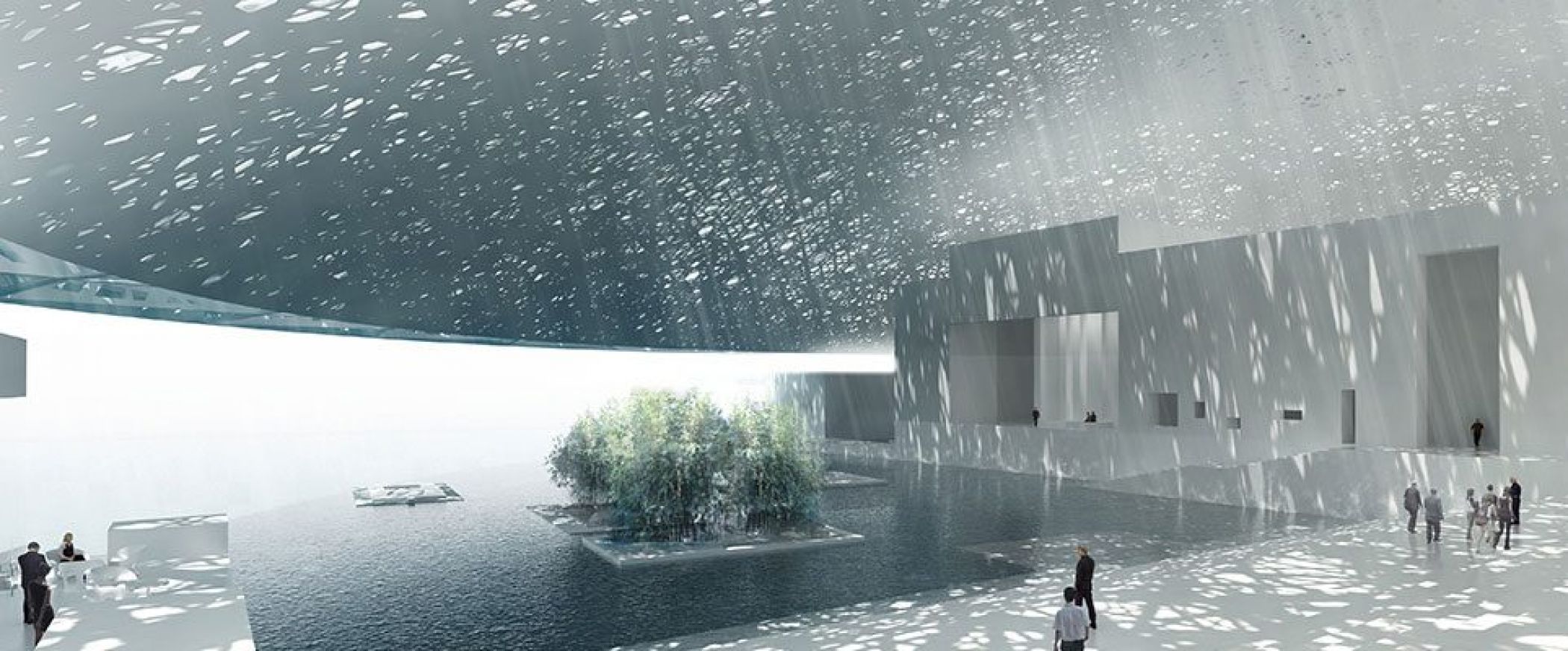
The Middle Eastern museum of today is not just a container for artifacts; it is a crucible where history, art, and emotion are forged into something new. It is a place where the past does not merely speak—it sings, it dances, it dreams. And in that dream, we find not just a reflection of who we were, but a glimpse of who we might yet become.


Leave a Comment