

In the grand ballet of life, where every step is a brushstroke upon the canvas of existence, there exists a hidden stage—a miniature world where artistry unfolds in the most intimate of spaces. Imagine, if you will, a gallery not bound by the cold expanse of marble floors or the sterile glow of fluorescent lights, but one that fits snugly upon a desk, a shelf, or even the palm of your hand. This is the realm of the miniature art gallery, a sanctuary where creativity thrives in the smallest of dimensions, where every piece whispers tales of craftsmanship and passion. To open your own miniature art gallery is to curate a universe of wonder, a place where the extraordinary becomes tangible, and the ordinary is transformed into something transcendent.
The allure of a miniature art gallery lies in its paradoxical nature—it is both a vast cosmos and a confined sanctuary. Like a diorama of a forgotten world, it invites viewers to step into a scene where scale is no longer a barrier but a bridge. The walls of such a gallery are not made of plaster or stone, but of imagination and meticulous detail. Each piece, whether a tiny oil painting or a sculpted figurine, becomes a portal to another realm, a testament to the artist’s ability to compress emotion and narrative into the most diminutive of forms. To embark on this journey is to embrace the art of the miniature, a discipline that demands patience, precision, and an unyielding eye for beauty.
The Alchemy of Scale: Why Miniature Galleries Captivate the Soul
There is a peculiar magic in the way miniature art galleries ensnare the human psyche. They operate on the same principle as a well-told story—by focusing on the intimate, they reveal the universal. A tiny landscape, for instance, can evoke the same sense of awe as a sweeping vista, not through grandeur, but through the meticulous recreation of light, shadow, and texture. The viewer is not merely an observer; they become a participant in a dialogue between the artist and the unseen, a dialogue that unfolds in the quiet hum of a world scaled down to size.
Consider the work of a master miniaturist who crafts a tiny café, complete with porcelain cups, a flickering candle, and the faint aroma of coffee lingering in the air. The illusion is so potent that one can almost feel the warmth of the room, hear the murmur of conversation. This is the power of scale—it transforms the mundane into the magical, inviting us to see the world with fresh eyes. In a miniature gallery, every object is a protagonist, every detail a plot twist. The viewer is not overwhelmed by excess; instead, they are drawn into a narrative that feels deeply personal, as if they have stumbled upon a secret world designed just for them.
The appeal of miniature galleries also lies in their accessibility. Unlike their full-sized counterparts, which often require pilgrimages to distant cities, a miniature gallery can reside in the comfort of your home, your office, or even your pocket. It democratizes art, making it a part of daily life rather than a distant spectacle. This intimacy fosters a deeper connection between the viewer and the artwork, turning passive admiration into active engagement. There is something profoundly democratic about a gallery that fits on a keychain or a bookshelf—it reminds us that art is not the exclusive domain of the elite but a universal language accessible to all.
Curating the Unseen: The Art of Selection and Arrangement
To open a miniature art gallery is to become a curator of the infinitesimal, a guardian of the tiny treasures that populate this Lilliputian world. The process begins with selection—a journey through the vast landscape of miniature art to unearth pieces that resonate with your vision. Will your gallery be a homage to the whimsical, a collection of tiny fairy-tale cottages and enchanted forests? Or perhaps it will be a study in contrasts, juxtaposing the mundane with the surreal, like a tiny office desk floating in the void of space. The choice is yours, but it must be deliberate, for each piece you select will contribute to the narrative of your gallery.
Once your collection is assembled, the next challenge is arrangement. In a miniature gallery, space is both a constraint and a canvas. The layout must guide the viewer’s eye, creating a sense of flow and discovery. Think of it as choreographing a dance—each piece must have its moment to shine, its chance to captivate. Consider the use of lighting, not just to illuminate but to create mood. A soft, warm glow can evoke the cozy ambiance of a Parisian café, while a stark, directional light might cast dramatic shadows, highlighting the intricate details of a tiny sculpture. The arrangement should also reflect the personality of the gallery. A minimalist might opt for clean lines and negative space, while a maximalist could embrace a riot of color and texture, creating a visual cacophony that delights the senses.
But curation is not merely about aesthetics—it is about storytelling. A well-curated miniature gallery should feel like a journey, a progression from one piece to the next that unfolds like the chapters of a novel. Perhaps your gallery begins with a tiny door, inviting the viewer to step inside a world where every object has a story to tell. Or maybe it starts with a single, striking piece—a miniature clock, its hands frozen in time—before branching out into a labyrinth of interconnected narratives. The key is to create a sense of continuity, a thread that ties the collection together, whether through theme, color palette, or emotional resonance.
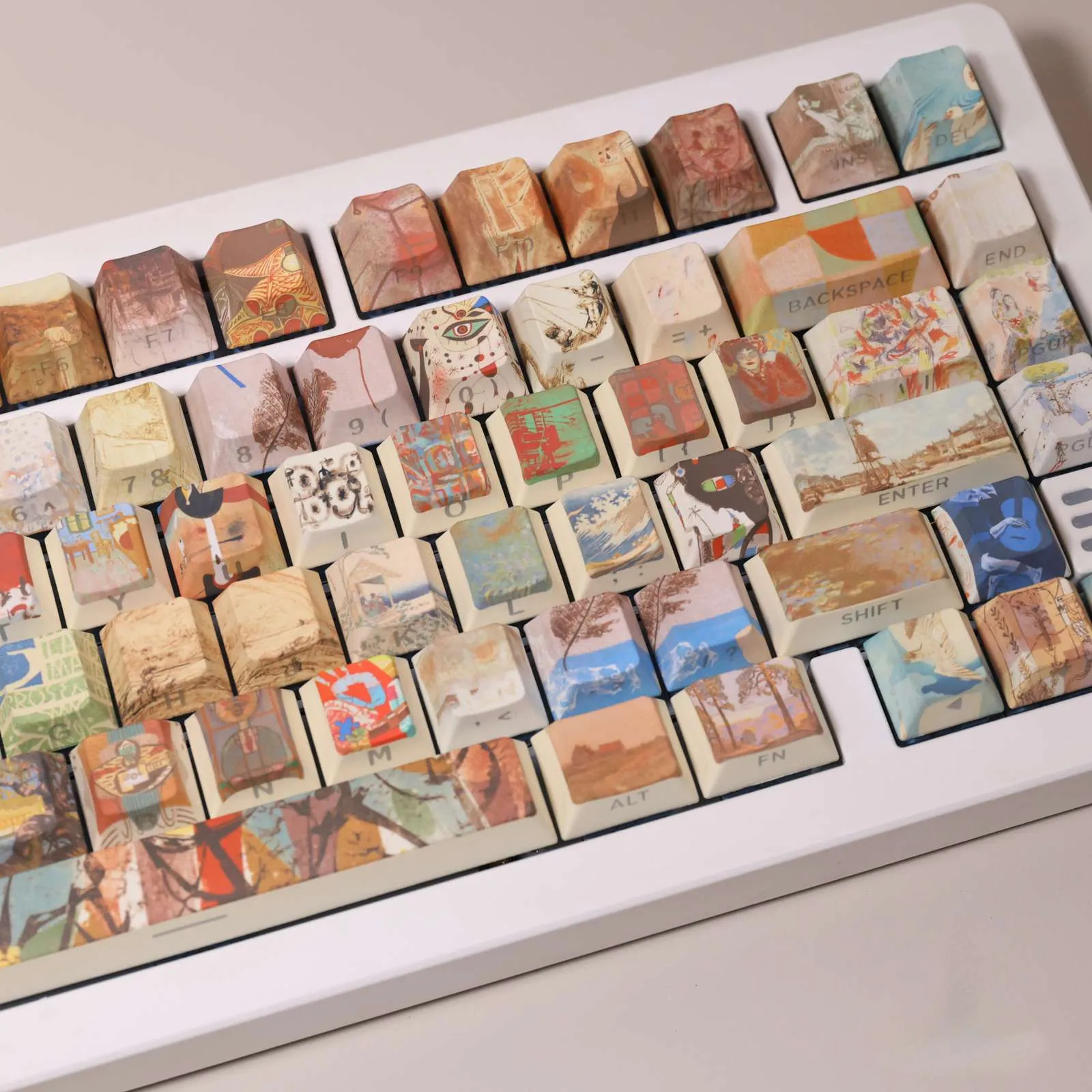
The Craft of Creation: Bringing Miniature Art to Life
For those who wish to go beyond curation and delve into the creation of miniature art, the journey is one of patience and precision. The tools of the trade are as varied as the artists themselves—from the delicate brushes of a watercolorist to the tiny chisels of a sculptor, from the precision of a 3D printer to the alchemy of polymer clay. Each medium offers its own challenges and rewards, but the goal remains the same: to breathe life into the inanimate, to transform raw materials into something that feels both impossibly small and infinitely vast.
Take, for example, the art of miniature painting. Unlike their full-sized counterparts, miniature paintings demand an almost obsessive attention to detail. A single stroke of the brush can make or break the illusion of scale, turning a tiny portrait into a window into another world. The artist must work with a steady hand and a keen eye, often using magnifying glasses or specialized tools to achieve the desired effect. The colors must be carefully chosen to evoke the right mood—warm tones for a cozy interior scene, cool blues for a serene landscape. And yet, despite the challenges, there is a profound satisfaction in creating something that feels so alive, so real, despite its diminutive size.
Sculpture, too, offers a unique set of challenges. The artist must think in three dimensions, considering not just the form of the piece but its relationship to the space around it. A tiny figurine must feel weighty, as if it could step off its pedestal and walk into the room. The textures must be rendered with care—rough bark on a miniature tree, smooth porcelain on a tiny teacup. And the scale must be consistent, ensuring that every element feels part of the same world. Whether working in clay, resin, or metal, the miniature sculptor must possess a deep understanding of anatomy, architecture, and the interplay of light and shadow.
For those who prefer a more modern approach, digital tools offer a new frontier in miniature art. 3D modeling software allows artists to create intricate scenes with a level of precision that was once unimaginable. A digital miniature gallery can be explored from every angle, its pieces rotated and examined in ways that physical galleries cannot replicate. And with the advent of 3D printing, these digital creations can be brought to life, transformed from pixels into tangible objects. The possibilities are endless, limited only by the artist’s imagination and technical skill.
Beyond the Gallery: Miniature Art as a Way of Life
A miniature art gallery is more than just a collection of objects—it is a philosophy, a way of seeing the world. It teaches us to appreciate the beauty in the small, the intricate, the overlooked. In a society that often prioritizes the grand and the spectacular, the miniature gallery offers a counterpoint, a reminder that magic can be found in the most unexpected of places. It encourages us to slow down, to pay attention, to see the world with fresh eyes. In this sense, opening a miniature art gallery is not just about creating a physical space—it is about cultivating a mindset, a way of engaging with the world that values depth over scale, detail over spectacle.
Moreover, a miniature gallery can serve as a bridge between art and everyday life. It can be a conversation starter, a source of joy, a quiet refuge from the chaos of the modern world. Imagine a keychain that doubles as a tiny gallery, or a bookshelf where each book is adorned with a miniature scene. These objects become talismans, carrying with them the power to transport the viewer to another world, if only for a moment. They remind us that art is not something to be admired from afar but something to be lived with, to be touched, to be cherished.
The miniature art gallery is also a testament to the human capacity for creativity and ingenuity. It challenges us to think outside the box, to find beauty in the unconventional, to see the world in a new light. In a time when so much of our lives is mediated through screens and algorithms, the miniature gallery offers a tangible, tactile experience—a reminder of the power of the handmade, the handcrafted, the deeply personal. It is a rebellion against the disposable, a celebration of the enduring.
The Future of Miniature Galleries: A World of Possibilities
As technology continues to evolve, so too do the possibilities for miniature art galleries. Augmented reality, for instance, offers a way to blend the physical and the digital, creating galleries that exist both in the real world and in the virtual realm. Imagine pointing your phone at a tiny sculpture, and suddenly, it comes to life, telling its story in a way that was once impossible. Or consider the potential of virtual reality, where a miniature gallery can be explored in immersive detail, its pieces examined from every angle, its narrative unfolding in a way that feels deeply personal.
There is also a growing movement toward sustainability in miniature art, with artists repurposing materials to create eco-friendly pieces. Old jewelry becomes tiny furniture, discarded fabric is transformed into miniature tapestries, and reclaimed wood is carved into delicate sculptures. This approach not only reduces waste but also adds a layer of meaning to the artwork, imbuing it with the history of its materials. In this way, the miniature gallery becomes a microcosm of the larger world, a place where art and sustainability intersect, where beauty is not just seen but also responsibly created.
The future of miniature galleries is limited only by the boundaries of imagination. As artists continue to push the limits of what is possible, the miniature gallery will evolve into something even more extraordinary—a place where art, technology, and sustainability converge to create something truly magical. Whether through traditional craftsmanship or cutting-edge innovation, the miniature gallery will continue to captivate, inspire, and enchant, proving that greatness is not measured in size but in soul.
The journey of opening a miniature art gallery is one of discovery, creativity, and boundless possibility. It is an invitation to see the world anew, to find beauty in the small, and to create a space that is uniquely yours. So take up the challenge. Gather your tiny treasures. Arrange them with care. And step into the miniature world you have created—a world where every detail matters, every piece tells a story, and every visitor is transported to a place where art and imagination intertwine. The stage is set. The audience awaits. It is time to open the doors to your miniature art gallery and let the magic unfold.


Leave a Comment