

In the vast realm of artistic expression, where imagination and reality blur, two formidable currents surge with compelling force: chaoticism and hyperrealism. Both operate as intricate languages on the grand canvas of creativity, each courting the observer with profoundly different seductions. Yet, they share a fascinating dialogue, a silent duel played beneath the surface of perception itself — a dance far beyond the unsettling valley where the uncanny often resides.
The Unsettling Valley: A Prelude to Contrast
The term “uncanny valley” typically conjures images of eerily lifelike humanoid robots or digitally rendered faces that straddle the chasm between realism and artificiality, eliciting discomfort. It is a psychological limbo, where subtle imperfections amplify unease. However, when viewed through the prism of art, this valley morphs into a metaphorical landscape where chaoticism and hyperrealism stake their claims, challenging our epistemological boundaries.
Hyperrealism teeters on the edge of photographic exactitude. Every pore, every shadow is meticulously conjured with an almost supernatural precision, inviting the observer to marvel at the illusory truth of paint and canvas. Meanwhile, chaoticism revolts against this meticulousness: it thrives in aesthetic anarchy, embracing disorder, fragmentation, and dissonance as instruments of expression. Where hyperrealism seeks to imitate reality, chaoticism distills the essence of existence through fractured narratives and disruptive spontaneity.
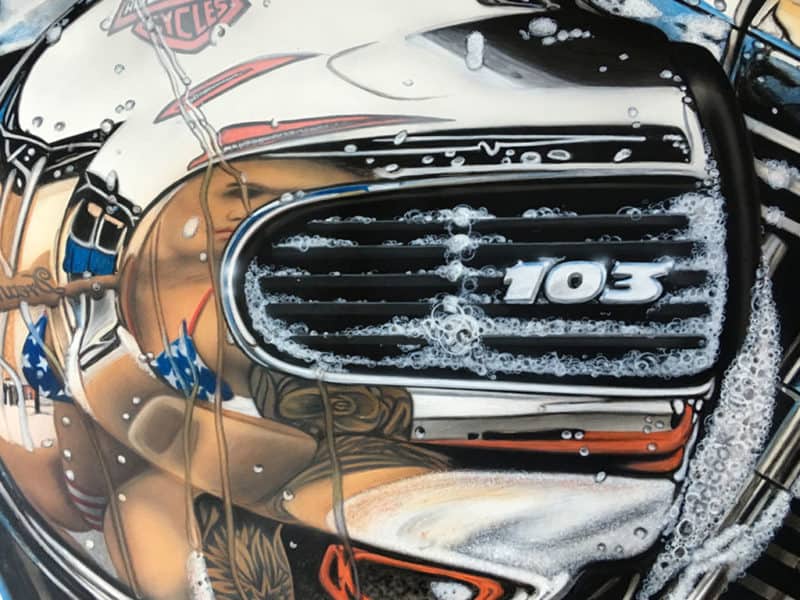
Hyperrealism: The Alchemist of Visual Truth
Imagine walking into a gallery, your eyes tricked into believing you are staring at a photograph, when in fact, you stand before an immaculate painting. This is the siren call of hyperrealism — a technical tour de force where artists wield brush and pigment with the precision of a scientific instrument. The appeal lies not merely in duplicity but in a celebration of detail, texture, and light that transcends photographic limitations.
At its core, hyperrealism elevates mundane subjects to the extraordinary. A droplet of water, a wrinkle in a fabric, or the subtle gleam in a subject’s eye becomes a universe unto itself. The artist’s fidelity to minute detail becomes an act of reverence, an invitation to slow down and engage in a contemplative gaze that defies modern-day distraction. It captures the fleeting whispers of reality with such fervor that it engenders a new form of truthfulness — one not born out of mere replication, but out of an almost obsessive pursuit of perceptual authenticity.

Chaoticism: Beauty in Ruin and Rebellion
If hyperrealism is a whispered litany to precision, chaoticism is a tumultuous symphony of disruption. It dilutes linearity and injects a cacophony of forms, colors, and textures that dare to defy comprehension. Rather than mimicking the external world, chaoticism embraces the internal, the emotional, the ephemeral — a tempest of the psyche captured on canvas or through other mediums.
At first glance, chaoticism may seem frenzied or even nihilistic, but such a reading would miss the subtle intricacies hidden within the disorder. To engage with chaoticism is to navigate a labyrinth where meaning twists and splinters, revealing moments of clarity like jewels mined from chaos. This aesthetic valorizes unpredictability, harnessing asymmetry and discord as tools to reflect the fractal nature of existence itself.
One can liken chaoticism to a star exploding in myriad shards. The compelling force is not in perfect form but in the dynamic flux — the tension between control and abandon, stability and entropy. Its unique appeal lies in its refusal to be tamed, unapologetically embodying raw, unrefined creativity.
Beyond the Valley: Reconciling the Polarities
Though chaoticism and hyperrealism might appear as polar opposites on the surface, they embody complementary narratives in the vast dialogue of art. The unsettling valley, that strange no-man’s land of discomfort, loses its grip once one appreciates that hyperrealism’s ultra-detail can amplify chaos just as chaoticism’s unpredictable energy can reveal deeper layers of hyperreal perception.
Consider the metaphor of a turbulent ocean: hyperrealism renders each wave in crystalline clarity, capturing every translucent fold of water and crested white tip. Chaoticism, however, reflects the ocean’s raw power — the storm’s wrath, the unpredictable swirl of currents and debris. Together, they offer a full understanding of the sea, both its serene beauty and its wild turmoil.
Ultimately, both serve as conduits to heightened experience. Hyperrealism takes us deep into the minutiae of the now, inviting meditation on the tangible. Chaoticism shoves us into the throes of the unknown, evoking primal responses and introspection on the intangible. Their interplay challenges and enriches our perceptual and emotional registers, ensuring that art remains a vehicle not only for representation but for existential exploration.
The Unique Appeal: Why the Tension Enchants
The magnetism of chaoticism and hyperrealism stems from their invitation to oscillate between order and disorder, clarity and ambiguity, surface and depth. Hyperrealism seduces with its promise of certainty; chaoticism beguiles with the thrill of unpredictability. These modes beckon the viewer to reconsider the nature of reality and the very act of seeing.
In a world increasingly saturated with digital illusions, both offer valuable counterpoints. Hyperrealism challenges the supremacy of the photographic image by reclaiming brush and canvas as bearers of truth, though filtered through human sensitivity. Chaoticism resists homogenization, celebrating the fracturing and multiplicity inherent in contemporary life — a chaotic mirror to the fractured psyche.
This dialectic fuels a vibrant creative furnace where innovation thrives. Artists and audiences alike are compelled to rethink boundaries — not just in art but in cognition and feeling. It is a clarion call to embrace paradox, revel in details, and also surrender to the whirlwinds of chance.
Conclusion: Embracing the Artistic Paradox
Far beyond the unsettling valley lies a fertile landscape where chaoticism and hyperrealism converge, clash, and converse. Here, art transcends mere mimicry, transforming into a powerful exploration of existence’s dualities. Whether you find wonder in the meticulous replication of a hyperrealist’s brushstroke or in the ecstatic tumult of chaoticism, both provoke a profound awakening to the myriad ways we interpret and experience our world.
In this exquisite tension, we discover that reality is neither fixed nor fractured but rather a fluid, evolving spectacle that demands our full engagement. The interplay of chaos and clarity invites us to look again, to see differently, and perhaps to understand a little more about the kaleidoscopic nature of truth itself.


Leave a Comment