

In the alchemy of art, where raw emotion meets tactile creation, the choice between charcoal and graphite is less a decision and more a revelation. These two mediums, seemingly simple in their essence, are the yin and yang of the artist’s toolkit—each with the power to elevate a piece to celestial heights or plunge it into the abyss of mediocrity. But which one is the silent saboteur of your artistic vision? The answer isn’t as straightforward as you might think. To uncover the truth, we must delve into the very soul of these materials, where texture, tone, and technique collide in a dance as old as time itself.
The Raw Charisma of Charcoal: A Medium of Wild Passion
Charcoal is not merely a tool; it is a tempest in a stick. Born from the charred remains of organic matter, it carries within it the essence of fire and decay, a paradox that makes it both primal and sophisticated. When you drag a piece of vine or compressed charcoal across paper, you’re not just drawing—you’re conjuring. The medium is unapologetically bold, capable of producing strokes that range from the faintest whisper of a shadow to the deepest, velvety abyss of a void. Its grainy texture clings to the tooth of the paper like a lover’s embrace, creating a surface that feels alive, almost sentient.
But with great power comes great volatility. Charcoal is a rebel. It smudges with the slightest touch, it dusts the air with its presence, and it demands a certain recklessness. Artists who wield it must surrender to its chaos, allowing the medium to guide their hand rather than the other way around. This is where its allure lies—it forces you to embrace imperfection, to find beauty in the accidental. A stray mark, a smudge, a blur—these are not mistakes but the fingerprints of the artist’s soul. Yet, this very quality can be the undoing of the meticulous creator. The ephemeral nature of charcoal means that once the dust settles, your masterpiece could be lost to the ravages of time, unless you seal it with a fixative. And even then, the ghost of your work lingers, taunting you with its fragility.
Consider the works of the old masters, like Leonardo da Vinci, who used charcoal for his preliminary sketches. The medium’s ability to capture the raw energy of a gesture is unparalleled. But here’s the catch: charcoal doesn’t just draw—it *feels*. It responds to pressure, to angle, to the artist’s breath. It’s a medium that doesn’t just sit on the surface; it burrows into the paper, leaving behind traces of its existence. This depth is what makes charcoal so mesmerizing, but it’s also what makes it treacherous. A single misstep can send your entire composition spiraling into obscurity, where the once-vibrant lines dissolve into a murky haze.
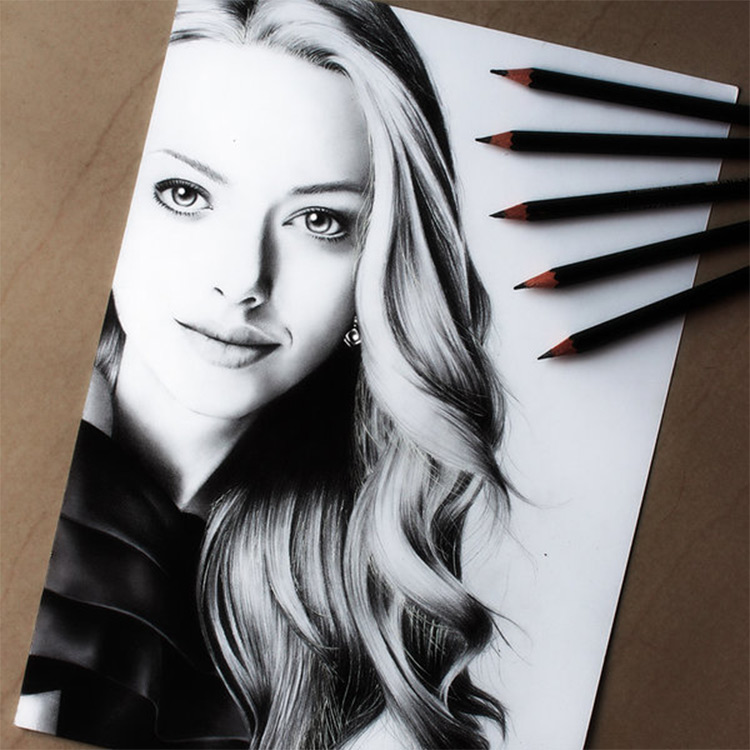
The Subtle Seduction of Graphite: Precision in a Pencil’s Grip
If charcoal is the storm, then graphite is the calm before it. A humble alloy of carbon and clay, graphite is the quiet virtuoso of the drawing world. It doesn’t shout; it *whispers*. With its precise, controllable strokes, graphite allows the artist to sculpt light and shadow with the delicacy of a surgeon. The range of grades—from the faintest H to the darkest 9B—grants an unparalleled control over value, making it the medium of choice for hyperrealistic renderings and intricate details. Where charcoal is a wildfire, graphite is a laser beam, cutting through the darkness with surgical precision.
Yet, this precision is a double-edged sword. Graphite’s smooth, almost clinical nature can strip away the raw emotion that makes art compelling. It’s easy to fall into the trap of overworking a piece, smoothing out every imperfection until the soul of the subject is lost beneath layers of mechanical perfection. The medium’s lack of tooth means it doesn’t cling to the paper with the same fervor as charcoal; instead, it sits on the surface, pristine and untouchable. This can make graphite drawings feel sterile, like a photograph rather than a living, breathing creation. The artist must work harder to infuse their work with life, to coax out the subtle gradations that make a piece feel three-dimensional.
But graphite has its own kind of magic. It’s the medium of choice for architects, engineers, and illustrators who demand accuracy. Its ability to create fine lines and intricate textures is unparalleled. Think of the delicate cross-hatching in Albrecht Dürer’s engravings or the hyper-detailed portraits of contemporary artists like Paul Cadden. Graphite doesn’t just draw; it *builds*. Layer upon layer, it constructs a world that feels tangible, as if you could reach out and touch the surface. Yet, this very tangibility can be its downfall. The precision that makes graphite so appealing can also make it feel cold, calculated—a tool of the mind rather than the heart.

The Clash of Philosophies: Which Medium Aligns With Your Artistic Soul?
Choosing between charcoal and graphite isn’t just about technique—it’s about philosophy. Are you a romantic, drawn to the chaos and unpredictability of life? Then charcoal is your medium. It’s the choice of the passionate, the rebellious, the artist who sees beauty in the imperfect. But be warned: it will test your patience, your control, and your willingness to embrace the unknown. Charcoal doesn’t just challenge your skills; it challenges your very approach to art.
Or are you a classicist, a perfectionist, someone who believes that art should be a controlled explosion of precision? Then graphite is your ally. It’s the medium of the disciplined, the patient, the artist who finds solace in the meticulous. But beware—graphite can be a tyrant. It demands perfection, and if you’re not careful, it will strip away the spontaneity that makes art alive. The choice between these two mediums is, at its core, a choice between control and surrender, between the mind and the heart.
Consider the emotional weight of your subject matter. Charcoal, with its dramatic contrasts and textured surfaces, is perfect for portraits that demand raw emotion, for landscapes that evoke the wildness of nature, for scenes that tell a story of struggle and passion. Graphite, on the other hand, is ideal for subjects that require delicacy and detail—portraits that capture the subtleties of a face, still lifes that demand hyperrealism, architectural sketches that must be exact. The medium you choose should reflect not just the subject, but the *feeling* behind it.
The Unseen Battle: How Each Medium Affects Your Workflow
The tools you use shape the way you think, the way you create, and even the way you see the world. Charcoal is a medium of immediacy. It demands that you work quickly, that you trust your instincts, that you embrace the moment. There’s no time for overthinking, no room for hesitation. This can be liberating, but it can also be terrifying. The ephemeral nature of charcoal means that mistakes are permanent in a way that’s hard to accept. Once the dust settles, there’s no going back.
Graphite, by contrast, is a medium of patience. It allows for endless refinement, for layering, for erasing and reworking. This can be a blessing for artists who thrive on precision, but it can also lead to paralysis. The fear of making a mistake, of ruining a perfectly good drawing, can paralyze even the most skilled artist. Graphite doesn’t just test your skills; it tests your confidence. And in a world where art is often judged by its flawlessness, this can be a heavy burden to bear.
Then there’s the matter of presentation. Charcoal drawings are fragile, vulnerable to smudging, fading, and damage. They require careful handling, protective sleeves, and often, a fixative to preserve their integrity. Graphite drawings, while still delicate, are less prone to accidental destruction. They can be erased, reworked, and even scanned without losing their integrity. But this durability comes at a cost—graphite lacks the tactile immediacy of charcoal. It doesn’t feel as *alive* when you touch it, and that can make it feel less like a true work of art and more like a technical exercise.
Finding Your Medium: A Journey of Self-Discovery
The truth is, neither charcoal nor graphite is inherently “ruining” your art. The real saboteur is the artist’s inability to harness the unique strengths of their chosen medium. Charcoal will reveal your flaws, your hesitations, your fears—but it will also reveal your passion, your spontaneity, your raw talent. Graphite will expose your meticulousness, your discipline, your technical prowess—but it will also expose your rigidity, your fear of imperfection, your struggle to let go.
The key is to experiment. Try both. Let charcoal teach you to embrace the chaos, to find beauty in the unexpected. Let graphite teach you to refine your vision, to master the details, to create something that feels almost tangible. And then, when you’re ready, combine them. Use graphite for the underdrawing, charcoal for the shadows, and a touch of both for the highlights. The fusion of these two mediums can create something truly magical—a piece that is both precise and passionate, controlled and wild.
In the end, the choice between charcoal and graphite isn’t about which one is better. It’s about which one speaks to you. Which one makes your heart race, your hands tremble, your soul sing. Art isn’t about perfection; it’s about expression. And the medium you choose should be an extension of that expression, a tool that helps you translate your vision into something tangible, something real. So pick up that stick of charcoal or that graphite pencil, and let the battle begin. Your art depends on it.
The canvas awaits. The medium is ready. The question is—are you?


Leave a Comment