

Picture this: you’ve just spent hours meticulously editing a RAW file, pulling shadows from the abyss, coaxing highlights into submission, and sculpting midtones with surgical precision. The result? A photograph that looks like it was bathed in the neon glow of a Las Vegas casino at midnight—oversaturated, contrast-crushed, and so artificially vibrant it borders on hallucinogenic. Welcome to the uncanny valley of overcooked HDR, where your well-intentioned edits have inadvertently transformed your image into a digital caricature of itself.
This isn’t just a matter of taste—it’s a symptom of a deeper tension between the raw material of light and the human desire to control it. RAW files are the unfiltered whispers of reality, but when we push them too far, we don’t just enhance them; we mutate them. The line between “enhanced” and “overdone” is thinner than a razor’s edge, and crossing it isn’t just a technical misstep—it’s a philosophical betrayal of the image’s original intent. So why does this happen? And more importantly, how do we reclaim the subtlety and authenticity that first drew us to photography?
The Allure and the Trap of the “HDR Look”
There’s a seductive promise buried in the term “HDR”—High Dynamic Range. It whispers of reclaiming lost detail, of balancing the unbalanceable, of making every pixel sing in perfect harmony. But somewhere along the way, the promise curdled into a visual cliché: halos around edges, colors that scream instead of whisper, and a texture so aggressively sharpened it feels like the image is vibrating. This isn’t HDR. It’s HDR’s overzealous, neon-drunk cousin.
The root of the problem lies in a fundamental misunderstanding. HDR isn’t a style—it’s a technique. It’s a method to merge multiple exposures into one cohesive image, preserving detail across extremes of light. But when applied to a single RAW file, or when pushed beyond its natural limits, HDR becomes a visual steroid. The software doesn’t know your intent. It only knows the numbers you feed it—and if those numbers scream “more contrast! more saturation! more everything!”, it will deliver exactly that.
This is where the trap snaps shut. We chase the HDR aesthetic because it feels powerful, because it makes our images stand out in a sea of flat, lifeless photos. But power without restraint is just chaos. The HDR look isn’t inherently bad—it’s just often misapplied, like using a flamethrower to light a candle.
Why Your Edits Are Morphing Into Digital Candy
Let’s dissect the anatomy of an overcooked edit. First, there’s the contrast avalanche. You nudge the contrast slider slightly, then a bit more, and suddenly the darkest shadows are blacker than midnight and the brightest highlights are white-hot. The midtones? They’ve been erased, flattened into a wasteland of lost detail. This isn’t contrast—it’s contrast abuse.
Then comes the saturation surge. Colors that were once subtle and nuanced now scream for attention. The sky isn’t just blue—it’s electric ultramarine. The grass isn’t green—it’s chartreuse on steroids. The software doesn’t know that saturation should enhance, not dominate. It only knows that if you push the slider, the numbers go up. And up feels good. Until it doesn’t.
Next, the sharpening sledgehammer. Edges that were once soft and organic become razor-thin lines of artificial clarity. Texture that should feel like the grain of wood or the weave of fabric turns into a digital sandpaper nightmare. Sharpening isn’t evil—but when applied with the subtlety of a jackhammer, it erases the soul of the image.
Finally, the halo effect. That bright ring around the edges of objects? That’s the ghost of overzealous tone mapping. It’s the software’s desperate attempt to separate light from shadow, but it ends up creating a visual rift that screams “I’ve been overprocessed!”
These aren’t just aesthetic flaws—they’re symptoms of a deeper disconnect. You’re not just editing an image. You’re fighting the RAW file’s natural dynamic range, its inherent balance, its quiet authenticity. And when you fight too hard, the image fights back—by becoming something unrecognizable.
The RAW File’s Silent Rebellion
RAW files are the raw nerve endings of photography. They capture light in its purest, most unfiltered form. They don’t lie. They don’t exaggerate. They simply exist. When you edit a RAW file, you’re not just adjusting pixels—you’re negotiating with reality itself. And reality has limits.
Every RAW file has a hidden contract: a balance between shadow depth, highlight retention, and midtone harmony. When you push beyond that contract, you’re not enhancing the image—you’re violating it. The file doesn’t scream. It just silently distorts, its colors bleeding into each other, its details collapsing under the weight of your edits.
This is why so many RAW edits end up looking like overcooked HDR. You’re not just adjusting exposure—you’re trying to force the file to conform to an aesthetic that wasn’t part of its original design. The software obliges, but the result is a visual Frankenstein: parts that were never meant to go together, now stitched into something grotesquely beautiful.
The key to avoiding this fate lies in understanding the RAW file’s language. It speaks in subtle gradients, in soft transitions, in the quiet poetry of natural light. When you listen, your edits become whispers, not shouts. When you ignore it, your edits become a cacophony.
How to Reclaim the Subtle Art of Editing
So how do you break free from the overcooked HDR trap? Start by embracing restraint. Editing isn’t about maximum impact—it’s about maximum authenticity. Every adjustment should serve the image, not your ego.
Begin with the basics: exposure and white balance. These are the foundation of your edit. If the exposure is off, no amount of contrast or saturation will fix it. Use the histogram as your guide, not your enemy. Aim for a smooth, balanced curve—not a jagged mountain range of clipped highlights and crushed shadows.
Next, address contrast with intention. Instead of slamming the contrast slider, use the tone curve. Adjust the shadows and highlights separately. Pull the curve gently, like coaxing a shy animal out of hiding. The goal isn’t to flatten the image—it’s to reveal its hidden layers without shouting.
Saturation should be a scalpel, not a sledgehammer. Boost colors where they matter, but leave the rest alone. Use the HSL (Hue, Saturation, Luminance) panel to fine-tune individual colors. The sky might need a touch of blue, but the grass? Let it breathe. Let it feel real.
Sharpening is an art form. Apply it sparingly, only where it enhances texture without creating artifacts. Use the masking tool to limit sharpening to edges, not midtones. And always zoom in to check your work—what looks sharp at 100% might look jagged at 25%.
Finally, step back. Look at your edit with fresh eyes. Ask yourself: does this feel like a photograph, or a digital painting? Does it tell a story, or does it shout for attention? If the answer isn’t clear, it’s time to dial it back.
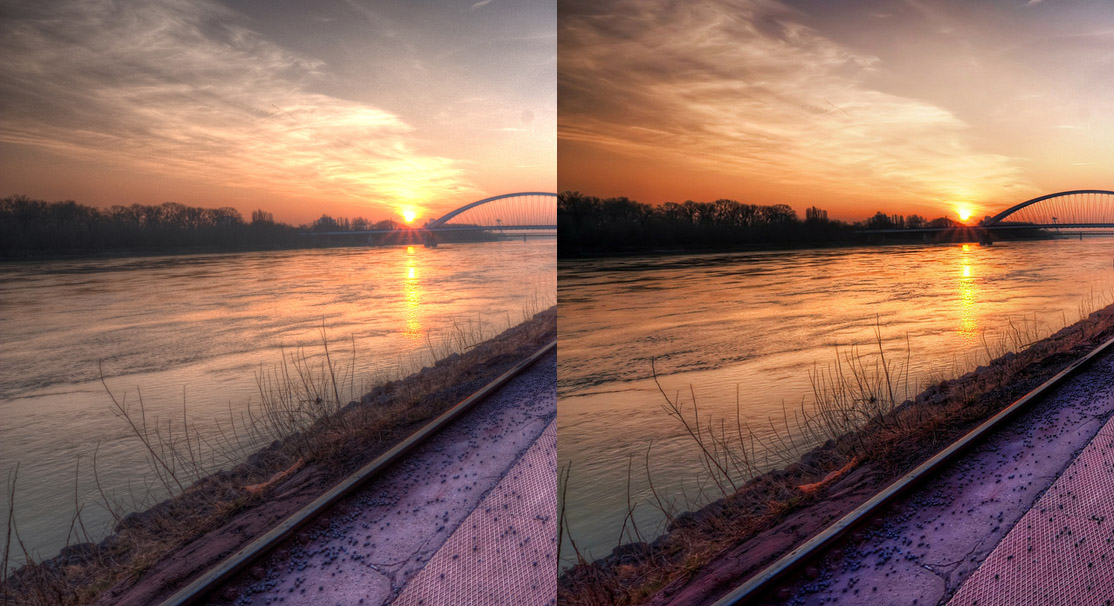
This image isn’t just a before-and-after. It’s a manifesto. On the left, the overcooked HDR version assaults the senses with its neon colors and halos. On the right, the subtly enhanced RAW file feels like a window into reality—rich, balanced, and alive. The difference isn’t in the tools used—it’s in the intent behind them.
The Philosophy of Editing: Less Is More
At its core, the battle against overcooked HDR is a philosophical one. It’s a question of intent, of restraint, of respect for the medium. Photography isn’t about control—it’s about collaboration. The camera captures light. The editor refines it. But when the editor becomes the dictator, the image loses its soul.
This isn’t to say that bold edits are inherently wrong. There’s a time and place for high-contrast, high-saturation images. But that time isn’t every time. That place isn’t every image. The best edits feel like a conversation—a give and take between you and the file. The worst edits feel like a monologue—a one-sided shouting match where the file has no choice but to surrender.
So the next time you find yourself pushing sliders to their limits, pause. Ask yourself: am I enhancing this image, or am I erasing it? Am I revealing its beauty, or am I burying it under layers of digital noise? The answer might just change the way you edit forever.
The RAW file isn’t your enemy. It’s your partner. Treat it with respect, and it will reward you with images that feel alive—not artificial. Edit with intention, and you’ll create photographs that resonate—not repel. The choice is yours. But choose wisely. The line between enhancement and overkill is thinner than you think.


Leave a Comment