

In the vast spectrum of human perception, few colors command the same hypnotic allure as black. Not the ordinary, everyday black of asphalt or ink, but a black so profound it seems to swallow light itself—an absence so complete it borders on the uncanny. This is the domain of Vantablack, a material so dark it defies conventional understanding, and its most notorious champion, artist Anish Kapoor, who wielded it like a brush dipped in the void. Yet, as with all things that teeter on the edge of the extraordinary, controversy followed. The story of Vantablack is not merely one of artistic innovation; it is a tale of obsession, rivalry, and the very nature of ownership in the realm of color.
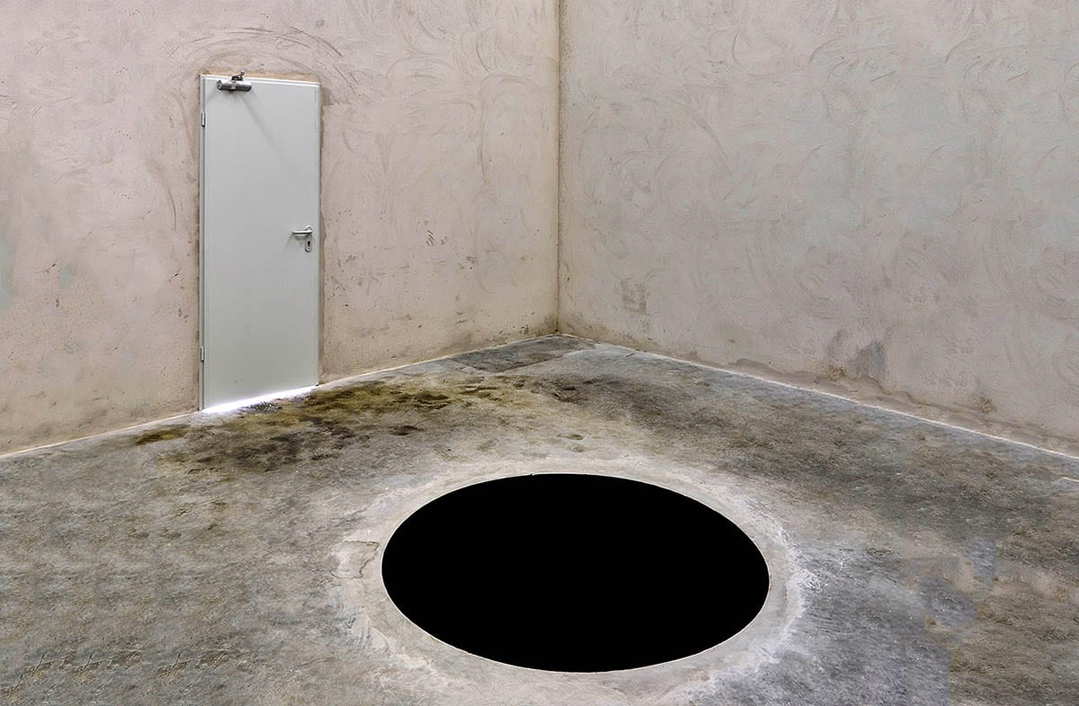
At first glance, the fascination with black seems paradoxical. In a world that celebrates vibrancy and light, why does the deepest black exert such a magnetic pull? The answer lies in the way it distorts perception. Vantablack, developed by Surrey NanoSystems, is composed of vertically aligned carbon nanotubes that trap 99.965% of incident light. When light strikes its surface, it is absorbed rather than reflected, creating an effect that is less a color and more a perceptual abyss. To stand before a Vantablack sculpture is to confront a surface that appears two-dimensional, as if the object itself has dissolved into the fabric of space. This is the paradox of the painted void: it is both present and absent, a tangible illusion that challenges the boundaries of reality.

The Alchemy of Absorption: How Vantablack Redefines Perception
Vantablack is not merely a pigment; it is an alchemical transformation of matter into something almost otherworldly. The process begins with a forest of carbon nanotubes, each one thinner than a wavelength of light. When light encounters this dense array, it is repeatedly scattered and absorbed until it is effectively extinguished. The result is a surface that appears to lack depth, texture, or even form—a quality that has made it irresistible to artists seeking to push the boundaries of visual experience.
For Anish Kapoor, Vantablack became more than a tool; it became a philosophical statement. His sculptures, such as *Descent into Limbo* and *Gathering Clouds*, exploit the material’s properties to create works that seem to float in a liminal space between existence and non-existence. The viewer is confronted with a paradox: the sculpture is undeniably present, yet its form dissolves into an inky abyss. This manipulation of perception is not merely aesthetic; it is a commentary on the nature of reality itself. In a world where images are ubiquitous and attention spans are fleeting, Vantablack forces us to confront the limits of our own perception.
Yet, the allure of Vantablack extends beyond its visual impact. It taps into a primal fascination with the void—a concept that has haunted human imagination since antiquity. From the black holes of cosmology to the existential dread of the unknown, the void represents both terror and fascination. Vantablack, in its ability to mimic this void, becomes a metaphor for the unknowable, a visual shorthand for the mysteries that lie beyond our comprehension.
The Feud That Shook the Art World: Kapoor, Semple, and the Battle for the Blackest Black
The story of Vantablack’s rise in the art world is not without its controversies. In 2016, Kapoor secured exclusive rights to use Vantablack in art, a move that sparked outrage among his peers. Stuart Semple, a British artist known for his vibrant and provocative works, saw this as a monopolization of the darkest possible shade—a color that, in his view, belonged to no single artist. In retaliation, Semple created *Pinkest Pink*, a hyper-saturated pink pigment, and made it available to all artists except Kapoor, a pointed jab at the exclusivity of Vantablack’s use.
This feud was not merely a clash of egos; it was a battle over the very nature of artistic ownership. Kapoor’s exclusive rights to Vantablack raised questions about the commodification of color and the ethics of artistic monopolies. Could a color, a fundamental element of visual language, be owned? The debate extended beyond the art world, touching on issues of intellectual property, creativity, and the role of artists as both creators and consumers of culture.

The controversy also highlighted the tension between innovation and exclusivity. Vantablack was, at its core, a scientific achievement before it became an artistic one. Its development was driven by practical applications in aerospace and military technology, where its light-absorbing properties could reduce glare and improve sensitivity in optical systems. Kapoor’s use of the material was a repurposing, a transformation of a utilitarian substance into something transcendent. Yet, by securing exclusive rights, he transformed it into a luxury commodity, accessible only to those who could afford it or curry his favor.
Semple’s response was a masterclass in artistic subversion. By creating *Pinkest Pink* and making it widely available, he not only challenged Kapoor’s monopoly but also highlighted the absurdity of owning a color. His act was a reminder that art is, at its heart, a communal endeavor—a dialogue between creator and audience, not a transaction between artist and patron. The feud became a symbol of the broader struggle between individual genius and collective creativity, a tension that has defined the art world for centuries.
The Psychology of the Void: Why We Are Drawn to the Darkest Black
To understand the fascination with Vantablack, we must delve into the psychology of the void. Human beings are wired to seek patterns and meaning in the world around us. When confronted with a surface that defies our expectations—one that appears to lack texture, depth, or even form—our brains are forced into overdrive, searching for clues that simply aren’t there. This cognitive dissonance is deeply unsettling, yet it is also strangely exhilarating.
Vantablack’s ability to evoke this response is rooted in its uncanny valley quality. It is not quite a color, not quite an absence, but something in between—a liminal space that challenges our understanding of reality. This is the same psychological mechanism that makes horror films so compelling; the unknown is both terrifying and fascinating. In the case of Vantablack, the unknown is not a monster or a ghost, but the very fabric of perception itself.
There is also a spiritual dimension to our fascination with the void. Across cultures and throughout history, the void has been associated with creation, destruction, and transcendence. In Hindu cosmology, the universe emerges from the void of *Brahman*, the ultimate reality. In Buddhist thought, enlightenment is often described as a dissolution into the void. Even in Western esotericism, the void is a symbol of the infinite, the unknowable, the divine. Vantablack, in its ability to mimic this void, becomes a secular icon—a visual representation of the mysteries that lie beyond our comprehension.
This spiritual undertone is perhaps why Vantablack resonates so deeply with artists and audiences alike. It is not merely a material; it is a portal—a way to glimpse the ineffable. When we stand before a Vantablack sculpture, we are not just observing an object; we are confronting the limits of our own perception, the boundaries of our understanding. In this sense, Vantablack is more than a color; it is an experience, a journey into the painted void.
The Legacy of the Painted Void: What Vantablack Teaches Us About Art and Ownership
The story of Vantablack and Anish Kapoor is more than a cautionary tale about artistic monopolies; it is a reflection on the nature of art itself. Art has always been a battleground for ideas, a space where ownership is both claimed and contested. From the Renaissance patrons who dictated the subjects of paintings to the contemporary artists who grapple with the ethics of appropriation, the question of who controls artistic expression is as old as art itself.
Kapoor’s exclusive rights to Vantablack raised important questions about the role of artists in a commercialized world. Is art a sacred calling, or is it a commodity to be bought and sold? Can an artist truly own a color, or is color a shared language, a tool that belongs to everyone? These questions are not merely philosophical; they have real-world implications for how art is created, displayed, and experienced.
Yet, the story of Vantablack also offers a glimmer of hope. In the face of Kapoor’s monopoly, artists like Stuart Semple found ways to subvert the system, to reclaim the language of color for themselves. Their acts of defiance remind us that art is ultimately a communal endeavor, a dialogue that transcends individual ownership. The feud between Kapoor and Semple was not just a clash of personalities; it was a battle over the soul of art itself.
As we move forward, the legacy of Vantablack will continue to evolve. New materials and technologies will emerge, pushing the boundaries of what is possible in art and perception. Yet, the questions raised by Kapoor’s use of Vantablack will remain relevant. How do we balance innovation with accessibility? How do we ensure that art remains a space for dialogue rather than a playground for the privileged? These are not easy questions, but they are necessary ones. The painted void is not just a color; it is a mirror, reflecting back to us the complexities of our own desires, fears, and obsessions.
In the end, the story of Vantablack is a reminder that art is not just about beauty or technique; it is about meaning. It is about the way we see the world, the way we interpret reality, and the way we confront the unknown. Whether through the deepest black or the brightest hue, art challenges us to look deeper, to question more, and to embrace the mysteries that lie beyond the surface. The painted void is not just a color; it is an invitation—to see, to feel, and to wonder.


Leave a Comment