

In the grand symphony of human creativity, few instruments command the same hypnotic allure as the turntable. Once a humble vessel for vinyl’s melodic whispers, it has evolved into a canvas for sonic alchemy, where the DJ becomes a modern virtuoso—part conductor, part sorcerer, part storyteller. The scratch DJ, in particular, stands at the nexus of tradition and innovation, wielding the turntable not merely as a playback device but as a full-fledged instrument. This transformation is not just technical; it is poetic, a dance between precision and improvisation, where every flick of the wrist and crackle of the needle crafts an ephemeral masterpiece.
The scratch DJ’s craft is a paradox: a marriage of mechanical intimacy and digital rebellion. At its core, scratching is the art of manipulating vinyl in real time, coaxing rhythms from the very grooves that once held static music. Yet, beneath this surface lies a deeper narrative—one of cultural defiance, technological synergy, and the relentless pursuit of sonic expression. To understand the scratch DJ as a modern virtuoso is to peer into a world where the past and future collide in a whirlwind of sound.
The Turntable as a Sonic Canvas: Where Tradition Meets Revolution
Imagine the turntable not as a relic of a bygone era, but as a chameleon—a device that bends to the will of its wielder. The vinyl record, with its tactile imperfections and warm analog hum, serves as the foundation for this sonic experimentation. Unlike digital audio workstations, which offer pristine precision, the turntable demands a tactile relationship with sound. The DJ’s hands become extensions of the machine, fingers dancing across the platter, back-cueing with the delicacy of a calligrapher, and scratching with the ferocity of a percussionist.
This tactile engagement is where the magic begins. A well-executed scratch is not just a rhythmic flourish; it’s a conversation between the DJ and the record. The needle’s journey across the vinyl is a dialogue—sometimes playful, sometimes urgent—where the DJ’s movements dictate the ebb and flow of the music. It’s a form of sonic sculpting, where the turntable’s limitations become the very constraints that inspire creativity. In the hands of a skilled scratch DJ, the turntable ceases to be a mere playback tool; it becomes a partner in crime, a silent collaborator in the creation of something entirely new.
The revolution of the turntable into an instrument is not just a technical feat; it’s a cultural one. In the 1970s and 80s, DJs like Grandmaster Flash and DJ Kool Herc transformed the turntable from a consumer appliance into a tool of sonic warfare. They didn’t just play records—they weaponized them. Scratching, in particular, emerged as a way to inject personality into the music, to make the turntable sing in ways it was never intended to. This was not just music; it was a declaration of independence, a sonic manifesto that said, “The machine serves me, not the other way around.”
The Virtuoso’s Arsenal: Tools of the Trade and the Alchemy of Sound
To the uninitiated, the scratch DJ’s setup might appear deceptively simple: two turntables, a mixer, and a handful of records. But within this minimalist arrangement lies a universe of possibilities. The mixer, often overlooked, is the DJ’s secret weapon—a device that allows for seamless transitions, abrupt cuts, and the kind of sonic sleight-of-hand that defines scratching. A well-crafted scratch mix is a ballet of faders and knobs, where the DJ’s hands move in perfect sync with the music, creating a tapestry of rhythm and texture.
The records themselves are another layer of the virtuoso’s arsenal. While any vinyl can be scratched, certain records are prized for their sonic qualities—records with percussive breaks, vocal chops, or distinctive basslines. The scratch DJ’s library is a treasure trove of sonic gold, each record a potential ingredient in the alchemy of sound. Some DJs even seek out rare or obscure records, not just for their musical value, but for the unique textures they bring to a mix. It’s a form of sonic archaeology, where the DJ digs through the past to unearth sounds that can be repurposed for the future.
But the true virtuosity lies in the DJ’s ability to manipulate these tools with precision and flair. A scratch DJ doesn’t just play records; they conduct them. The flick of the wrist, the subtle adjustment of the pitch fader, the timing of a release—all of these elements combine to create a performance that is as much about rhythm as it is about emotion. The scratch DJ is a storyteller, using sound to paint vivid narratives that resonate with listeners on a primal level. Whether it’s the staccato bursts of a baby scratch or the fluid, hypnotic loops of a transformer scratch, each technique is a brushstroke in a larger sonic masterpiece.
The Language of Scratching: A Dialect of Rhythm and Rebellion
Scratching is more than just a technique; it’s a language. Like any language, it has its own grammar, its own syntax, and its own dialects. The baby scratch, with its simple back-and-forth motion, is the alphabet of scratching—a foundational skill that every DJ must master. From there, the language expands into a lexicon of techniques: the scribble scratch, the chirp scratch, the crab scratch, the flare scratch. Each technique has its own character, its own emotional resonance, and its own place in the DJ’s repertoire.
But scratching is not just about technical prowess; it’s about communication. A great scratch DJ doesn’t just impress with their speed or complexity; they connect with their audience on a visceral level. The best scratches feel like a conversation—a call and response between the DJ and the crowd. The crowd doesn’t just listen; they feel the rhythm, they anticipate the next move, they become part of the performance. It’s a form of sonic telepathy, where the DJ’s hands speak directly to the listener’s soul.
This language of scratching is also deeply tied to the culture of hip-hop and its roots in rebellion. Scratching emerged from the streets, from the block parties and the underground clubs where DJs pushed the boundaries of what was possible. It was a way to reclaim the turntable, to turn it from a tool of passive consumption into an instrument of active creation. In this sense, scratching is not just a musical technique; it’s a political statement, a declaration of agency in a world that often seeks to silence the voices of the marginalized.
The Future of the Scratch DJ: Innovation and the Uncharted Frontier
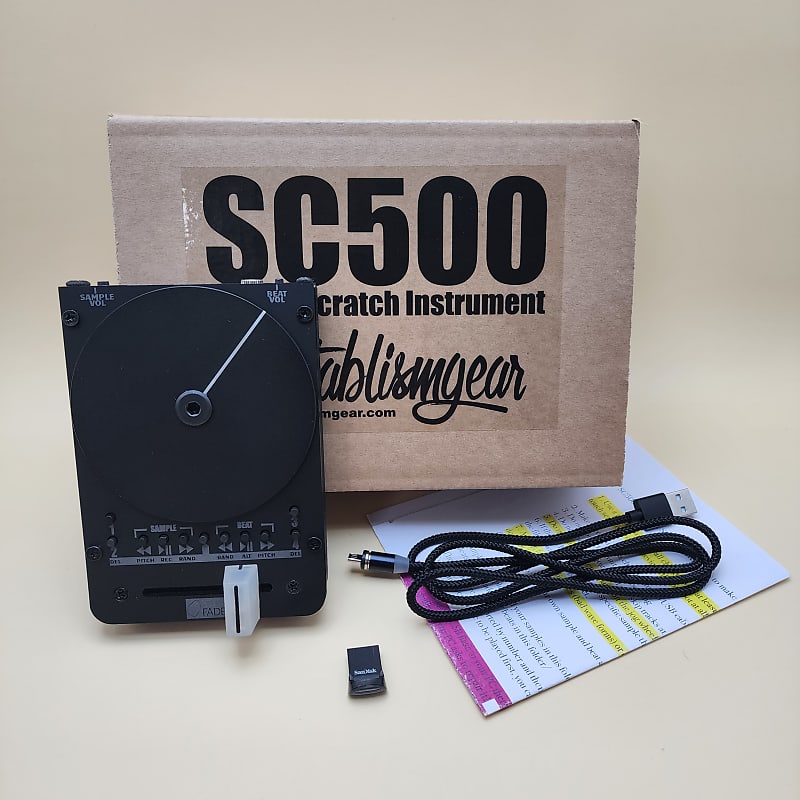
The scratch DJ’s journey is far from over. As technology advances, so too does the art form. Digital scratch instruments, like the ones seen in modern DJ setups, offer new possibilities for experimentation. These devices blend the tactile feel of vinyl with the precision of digital audio, allowing DJs to explore new sonic territories without sacrificing the intimacy of the turntable. Meanwhile, software like Serato and Traktor has democratized scratching, making it accessible to a new generation of DJs who may never have touched a vinyl record in their lives.
Yet, despite these innovations, the essence of scratching remains unchanged. It is still about the connection between the DJ and the music, the hands and the machine, the past and the future. The scratch DJ is a bridge between eras, a guardian of a tradition that refuses to die. In a world dominated by algorithms and auto-generated beats, the scratch DJ stands as a testament to the power of human creativity, to the idea that music is not just something to be consumed, but something to be made.

The future of scratching may be uncertain, but one thing is clear: the scratch DJ will continue to evolve, to adapt, and to inspire. Whether through the crackle of vinyl or the hum of digital circuits, the scratch DJ’s artistry will endure. It is a reminder that true virtuosity is not about the tools you use, but the stories you tell with them. And in the hands of a skilled scratch DJ, the turntable is not just an instrument—it is a portal to another world, a place where sound becomes magic.
The scratch DJ is more than a musician; they are a modern-day shaman, a keeper of rhythms, a weaver of sonic spells. In a world that often feels fragmented and disconnected, the scratch DJ offers a moment of unity—a shared experience where everyone, regardless of background, can feel the pulse of the music. It is this power, this ability to bring people together through sound, that makes the scratch DJ a true virtuoso of our time.


Leave a Comment