

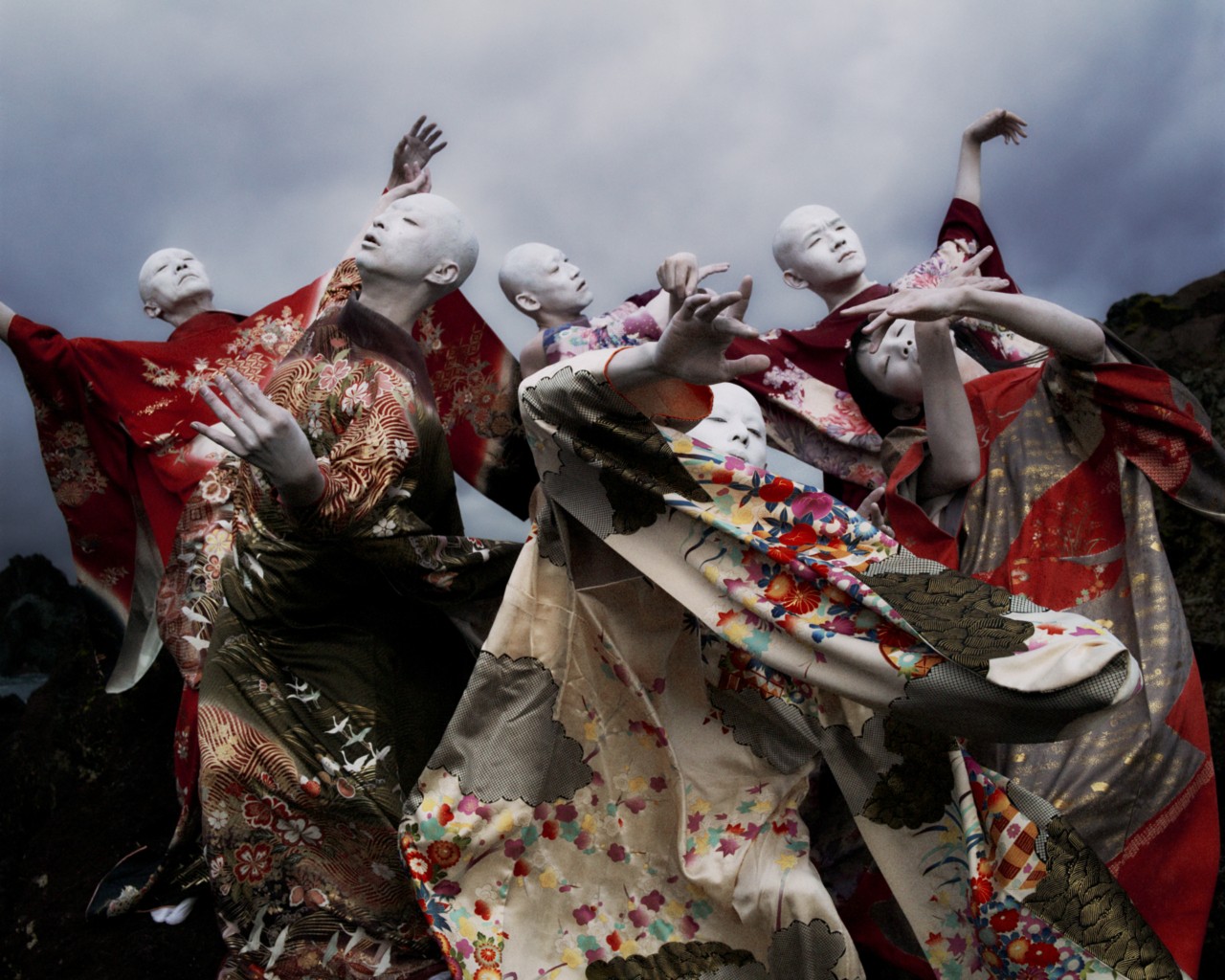
In the dim glow of a backstreet Tokyo studio, a dancer moves with a slowness that borders on the unbearable. Their body twists, contorts, and collapses—not in agony, but in a deliberate unraveling of form. Their skin is painted chalk-white, their eyes hollow, their mouth a silent scream. At first glance, it’s easy to mistake Butoh for a macabre performance art, a grotesque spectacle designed to shock. But to see it only as “scary white makeup” is to miss the heart of a movement that has, for decades, whispered secrets of the human condition through the language of the body.
Butoh is not a dance of darkness because it revels in fear. It is a dance of darkness because it dares to stare into the abyss of existence—and invites the audience to do the same. Born in the ashes of post-war Japan, this radical art form emerged as a rebellion against tradition, a rejection of the polished aesthetics of classical dance, and a raw confrontation with the fragility of life. It is a practice that doesn’t just move the body; it dismantles the ego, dissolves boundaries, and reveals the grotesque beauty hidden within decay. To understand Butoh is to step beyond the veil of its unsettling imagery and discover a philosophy, a spirituality, and a radical redefinition of what dance—and humanity—can be.
The Birth of Butoh: A Dance Born from Ruin
To trace the origins of Butoh is to walk through the ruins of Hiroshima and Nagasaki, to feel the weight of a nation shattered by war and occupation. In the late 1950s and early 1960s, Japan was a land of paradox: rapid economic growth clashing with deep existential despair. Traditional arts, once the preserve of the elite, felt hollow in the face of such devastation. It was against this backdrop that two avant-garde artists, Kazuo Ohno and Tatsumi Hijikata, birthed Butoh—not as a codified technique, but as a visceral response to the absurdity of existence.
Hijikata, often called the “father of Butoh,” rejected the refined movements of ballet and Noh theater. Instead, he sought to create a dance that was “anarchic, grotesque, and primal.” His 1959 performance Kinjiki (“Forbidden Colors”), based on a novel about homosexuality and taboo, caused a scandal. The piece featured a dancer crawling on all fours, his body smeared with mud, his movements mimicking the struggle of an animal caught in a snare. The audience was horrified. Critics called it obscene. Butoh was born in controversy—not because it was shocking for shock’s sake, but because it dared to expose the raw, unfiltered truth beneath societal facades.
Ohno, on the other hand, brought a different energy to Butoh. Where Hijikata’s work was raw and confrontational, Ohno’s was tender, almost ethereal. His performances often featured elderly dancers, their bodies frail but their spirits indomitable. In Admiring La Argentina (1977), Ohno embodied the spirit of a flamenco dancer, his movements a fusion of decay and grace. Through his work, Butoh revealed itself not just as a dance of darkness, but as a dance of memory—a way to honor the past while confronting the present.
The Body as a Site of Transformation
At its core, Butoh is a practice of transformation. It is not about perfecting a sequence of steps, but about dissolving the self into something raw and unrecognizable. Dancers often begin with a process of “deformation”—smearing white body paint not to look like ghosts, but to erase the markers of individuality. The paint becomes a second skin, a blank canvas upon which the dancer can project primal emotions: grief, ecstasy, rage, longing.
The movements themselves are a study in contradiction. A Butoh dancer might move with the slowness of a glacier, their limbs trembling as if weighed down by invisible chains. Or they might jerk violently, their body spasming as if possessed by an unseen force. There is no narrative in the traditional sense; instead, the dance is a series of states—a body in decay, a spirit in flight, a memory materializing in the air. The audience is not invited to watch a performance; they are asked to witness a ritual.
This emphasis on transformation extends beyond the physical. Butoh is deeply tied to the concept of ma—the Japanese idea of the space between things, the pause that gives meaning to sound and silence. In Butoh, ma is the breath between movements, the stillness that makes the next gesture feel like a revelation. A dancer might freeze mid-motion, their body suspended in time, and the audience is left to feel the weight of that absence. It is in these moments that Butoh transcends the grotesque and becomes something profoundly spiritual.
The Grotesque as a Path to the Sublime
To call Butoh “grotesque” is to acknowledge its fascination with the body’s decay, its obsession with the uncanny, its embrace of the monstrous. But this grotesquerie is not gratuitous. It is a deliberate confrontation with the taboos that society suppresses: death, madness, sexuality, the loss of control. By exaggerating these elements—by painting the body white, by contorting it into unnatural shapes, by forcing it to mimic the movements of insects or corpses—Butoh strips away the veneer of civilization and reveals the raw, pulsating truth beneath.
Consider the work of Min Tanaka, a Butoh dancer who often performed nude or nearly nude, his body covered in mud and ash. His movements were not just physical; they were alchemical. He transformed the stage into a crucible where the human form was both destroyed and reborn. In one famous piece, he lay motionless on the ground, his body covered in white powder, as if he were a corpse. Slowly, he began to twitch, his fingers curling, his spine arching—until he was no longer a corpse, but something else entirely. Something alive.
This is the paradox of Butoh: it uses the grotesque to reach the sublime. By embracing the ugly, the deformed, the abject, it reveals a beauty that is not found in perfection, but in the struggle to exist. It is a dance that says: This is what it means to be human.
Butoh Beyond Japan: A Global Language of the Body
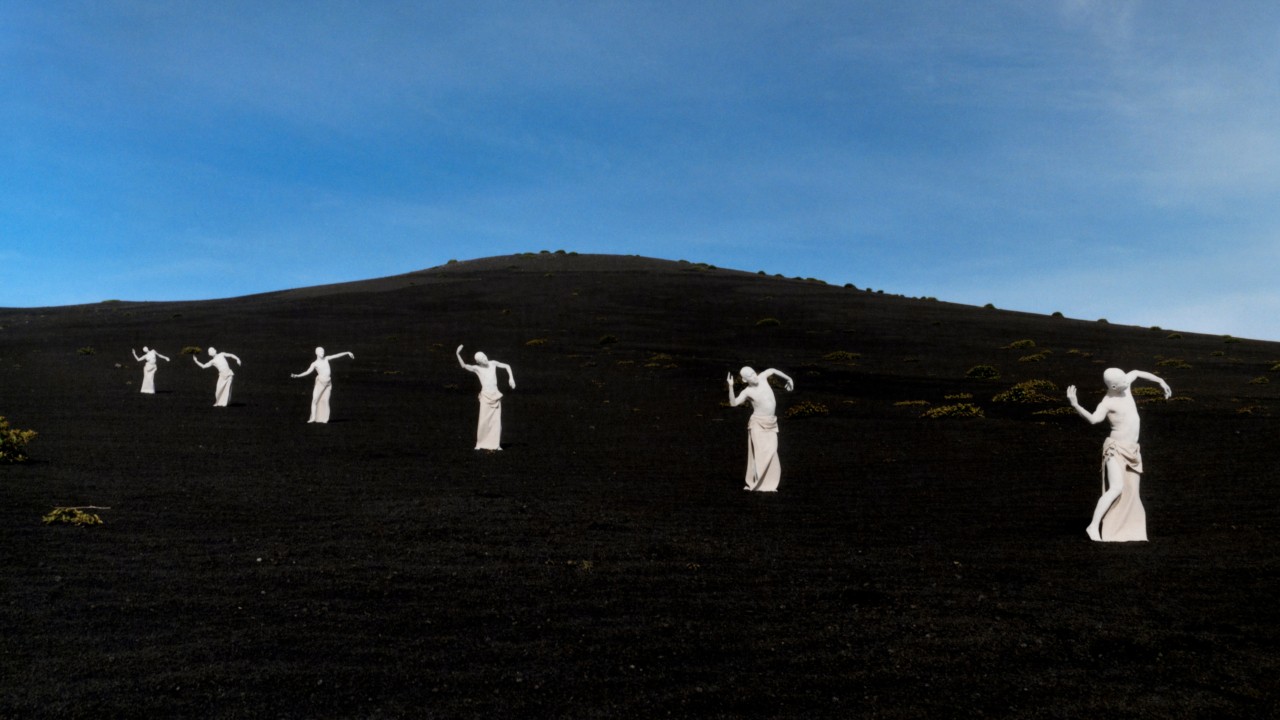
For decades, Butoh remained a largely Japanese phenomenon, its esoteric nature and radical aesthetics making it inaccessible to many. But in the 1980s and 1990s, as global interest in avant-garde performance grew, Butoh began to spread. European and American dancers traveled to Japan to study with Ohno and Hijikata’s disciples. Festivals dedicated to Butoh emerged in cities like Berlin, New York, and Paris. Today, Butoh is practiced worldwide—not as a rigid tradition, but as a living, evolving art form.
This global dissemination has led to fascinating fusions. In some cases, Butoh has merged with contemporary dance, creating hybrid performances that blend Western abstraction with Japanese spirituality. In others, it has been reimagined through the lens of different cultures. For example, some African Butoh practitioners incorporate traditional rituals into their work, using the dance to explore themes of colonialism and identity. Similarly, Latin American Butoh artists have used the form to grapple with political oppression and social justice.
Yet, despite these adaptations, the essence of Butoh remains intact. It is still a dance of darkness, still a confrontation with the unknown, still a ritual of transformation. Whether performed in a Tokyo studio or a Berlin warehouse, Butoh carries with it the same uncompromising honesty—a refusal to look away from the shadows.
Why Butoh Matters Now More Than Ever
In an era dominated by algorithms, curated identities, and the relentless pursuit of perfection, Butoh offers something radical: a space where imperfection is not just accepted, but celebrated. It is a reminder that beauty can be found in decay, that strength can be found in vulnerability, and that truth can be found in the uncomfortable.
Butoh teaches us to slow down. To feel the weight of our bodies. To confront the parts of ourselves we’d rather ignore. In a world that moves at breakneck speed, Butoh is a rebellion—a call to pause, to breathe, to exist in the present moment without distraction.
It is also a call to remember. To remember that we are not just minds, not just consumers, not just performers in the grand theater of life. We are bodies. We are flesh. We are subject to time, to decay, to the relentless march of existence. And in that vulnerability lies a profound power.
So the next time you see a Butoh dancer, don’t just see the white paint and the contorted limbs. See the artist stripping away the layers of the self, revealing the raw, unfiltered truth beneath. See the dance as a ritual of transformation. See it as an invitation—to look deeper, to feel more, to embrace the darkness not as something to fear, but as something to dance with.
Because Butoh isn’t just scary white makeup. It’s a mirror. And what it reflects is up to you.


Leave a Comment