

The Stradivarius violin—its name alone evokes a shiver of reverence, a whisper of centuries-old craftsmanship that seems to hum with the ghosts of master luthiers. For over three hundred years, these instruments have been the gold standard of stringed perfection, their sound described in terms that verge on the mythic: “unearthly resonance,” “liquid gold,” “a voice from another world.” Yet, in a world where innovation races ahead like a thoroughbred, the modern violin—gleaming with precision, engineered for consistency—challenges this supremacy. What happens when the two face off in a blind test? The results might just unravel the very fabric of musical belief.
The blind test is more than a curiosity; it is a crucible where perception and reality collide. Imagine a room bathed in the soft glow of amber light, where seasoned musicians, critics, and even skeptics gather, their identities concealed behind velvet curtains. Before them lie two violins—one cradled in the timeless embrace of Antonio Stradivari’s hands, the other forged in the labs and workshops of today’s artisans. The challenge? To discern which is which, solely by the sound they produce. The stakes? Nothing less than the soul of violin music itself.
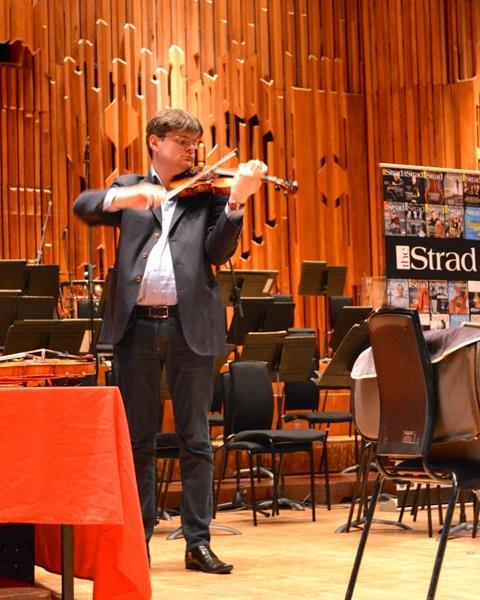
The Allure of the Stradivarius: A Symphony Carved in Time
The Stradivarius violin is not merely an instrument; it is a relic, a testament to the alchemy of 17th- and 18th-century craftsmanship. Antonio Stradivari, working in Cremona, Italy, between 1666 and his death in 1737, created instruments that have defied the erosion of time. Their wood, aged like fine wine, resonates with a depth and complexity that modern violins often strive to emulate. The varnish—its exact recipe lost to history—lends a patina that seems to sing with the echoes of Vivaldi’s concertos and Paganini’s fiery virtuosity.
What makes the Stradivarius so mesmerizing? It is the paradox of its voice: a paradox of warmth and clarity, of power and delicacy. The lower register thrums with a chesty authority, while the upper notes shimmer like sunlight on water. This duality is no accident. Stradivari’s violins were built for the music of his era—Baroque and early Classical—where ornamentation and emotional nuance reigned supreme. The instrument responds with a responsiveness that feels almost sentient, as if it breathes in sync with the player’s soul.
Yet, the Stradivarius is not without its enigmas. Its secrets lie not just in the wood or the varnish, but in the very air trapped within its f-holes. Some theories suggest that the “Little Ice Age” of the 17th century lent the spruce and maple used in these violins an unparalleled density and resonance. Others point to the unique mineral-rich soil of Cremona, which may have imbued the wood with properties unseen elsewhere. Whatever the truth, the result is a sound that transcends the physical, a voice that feels as though it has been distilled from the essence of nature itself.
The Modern Violin: Precision Engineered for the Future
In stark contrast, the modern violin is a marvel of scientific precision. Today’s luthiers wield lasers, computer modeling, and advanced materials to craft instruments that are not just beautiful, but consistently excellent. Gone are the days of relying solely on intuition; now, every curve, every thickness of wood, is calculated to optimize resonance, sustain, and projection. The result? A violin that can hold its own in a 2,000-seat concert hall without amplification, its sound cutting through the din with surgical clarity.
Modern violins are often built with alternative woods—sustainably sourced spruce, carbon fiber, or even composites that mimic the acoustic properties of traditional materials. The varnish, too, has evolved, with synthetic resins and oils designed to enhance durability without sacrificing tonal quality. And let’s not forget the electric violins, which have expanded the instrument’s sonic palette into realms previously unimaginable, from jazz fusion to avant-garde soundscapes.
But does precision equate to soul? Critics argue that modern violins, while technically flawless, often lack the “magic” of their Stradivarian counterparts. The sound can be bright, almost clinical, lacking the organic warmth that makes a Stradivarius feel alive. Yet, for many musicians, the modern violin is a blank canvas, a tool that can be shaped to fit any musical vision. It is the difference between a handwritten letter and a printed masterpiece—both have their place, but they evoke different emotions.
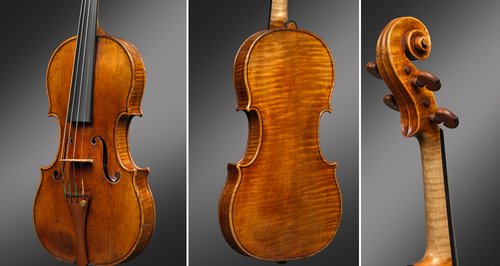
The Blind Test: When Science Meets Art
The blind test is where the rubber meets the road. In 2012, a study conducted by the Royal Academy of Music in London sent shockwaves through the musical world. Six professional violinists were tasked with identifying a Stradivarius among several modern violins in a series of blind trials. The results? The Stradivarius was not always the winner. In fact, the modern violins often fooled the experts, with some players even preferring their sound over the historic instrument.
How is this possible? The answer lies in the subjective nature of sound. The Stradivarius, with its aged wood and varnish, produces a sound that is rich and complex, but it can also be unpredictable. Modern violins, on the other hand, are designed to deliver a consistent, balanced tone. For some players, this consistency is a virtue; for others, it feels sterile. The blind test strips away the mystique of the Stradivarius, forcing listeners to engage with the raw acoustics rather than the legend.
Yet, the blind test is not just about which violin sounds better—it is about what the sound evokes. The Stradivarius carries the weight of history, its voice a bridge to the past. When a musician plays a Stradivarius, they are not just making music; they are channeling centuries of tradition. The modern violin, by contrast, is a blank slate, ready to be filled with the player’s own interpretation. The choice between the two is not just technical; it is philosophical.
The Unseen Factors: The Player and the Room
No discussion of violin sound is complete without acknowledging the role of the player and the environment. A Stradivarius in the hands of a master can sound transcendent, while the same instrument in the grasp of a novice may produce a thin, reedy tone. Similarly, the acoustics of a room can transform a violin’s voice—what sounds glorious in a small, intimate space may feel muddy in a vast cathedral.
Modern violins, with their engineered designs, are often more adaptable to different environments. Their sound is less likely to be overwhelmed by the acoustics of a large hall or dulled by the intimacy of a recording studio. The Stradivarius, with its complex overtones, can be more sensitive to these factors, its voice shifting like the tides with the slightest change in humidity or temperature.
Then there is the matter of the player’s connection to the instrument. A musician who has spent years with a Stradivarius develops an almost symbiotic relationship with it, learning its quirks and idiosyncrasies. The violin becomes an extension of the player’s body, its sound a reflection of their innermost emotions. The modern violin, while no less capable, may lack this deep bond, its voice feeling more like a tool than a companion.
The Verdict: A Matter of Heart Over Head
So, who wins in the blind test? The answer, as with all things musical, is that it depends. For some, the Stradivarius will always hold the crown, its sound a siren call that modern violins cannot replicate. For others, the modern violin’s precision and versatility will be the clear victor. The truth is that the two are not in competition; they are two sides of the same coin, each offering something unique to the world of music.
The Stradivarius is a relic, a whisper from the past that continues to inspire awe. The modern violin is a beacon of progress, a testament to human ingenuity. Together, they represent the duality of art—tradition and innovation, history and future, soul and science. In the end, the winner is not the instrument, but the music it helps create. And that, dear reader, is a victory for us all.
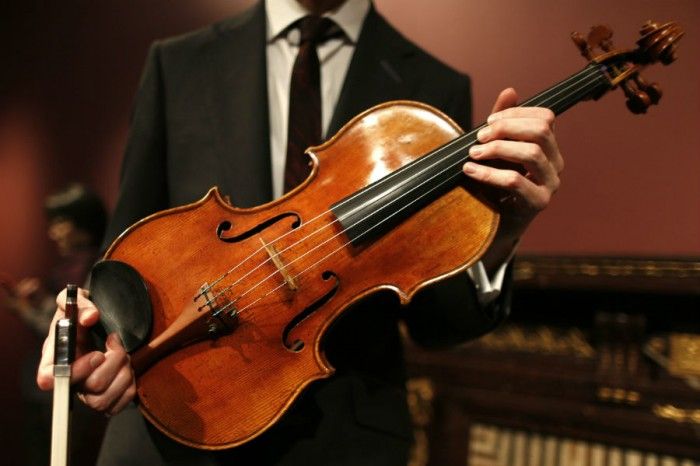
The next time you hear a violin, close your eyes. Listen not just to the notes, but to the story they tell. Is it the voice of a bygone era, rich with the patina of time? Or is it the crisp, clear call of the future, unburdened by the weight of history? The answer may surprise you. But one thing is certain: the magic of the violin lies not in its age or its innovation, but in the way it makes you feel.


Leave a Comment