

In the quiet hum of a ballet studio, where the scent of rosin lingers like a ghost of performances past, I stood barefoot on the sprung floor, my muscles trembling not from exertion alone, but from the sheer weight of expectation. The mirror stretched before me, a merciless judge, reflecting not just my form, but the years of sedentary life that had turned my body into a stranger to grace. For thirty days, I subjected myself to the grueling regimen of a prima ballerina—no, not the glamorous version splashed across Instagram, but the raw, unfiltered reality of discipline that turns flesh into poetry and sweat into sacrifice. What unfolded was not a transformation, but a reckoning. This is the story of how a modern body, accustomed to the languid comfort of chairs and screens, confronted the relentless demands of an art form that has, for centuries, demanded everything.
The Illusion of Effortless Grace
Ballet is the ultimate paradox: it is both the most ethereal of arts and the most physically brutal. To the untrained eye, a pirouette appears as natural as breathing, a leap as effortless as floating. Yet beneath the satin slippers and the meticulously pinned buns lies a foundation of suffering that is as invisible as it is inescapable. The first week shattered my illusions. My calves, once content with a few flights of stairs, screamed in protest as I forced them into the relentless rhythm of tendus and dégagés. The arch of my foot, a structure I had never truly appreciated, became a battleground, each plié a reminder of how little I understood the language of my own body.
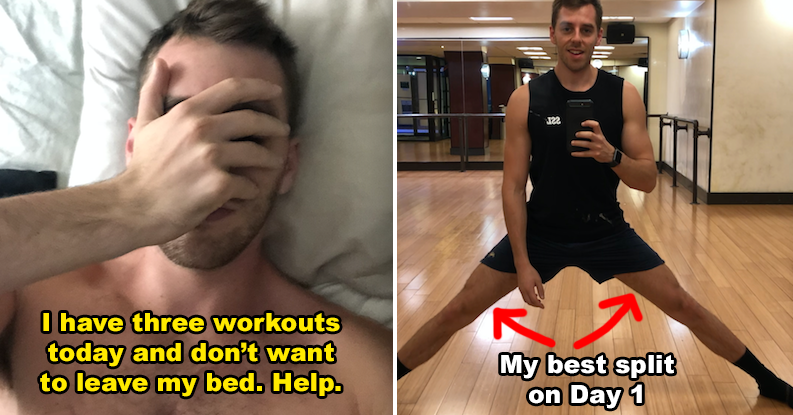
The mirror, that cruel confidant, revealed the truth: my turnout was nonexistent. My hips, locked in the sedentary prison of a desk-bound life, refused to cooperate. The barre became my therapist, my judge, my executioner. Each day, I inched closer to the ideal, but the gap between my body and the prima ballerina’s was not just physical—it was existential. Grace, I learned, is not a gift. It is a currency earned through daily devaluation of comfort, a relentless negotiation with pain.
The Tyranny of the Turnout
Turnout is the silent dictator of ballet, a 180-degree decree that governs every movement, every position, every breath. For those not born to it, it is a sentence of perpetual struggle. My attempts to force my feet into the required alignment felt like trying to bend a steel rod with my bare hands. The muscles in my inner thighs, dormant for years, awoke with a vengeance, their protests echoing through my legs with each forced rotation. I could feel the tendons in my ankles tightening, as if my body were rebelling against the unnatural demand.
Yet, the true cruelty of turnout is not the physical pain—it is the psychological erosion. Every time I failed to achieve the perfect 180 degrees, I was reminded of how far I was from the ideal. The prima ballerina’s body is not just trained; it is sculpted, whittled down to a precision that borders on the inhuman. My body, soft and yielding, resisted the transformation with every fiber. I began to understand why so many dancers develop stress fractures, why so many quit before they ever reach the stage. The body can only endure so much before it begins to break.
By the end of the second week, my hips ached with a dull, persistent throb. I could no longer sit cross-legged without wincing. The irony was not lost on me: the pursuit of beauty had become a form of self-inflicted torture. But ballet does not care for irony. It only cares for perfection.
The Ritual of Repetition
Ballet is not a sport of spontaneity. It is a religion of repetition, where the same movements are drilled until they become muscle memory, until they are no longer choices but compulsions. Each day in the studio was a marathon of déjà vu, the same combinations repeated until my body moved on autopilot, my mind free to wander into the abyss of exhaustion. The first few repetitions were always the hardest, my muscles stiff and uncooperative. But by the tenth, I could feel the neural pathways firing with a precision that bordered on the mechanical.

Yet repetition is a double-edged sword. On one hand, it forges discipline, turning chaos into order. On the other, it grinds away at the soul. There were days when I moved through the motions like a marionette, my spirit dulled by the monotony. The thrill of improvement was fleeting, replaced by the crushing weight of the grind. I began to understand why so many dancers speak of burnout before they even reach their prime. The pursuit of excellence is not a sprint; it is a life sentence.
The ritual extended beyond the studio. My diet became a study in deprivation—protein shakes, endless salads, the occasional piece of grilled chicken that felt like a reward for good behavior. I avoided sugar, avoided processed foods, avoided anything that might betray my body into softness. Yet even in my strict adherence, I felt the gnawing hunger of a body that was not designed for such austerity. The prima ballerina’s diet is not just about nutrition; it is about control, about bending the body to the will of the art.
The Breaking Point
By the third week, my body began to rebel in earnest. My shins, once unremarkable, now bore the marks of a thousand tiny fractures—shin splints that flared with every step. My arches, once flexible, had stiffened into a rigid arch that made even walking a chore. The pain was not localized; it radiated through my legs, my back, my shoulders, as if my entire body had conspired to remind me of my inadequacy. I could no longer ignore the fact that I was, at best, a dilettante playing at a profession that demanded the devotion of a monk.
The breaking point came during a particularly grueling combination of grand battements and pirouettes. My left foot, already weakened by the relentless turnout, gave way mid-air. I crashed to the floor with a violence that left me breathless, my ankle screaming in protest. For a moment, I lay there, stunned, the mirror reflecting my crumpled form back at me. It was not just my body that had failed; it was the illusion of transformation. I had entered the studio believing that discipline could bridge the gap between amateur and artist. Instead, I had discovered the chasm was far wider than I had imagined.
That night, as I iced my ankle and stared at the ceiling, I wondered if I had ever truly wanted to be a ballerina, or if I had merely been seduced by the romance of the idea. Ballet is not just a dance; it is a crucible. And I had entered it unprepared.
The Aftermath: What Remains
When the thirty days were over, I did not emerge as a prima ballerina. I emerged as something far more valuable: a humbled observer. My body was stronger in some ways, weaker in others. My turnout had improved, but not enough to fool a professional. My arches were more flexible, but my shins still ached at the memory of the grind. Most importantly, I had gained an appreciation for the art that I had previously taken for granted. Ballet is not just about the dancers on stage; it is about the bodies that have been sculpted, broken, and rebuilt in the pursuit of an impossible ideal.
Yet the fascination remains. There is something intoxicating about the idea of a body that moves with such precision, such control, such otherworldly grace. It is the same fascination that draws people to watch a trapeze artist or a free climber—an awe at the limits of human potential. But ballet is different. It is not just about pushing the body to its limits; it is about transcending them. The prima ballerina does not just dance; she becomes an extension of the music, a living sculpture of discipline and artistry.
I will never be that ballerina. But in those thirty days, I glimpsed the price of such perfection. And for that, I am grateful.
The next time you watch a ballerina leap across the stage, spare a thought for the body beneath the costume—the years of sacrifice, the relentless discipline, the quiet breaking and rebuilding that makes grace possible. It is not magic. It is not luck. It is the result of a thousand small deaths, each one a surrender to the demands of an art that does not forgive weakness. And perhaps, in that understanding, we find a different kind of beauty—not the flawless perfection of the prima ballerina, but the raw, unvarnished truth of what it takes to chase an impossible dream.


Leave a Comment