

The haka is not merely a pre-match ritual—it is a thunderclap of culture, a defiant roar that echoes through time. What began as a Māori war dance has transcended its origins to become a global phenomenon, a symbol of pride, intimidation, and unity. Once confined to the rugby pitch, the haka has evolved into something far greater: a living testament to the power of tradition in a modern world. Its rhythm pulses through stadiums, screens, and even the hearts of those who have never set foot on a field. But how did this ancient practice become more than just a warm-up? How did it transform into a cultural force that commands attention, sparks debate, and stirs emotions across continents?
The Haka’s Roots: A Dance Born of Fire and Fury
To understand the haka’s metamorphosis, we must first step into the mist-laden valleys of Aotearoa, where the Māori people first raised their voices in defiance and celebration. The haka was not merely a performance—it was a weapon, a declaration, a way to channel the very essence of life into a primal scream. Each stomp, each chant, each fierce expression was a story etched in motion, a narrative of ancestry and resilience. The haka pūkana, with its bulging eyes and outstretched tongue, was not for the faint-hearted; it was a challenge, a warning, a proclamation of strength.
The Māori warriors who performed the haka before battle were not just warming up—they were forging an unbreakable bond with their comrades and their gods. The dance was a bridge between the earthly and the divine, a way to invoke the spirits of their ancestors to stand beside them. When Captain James Cook first encountered the haka in the late 18th century, he witnessed something far more profound than a spectacle—he saw a people who refused to be silenced, even in the face of colonial encroachment.
From War Cry to Rugby Anthem: The Unexpected Migration
The haka’s journey from the battlefield to the rugby field is a tale of adaptation, serendipity, and sheer audacity. In 1888, a Māori rugby team known as the Natives embarked on a tour of Britain, bringing the haka to European audiences for the first time. The sight of these players performing the Ka Mate before a match left spectators awestruck. It was not just a dance—it was a declaration of identity in a land that sought to erase it.
By the 20th century, the haka had become synonymous with New Zealand rugby. The All Blacks, the national team, adopted Ka Mate as their pre-match ritual, turning it into a global symbol of their dominance. But this was no mere tradition—it was a statement. Every time the All Blacks performed the haka, they were not just warming up; they were asserting their Māori heritage on the world stage. The haka became a defiant counterpoint to the colonial narratives that had long marginalized Indigenous voices.
Yet, this migration was not without controversy. Some saw the haka as a mere spectacle, a tourist attraction divorced from its sacred roots. Others argued that its commercialization diluted its meaning. But the haka endured, proving that its power lay not in its performance alone, but in the emotions it evoked—awe, fear, respect, and pride.
The Haka’s Global Resonance: Why the World Stopped to Listen
The haka’s reach extends far beyond the rugby pitch. In 2011, the New Zealand women’s rugby team performed the haka before a match against England, sending shivers down the spines of millions. In 2019, the All Blacks faced France in a high-stakes World Cup match, and as the haka echoed through the stadium, the French players stood in silent reverence—a moment of mutual respect that transcended language and culture.
But the haka’s influence is not limited to sports. It has seeped into popular culture, appearing in films, music videos, and even protests. In 2020, during the Black Lives Matter movement, Māori activists performed the haka outside New Zealand’s parliament, reclaiming it as a tool of resistance against systemic injustice. The haka, once a warrior’s cry, had become a rallying cry for the oppressed.
Why does the world stop to listen? Because the haka is not just a dance—it is a language of the soul. It speaks of struggle, of triumph, of unyielding spirit. When the All Blacks perform the haka, they are not just preparing for a game; they are invoking the ghosts of their ancestors, channeling the fire that has burned through centuries of adversity. And when the crowd responds with a hush, with goosebumps, with tears, they are acknowledging something universal—the power of tradition to unite, to inspire, to transcend.
The Haka’s Modern Evolution: A Living Tradition in a Changing World
Today, the haka is more than a pre-match ritual—it is a living, breathing entity, constantly evolving to meet the demands of a new era. The All Blacks have introduced new hakas, such as Kapa o Pango, a modern composition that honors the team’s Māori and Pasifika heritage while incorporating contemporary elements. This is not a betrayal of tradition, but an expansion of it—a way to ensure that the haka remains relevant to future generations.
Yet, with this evolution comes responsibility. The haka is sacred to the Māori people, and its performance must be approached with respect. In 2021, when a French rugby team attempted to mimic the haka before a match, they were met with backlash—not because they dared to perform it, but because they did so without understanding its significance. The haka is not a costume to be worn; it is a heritage to be honored.
This is the paradox of the haka: it is both timeless and ever-changing. It is a warrior’s cry and a lullaby, a battle hymn and a love song. It is a reminder that tradition is not a relic to be preserved in amber, but a flame to be passed forward.
The Future of the Haka: A Legacy That Will Not Fade
The haka’s journey is far from over. As rugby continues to globalize, the haka will undoubtedly find new audiences, new contexts, and new meanings. But its core will remain unchanged—a testament to the power of culture, the resilience of identity, and the unbreakable bond between past and present.
Perhaps one day, the haka will be performed not just before a rugby match, but before a concert, a political rally, or a moment of collective reflection. Perhaps it will become a universal language of defiance, a way for people everywhere to stand tall and declare, “We are here. We are strong. We will not be silenced.”
The haka is more than a dance. It is a promise—a promise that tradition will endure, that spirit will prevail, and that the echoes of the past will always find their way into the present. And as long as there are voices to raise, stomps to make, and chants to sing, the haka will roar on.
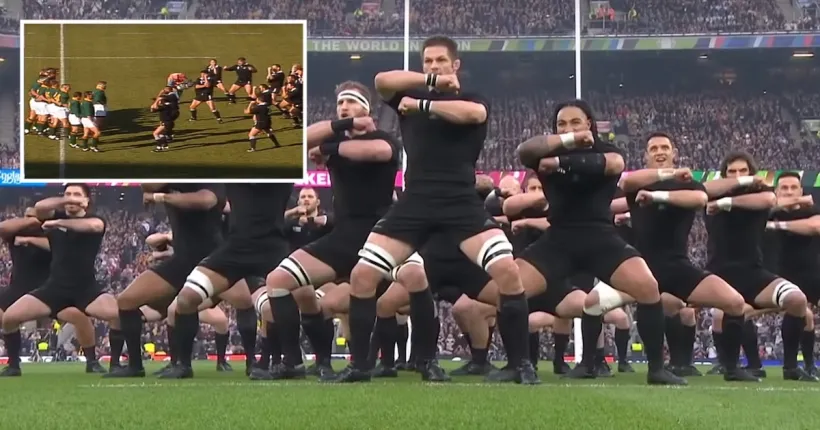
The next time you see the haka, don’t just watch—listen. Feel the ground tremble beneath your feet. See the ancestors in the eyes of the performers. And remember: this is not just a warm-up. This is a revolution in motion.


Leave a Comment