

In the heart of Istanbul’s historic Sultanahmet district, where the minarets of the Blue Mosque pierce the skyline like celestial compass needles, a silent revolution unfolds each evening. The Whirling Dervishes’ Sema, a ritual of hypnotic grace, is not merely a performance—it is a living equation, a choreography of physics disguised as devotion. Watching the dervishes spin, their long skirts flaring into perfect parabolas, one cannot help but marvel at the apparent defiance of gravity. How does a human body, suspended in mid-air, remain so eerily balanced? The answer lies not in supernatural forces, but in the elegant mechanics of rotational motion, angular momentum, and the unseen architecture of the universe itself.
This fascination is universal. From the cave temples of Cappadocia to the grand halls of Konya, where the Mevlevi Order was founded, audiences are drawn to the Sema not just for its cultural significance, but for the visceral thrill of witnessing physics made poetic. The spinning dervish becomes a metaphor for the cosmos—a tiny dancer mirroring the rotation of galaxies, the precession of planets, the very fabric of spacetime bending under the weight of eternity. It is this convergence of the spiritual and the scientific that makes the Sema more than a ceremony; it is a revelation.
The Choreography of the Cosmos: Understanding Rotational Motion
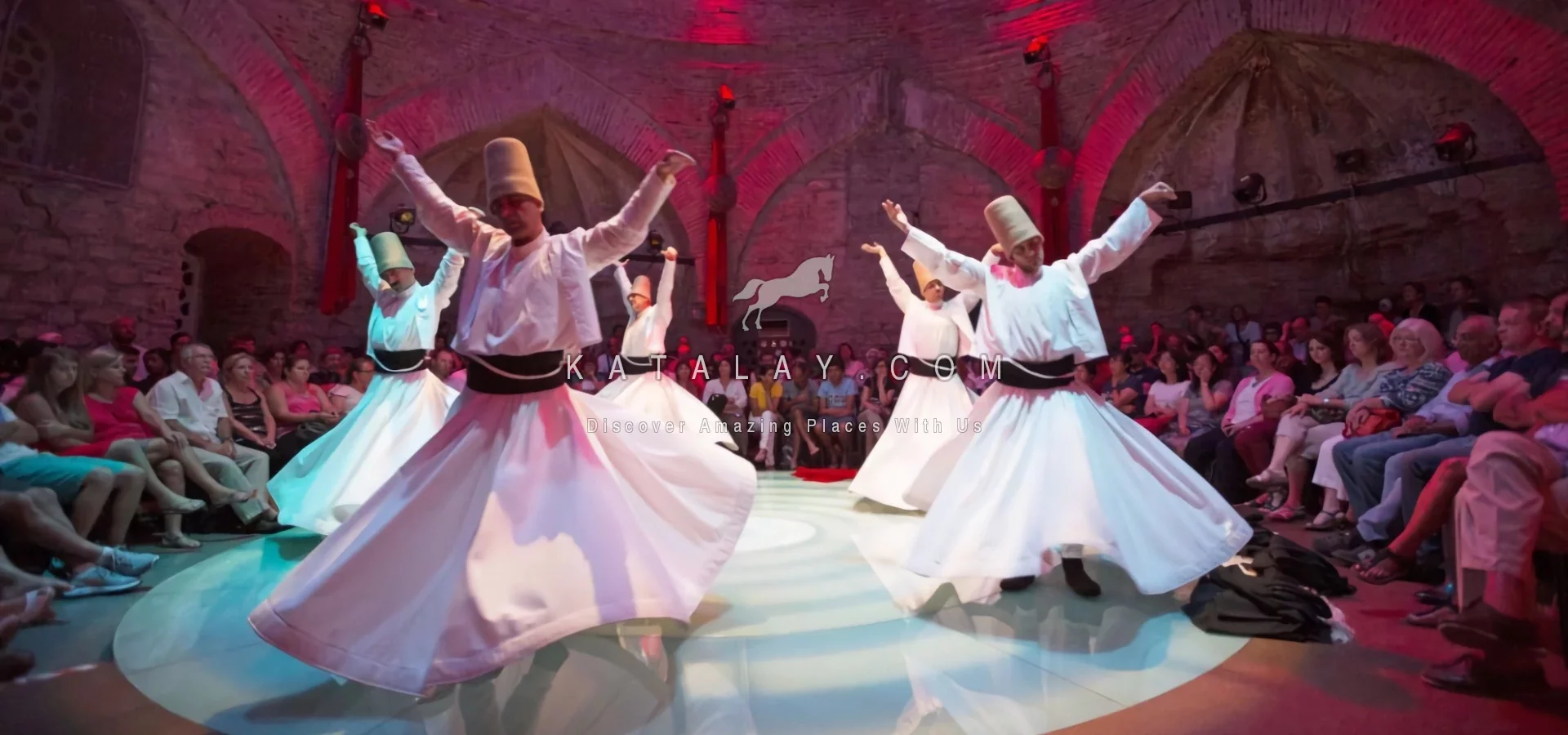
The dervish’s dance begins with a slow, deliberate pivot on the left foot. Arms outstretched, palms upturned—one toward heaven, one toward earth—the dancer embodies the axis of the universe. As the music swells, the body accelerates, the skirt transforming into a blur of motion. This is not random spinning; it is a controlled demonstration of rotational inertia, a principle where an object’s resistance to change in its rotation depends on its mass distribution. The dervish’s long, flowing robe increases the moment of inertia, allowing for slower, more sustained spins. The tighter the arms fold across the chest, the faster the rotation—an elegant application of the conservation of angular momentum.
Here lies the first layer of fascination. In a world where we are taught that speed demands energy, the dervish achieves ever-increasing velocity without external force. It is a living paradox: the more compact the form, the more rapid the spin. This mirrors the behavior of neutron stars, which rotate hundreds of times per second due to their collapsed mass. The dervish, in microcosm, enacts the same cosmic dance—a reminder that the laws governing the heavens are not distant abstractions, but intimate truths written into our very bones.
The Physics of Tranquility: Centripetal Force and Inner Stillness
Opposing the centrifugal force that threatens to hurl the dervish outward is the invisible hand of centripetal force, the inward pull that keeps the dancer rooted to the spot. This force is not a mystical tether, but the result of friction between the foot and the floor, the tension in the muscles, the alignment of the spine. The dervish does not resist the outward pull—he surrenders to it, allowing the force to become a cradle rather than a threat. This is the essence of the Sema: not a battle against nature, but a harmonious dialogue with it.
What makes this spectacle so mesmerizing is the stillness at its core. Despite the whirlwind of motion, the dervish’s gaze remains fixed, unblinking, on a single point. This is not mere concentration—it is a demonstration of dynamic equilibrium. The eyes act as a gyroscopic stabilizer, anchoring the dancer’s orientation in space. Studies in neuroscience suggest that such focused gaze can induce a meditative state, slowing the perception of time and enhancing spatial awareness. The dervish, in this moment, becomes a living compass, aligning not just with the Earth’s rotation, but with the deeper rhythms of existence.
The Geometry of Ecstasy: Spirals, Fractals, and Sacred Proportions
The path traced by the dervish’s feet is not a circle, but a spiral—a geometric shape that has fascinated mathematicians and mystics alike for millennia. Each revolution brings the dancer closer to the center, a visual metaphor for spiritual ascent. This spiral is not arbitrary; it echoes the golden ratio, the Fibonacci sequence, and the logarithmic spirals found in galaxies, hurricanes, and even the unfurling of ferns. The Sema is, in essence, a physical manifestation of the universe’s inherent order.
Consider the dervish’s headgear, the sikke, a tall, conical hat symbolizing the tombstone of the ego. Its shape is not merely symbolic—it is aerodynamic. The pointed top reduces air resistance, allowing the dancer to spin with minimal drag. Meanwhile, the long, flowing skirt acts as a natural gyroscope, stabilizing the body’s orientation. This interplay of form and function is no accident; it is the result of centuries of refinement, where artistry and physics converged into a single, transcendent act.
The spiral is also a fractal—a shape that repeats itself at different scales. From the molecular structure of DNA to the vast arms of the Milky Way, the universe is built on recursive patterns. The dervish’s dance, in its cyclical repetition, mirrors this fractal nature. Each spin is a microcosm of the eternal return, a reminder that all motion, no matter how fleeting, is part of a grander design.
The Silence Between Notes: The Role of Resonance and Rhythm
The music of the Sema is not background noise—it is the heartbeat of the ritual. The ney, a reed flute with a haunting, nasal tone, produces frequencies that resonate with the dervish’s movements. The rhythm, a slow 10/8 time signature known as aksak, is irregular in a way that mimics the natural cadence of the human gait. This irregularity is not a flaw, but a feature—it prevents the brain from predicting the next beat, inducing a state of heightened awareness.
Research into entrainment—the synchronization of biological rhythms with external stimuli—suggests that the Sema’s music can alter brainwave patterns, shifting the listener from beta (awake and alert) to theta (meditative and dreamlike) states. The dervish, attuned to these frequencies, enters a zone where time dissolves, and the boundaries between self and universe blur. This is not mere performance; it is a biofeedback loop, where sound, motion, and consciousness merge into a single, seamless experience.
The Paradox of Effort and Surrender: The Neuroscience of Whirling
At first glance, the Sema appears to demand immense physical control. Yet, paradoxically, the most skilled dervishes describe it as a state of effortless surrender. This is not a contradiction—it is a neurological phenomenon. When the brain enters a flow state, the prefrontal cortex (responsible for self-awareness) quiets, while the motor cortex and basal ganglia (responsible for automatic movement) take over. The dervish’s body moves not through conscious effort, but through muscle memory and instinct.
This state is akin to the default mode network in the brain, the neural network active during daydreaming and introspection. The Sema, in this light, is a form of moving meditation—a way to access the subconscious while remaining fully present. The spinning does not distract from thought; it dissolves the thinker entirely, leaving only the dance.
The Afterimage: Why the Sema Lingers in the Mind
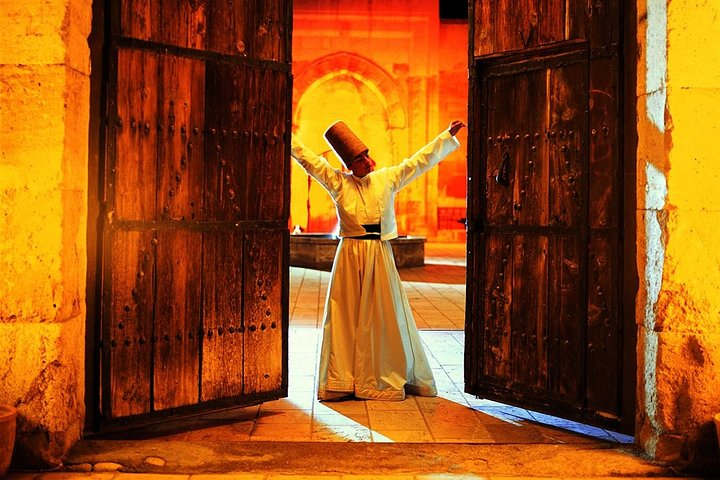
Long after the music fades and the dervishes come to rest, the image of their dance lingers—a ghostly spiral imprinted on the retina, a rhythm echoing in the mind. This persistence is not merely psychological; it is a testament to the power of the ritual. The Sema does not just entertain—it rewires perception. Studies on aftereffects in visual and auditory processing show that prolonged exposure to certain patterns can alter how we perceive subsequent stimuli. The dervish’s spin, with its hypnotic repetition, leaves a residue of motion in the mind’s eye.
This lingering effect is why the Sema has endured for centuries. It is not just a cultural artifact—it is a mnemonic device, a way to encode the mysteries of existence into the body’s memory. The dancer does not just perform; he becomes a living archive of cosmic laws, a human hard drive storing the algorithms of the universe.
The Universal Dance: Connecting the Microcosm to the Macrocosm
To witness the Whirling Dervishes is to stand at the intersection of the personal and the cosmic. The dancer’s spin is a microcosm of planetary rotation, a single note in the symphony of the spheres. The spiral of the skirt mirrors the path of electrons around a nucleus, the unfurling of a galaxy, the expansion of the universe itself. In this light, the Sema is not just a ritual—it is a cosmology in motion.
The fascination with the Whirling Dervishes is not merely aesthetic or cultural; it is a recognition of something deeper—a sense that the universe is not a cold, mechanical void, but a living, breathing entity, and we are all, in some way, part of its dance. The dervish does not spin to defy gravity; he spins to remember it. He does not move to escape the Earth; he moves to feel its rotation beneath his feet. In the end, the Sema is a reminder that we are not separate from the cosmos—we are its most intricate expression, spinning in silent harmony with the stars.
The next time you see a dervish whirl, do not just watch the motion. Listen to the music. Feel the rhythm. Notice the stillness at the center. And remember—you are not just an observer. You are part of the dance.


Leave a Comment