

The spell of a great stage performance lingers long after the final bow. It’s not just the words spoken or the movements executed—it’s the uncanny sense that what you’re witnessing is not an act, but life itself unfolding in real time. Yet, how can a stage, bathed in artificial light and surrounded by an audience of strangers, ever feel like the unfiltered truth? The answer lies not in the grandeur of the setting, but in the subtle mastery of an actor’s solitude—what some call “Public Solitude.” This paradoxical state is where the most compelling stage acting is born: a performer who appears utterly alone, even in the presence of hundreds, and in that aloneness, reveals the raw, unvarnished soul of a character.
Imagine standing center stage, bathed in a single pool of light, while the rest of the theater dissolves into darkness. The audience is there, yes—but for the actor, it’s as if they don’t exist. This is the essence of Public Solitude. It’s not about ignoring the crowd; it’s about transcending it. The actor doesn’t perform *for* the audience. They exist *within* the world of the play, and the audience is merely a silent witness to a private revelation. This is where the magic happens: when the fourth wall isn’t just broken, but dissolved entirely, and the actor’s inner life becomes visible, unfiltered, and achingly real.

Why does this trick work? Because it mirrors the way we experience life. In our most intimate moments—when we’re lost in thought, grieving, or consumed by joy—we forget we’re being watched. We don’t perform. We simply *are*. The greatest stage actors replicate this psychological invisibility. They don’t act *as if* no one is watching; they act *as if* the audience isn’t there at all. This isn’t detachment—it’s immersion. The actor becomes a conduit for truth, and the stage becomes a mirror reflecting the unguarded human experience.
But Public Solitude isn’t just about emotional exposure. It’s also about precision. When an actor is truly alone on stage—even if surrounded by others—their focus narrows. Every gesture, every breath, every flicker of expression carries weight. There’s no room for exaggeration, no safety net of audience reaction to prop up weak choices. The actor must trust their instincts, their preparation, and their connection to the character. This is where subtlety becomes power. A trembling hand, a hesitant pause, a glance that lingers just a second too long—these are the details that make a performance feel alive. They’re not performed for effect; they’re lived.
Consider the difference between a monologue delivered with broad, theatrical gestures and one spoken with quiet intensity. The latter pulls the audience into the actor’s world. They don’t just *see* the character’s pain—they *feel* it. This is the alchemy of Public Solitude. It transforms the stage from a platform for performance into a sacred space for revelation. The actor doesn’t need to shout to be heard; they need only to exist, fully and unapologetically, in the moment.
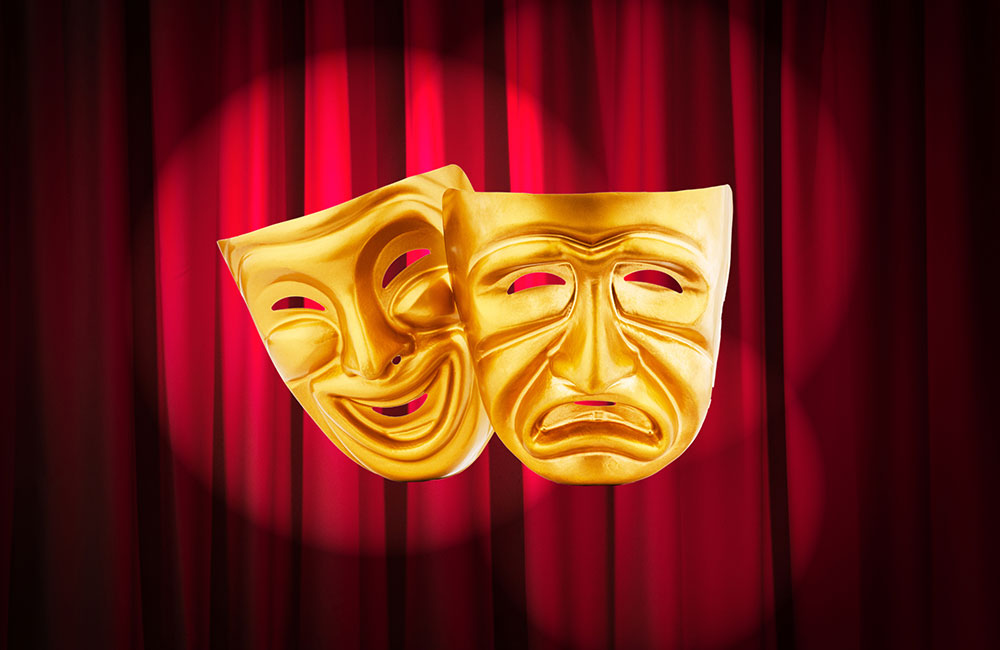
Yet, achieving this state is no small feat. It demands rigorous discipline. Actors must train not just their bodies and voices, but their minds—to let go of the need for approval, to embrace vulnerability, and to find stillness in the chaos of performance. It’s a paradox: the more an actor disappears into solitude, the more the audience feels seen. Their isolation becomes a bridge, connecting the performer and the spectator in a shared moment of humanity.
This is why Public Solitude is more than a technique; it’s a philosophy. It challenges the notion that acting is about spectacle or entertainment. Instead, it positions the stage as a place of truth, where the actor’s solitude becomes a gift to the audience—a chance to witness life, raw and unfiltered, in all its messy glory. When done right, the audience doesn’t just watch a play; they eavesdrop on a soul.
But Public Solitude isn’t just for solo performances. Even in crowded scenes, the most compelling actors carve out pockets of solitude. They might share the stage with others, but their focus remains inward, as if the other characters are merely echoes in their own inner world. This is the secret to ensemble work that feels authentic. Each actor is fully present in their own reality, and the chemistry between them emerges organically, like life itself.
There’s a deeper fascination here, too. In an age where everything is documented, curated, and performed for the public eye, the idea of true solitude feels almost radical. We’re bombarded with curated versions of ourselves—on social media, in advertisements, even in casual conversation. But on stage, when an actor embodies Public Solitude, they offer something rare: a glimpse of a self unburdened by performance, unfiltered by expectation. It’s a rebellion against the performative nature of modern life, a reminder that authenticity still exists, even if only for a fleeting moment.
This is why audiences are drawn to it. It’s not just about being entertained; it’s about being moved. There’s a catharsis in witnessing someone exist so fully in their own truth that the boundary between actor and character dissolves. We leave the theater not just with a story in mind, but with a feeling—one that lingers because it felt real. And in that reality, we recognize something of ourselves.
So the next time you find yourself captivated by a stage performance, look beyond the costumes and the set. Watch how the actor moves when they think no one is looking. Notice the moments of stillness, the unguarded expressions, the way their solitude becomes a conversation with the audience without a single word being spoken. That’s Public Solitude at work—a trick, yes, but one that reveals the deepest truths about what it means to be human.


Leave a Comment