

Have you ever stared at a blank page, your protagonist’s journey as murky as a fog-laden moor, and wondered: Is there a map for this madness? Literary fiction, with its labyrinthine depths and penchant for ambiguity, often feels like the rebellious cousin of genre fiction—daring, unpredictable, and allergic to rigid formulas. Yet, what if I told you that a trick born from Hollywood’s blockbuster playbook could be the secret sauce to elevating your literary masterpiece? Enter the “Save the Cat” beat sheet, a structure so deceptively simple it’s practically a heist against creative chaos. But does it work for the introspective, the lyrical, the unapologetically cerebral? Buckle up. We’re about to crack open the vault.
Imagine, for a moment, that your novel is a grand ballroom. Guests—characters, themes, subplots—mingle in the flickering candlelight, their conversations a symphony of nuance. Now, picture a sudden power outage. The room plunges into darkness. Panic ensues. This is the moment every writer dreads: the narrative’s blackout. The “Save the Cat” structure? It’s the emergency generator. It doesn’t dictate the party’s vibe, but it ensures the lights stay on long enough for the magic to happen.
The Myth of the “Literary” Loophole
Let’s dispel a fiction faster than a plot twist in a noir detective story: the idea that literary fiction exists in a vacuum, untouched by structure. This is the same fallacy that claims poetry can’t follow meter or that jazz can’t have a chord progression. Literary fiction thrives on intentionality, not chaos. The “Save the Cat” beat sheet isn’t a cage; it’s a scaffold. It doesn’t demand you sacrifice your protagonist’s existential crisis on the altar of three-act conformity. Instead, it offers a skeleton on which to drape the velvet of your prose.
Consider the works of Zadie Smith or Jonathan Franzen. Their novels are sprawling, introspective, and unapologetically complex. Yet, beneath the surface, they adhere to a rhythm—a pulse that keeps readers anchored even as the narrative meanders through the back alleys of human consciousness. The “Save the Cat” beats are the metronome marking that pulse. They’re the quiet promise to the reader that, no matter how far the story strays, it will eventually circle back to a moment of catharsis or revelation.
The Beats That Haunt (In a Good Way)
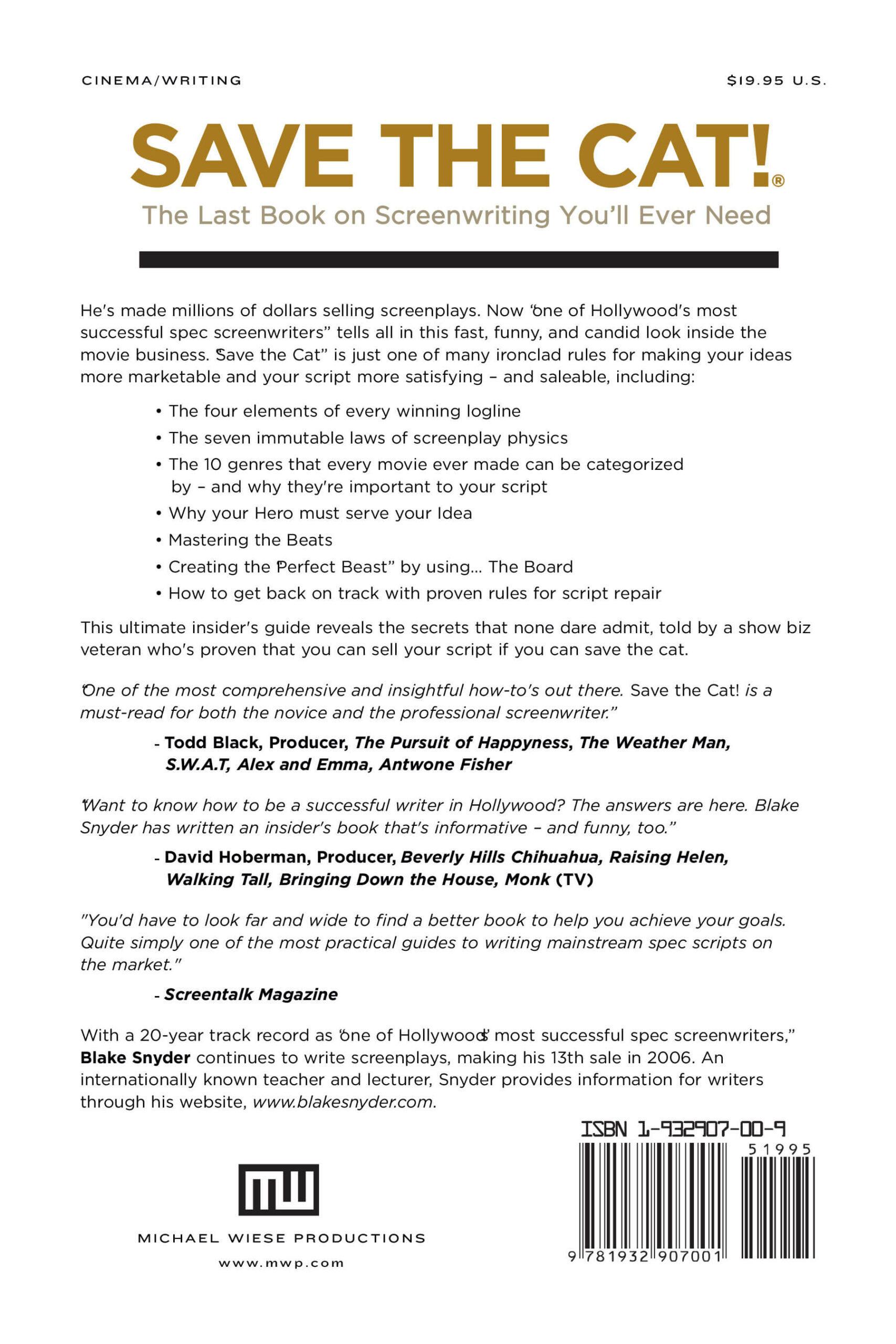
So, what are these beats, and why should a literary purist care? The “Save the Cat” method, coined by screenwriter Blake Snyder, outlines 15 key story beats that act as waypoints in a narrative’s journey. For literary fiction, the magic lies in subverting these beats—not ignoring them. Let’s dissect the most pivotal ones and explore how they can be bent to your will.
Opening Image: This isn’t just a pretty postcard to introduce your setting. In literary fiction, the opening image is your thesis statement. It’s the first brushstroke on the canvas, hinting at the novel’s central conflict. Think of Margaret Atwood’s The Handmaid’s Tale. The opening image—a red cloak on a white snowbank—isn’t just a visual; it’s a prophecy. The “Save the Cat” beat here isn’t about hooking the reader with a car chase. It’s about planting a seed that will haunt them by the final page.
Theme Stated: This beat is where you whisper the novel’s core question to the reader. In literary fiction, this isn’t a didactic lecture. It’s a murmur in a crowded room. For example, in Toni Morrison’s Beloved, the theme of memory and its inescapable grip is stated not through dialogue, but through the ghostly presence of a murdered child. The “Save the Cat” beat here is a ghost story—literally and thematically.
Break into Two: This is where the protagonist’s world tilts, and they’re forced into the unknown. In literary fiction, this tilt isn’t always a physical journey. It’s often an emotional or psychological unraveling. Take Kazuo Ishiguro’s The Remains of the Day. Stevens’ decision to embark on a road trip isn’t just a plot device; it’s the moment his carefully constructed facade of duty begins to crack. The “Save the Cat” beat here is a slow-motion car crash—one that reveals the protagonist’s true self.

The Art of the Literary Heist
Here’s where things get deliciously subversive. The “Save the Cat” beats aren’t a checklist; they’re a palette. You can rearrange them, stretch them, or even bury them beneath layers of prose. The key is to use them as emotional landmarks rather than rigid milestones. Let’s explore how to pull off this literary sleight of hand.
Subverting the Midpoint: In genre fiction, the midpoint is often a high-stakes confrontation or a revelation that propels the protagonist into the final act. In literary fiction, the midpoint can be a silent epiphany. Consider Sally Rooney’s Normal People. The midpoint isn’t a dramatic breakup or a grand gesture. It’s a quiet realization that changes everything—and yet, nothing changes at all. The “Save the Cat” beat here is a whisper, not a shout.
All Is Lost: This beat is where your protagonist hits rock bottom. In literary fiction, rock bottom isn’t always a dramatic fall from grace. It’s often a slow, creeping despair. Think of Haruki Murakami’s Kafka on the Shore. The protagonist’s descent into madness isn’t a single event; it’s a series of surreal, disjointed moments that culminate in a crisis of identity. The “Save the Cat” beat here is a labyrinth with no exit—until the protagonist finds one, not through action, but through acceptance.
Final Image: The closing image should mirror the opening, but with a twist. In literary fiction, this mirroring isn’t about symmetry; it’s about evolution. The final image should feel like a sigh of relief, a nod to the journey, and a hint that the story’s themes are still echoing in the reader’s mind. Take Cormac McCarthy’s The Road. The final image—a father and son walking toward an uncertain future—isn’t a resolution. It’s a beginning. The “Save the Cat” beat here is a door left ajar, inviting the reader to step through.
The Delicate Balance: Structure vs. Serendipity
Of course, no discussion of literary fiction would be complete without acknowledging the elephant in the room: What if the structure stifles the magic? The answer lies in the tension between control and spontaneity. The “Save the Cat” beats are not a straitjacket; they’re a safety net. They allow you to take risks—linguistic acrobatics, nonlinear timelines, unreliable narrators—without losing the reader in the process.
Consider David Foster Wallace’s Infinite Jest. The novel’s structure is a Rube Goldberg machine of footnotes, digressions, and nested narratives. Yet, beneath the chaos, the “Save the Cat” beats are there, guiding the reader through the madness. The opening image is a tennis match that foreshadows the novel’s themes of addiction and competition. The midpoint is a revelation that reframes the entire narrative. The final image is a funeral that feels like a beginning. The beats don’t constrain Wallace’s genius; they amplify it.
Your Turn: The Literary Heist Blueprint
Ready to put this into practice? Here’s your step-by-step guide to using the “Save the Cat” beats in your literary fiction without sacrificing your voice.
Step 1: Map the Beats (Then Burn the Map)
Start by plotting your novel’s key beats on a timeline. Don’t worry about perfection—this is a draft, not a blueprint. Once you have the skeleton, ask yourself: Where can I subvert this? Can the “All Is Lost” moment be a slow unraveling rather than a crash? Can the “Final Image” be ambiguous rather than conclusive?
Step 2: Weave the Beats into Your Prose
The beats shouldn’t feel like checkpoints. They should feel like echoes. For example, if your “Theme Stated” beat is a conversation between two characters, let that conversation reverberate through the novel. Have a character reference it later, or have it haunt the protagonist in a dream. The beats are threads—pull one, and the entire tapestry should shimmer.
Step 3: Trust the Reader
Literary fiction readers are not passive consumers. They’re detectives, linguists, and philosophers. They’ll notice the beats even if you don’t spell them out. Trust them to connect the dots. Your job isn’t to hold their hand; it’s to give them a lantern and let them explore the cave.
Step 4: Embrace the Mess
The beauty of literary fiction is that it doesn’t have to be tidy. If a beat feels forced, cut it. If a subplot derails the structure, let it. The “Save the Cat” beats are a suggestion, not a commandment. The goal isn’t to follow the map; it’s to find your way home.
The Grand Finale: Why This Works
So, does the “Save the Cat” trick work for literary fiction? Absolutely—but not in the way you might expect. It doesn’t turn your novel into a Hollywood script. It turns it into a masterclass in tension and release. It gives your readers the emotional scaffolding they need to dive into the abyss of your prose and emerge, breathless and changed.
Literary fiction isn’t about formulas. It’s about feeling. And feelings, like all great stories, need a rhythm. The “Save the Cat” beats are that rhythm—a heartbeat that keeps the reader anchored even as the narrative soars into the stratosphere of the human experience.
So go ahead. Steal the trick. Bend it. Break it. Make it your own. After all, the best heists aren’t about the loot—they’re about the thrill of the chase. And your novel? It’s the greatest heist of all.


Leave a Comment