

As the calendar advances towards 2026, a peculiar and captivating phenomenon dominates the collective consciousness of global political landscapes: chaoticism. This emergent aesthetic, woven from the threads of dissonance, dissent, and digital cacophony, offers more than mere spectacle. It plunges into the heart of contemporary political discourse, reflecting not only the overt turbulence of our times but also a deeper, almost intrinsic human fascination with disorder. Unraveling the complex tapestry of chaoticism reveals not just the noise of the present but subtle signals about the evolving nature of political engagement, perception, and representation.
The Anatomy of Political Dissonance
Political dissonance is no longer a mere backdrop; it has become an immersive environment. It transcends verbal arguments or ideological divides—transforming into a visual, auditory, and experiential maelstrom. Contemporary political throes exhibit fragmented narratives, polarized images, and a relentless collision of competing realities. The chaoticism aesthetic crystallizes this whirlwind, turning discord into a deliberate stylistic choice rather than an unfortunate byproduct.
In practical terms, this means political imagery, discourse, and symbolism are constructed to evoke unsettling fragmentation. Aggressive juxtapositions, surreal distortions, and abrupt visual ruptures beckon observers to confront a reality fractured along cultural, social, and ideological fault lines. This multifaceted turbulence mirrors the cacophony that erupts within digital forums, news media, and public spaces, capturing the chaotic zeitgeist with unnerving fidelity.
Why Does Chaos Captivate? The Psychological Pull
Amid this pandemonium, why does chaoticism engross so many? The answer might be tethered to our collective psyche’s paradoxical relationship with order and disorder. Human cognition thrives on patterns and predictability, yet it harbors an innate curiosity toward the unknown and the unpredictable. Chaoticism, as an aesthetic, tantalizes this duality. It disrupts complacency, demanding active interpretation and engagement.
Moreover, chaotic environments compel a heightened state of awareness. In the face of political dissonance, the mind oscillates between deciphering fractures and seeking connections—an exhilarating cognitive dance. This process stimulates a profound engagement with political themes, encouraging individuals to grapple with complexity rather than retreat into simplistic binaries. The aesthetic thus becomes a crucible for critical thought, self-reflection, and even cathartic release.
Manifestations of Chaoticism in Visual Politics
Visual art and digital media have assumed primary roles in embodying the aesthetic of chaoticism. Contemporary political art aggressively embraces pixelated overlaps, deconstructed motifs, and hyper-saturated colors that evoke emotional volatility. Distorted portraits of political figures, fragmented slogans, and collaged imagery form a digital palimpsest of conflict and contradiction.
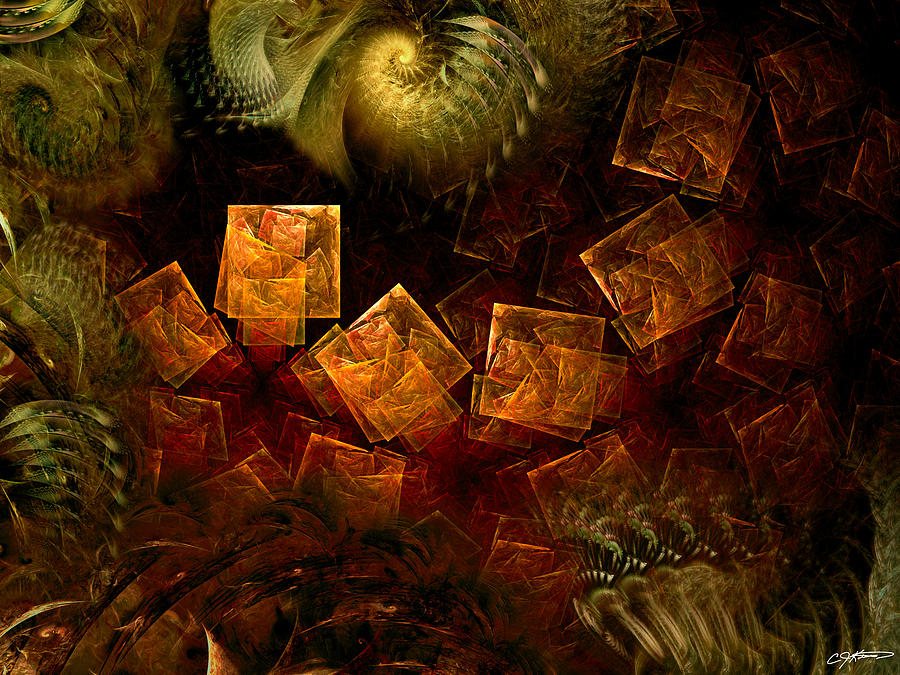
This deliberate visual turbulence is not merely decorative but reflective. It encapsulates the paradox of modern political environments—simultaneously hyperconnected and fragmented. Such artwork conveys the ebb and flow of power, dissent, and allegiance in ways traditional political expression cannot. It invites viewers to experience the sensation of being amidst the clamor of competing ideologies and disrupted truths.
The Digital Maelstrom: Politics in the Age of Hypercommunication
The internet revolution has precipitated a tectonic shift in how political narratives unfold. In 2026, digital platforms act as arenas where chaoticism thrives, embodying the unrelenting surge of conflicting messages, viral misinformation, and intensified polarization. The aesthetic captures this reality fluidly, mirroring the overwhelming influx of data and the fragmentation it engenders.
Chaoticism thus reflects a hypermediated political culture—one where every event splinters into myriad user-generated reactions, remixes, and reinterpretations. This fragmentation challenges traditional notions of coherence and authoritativeness in politics. Instead, it embraces multiplicity and encourages a fragmented yet vibrant discourse, resonant with the kaleidoscopic nature of digital epochs.
Political Dissonance and Societal Reflection
Beyond aesthetics and media, chaoticism exposes fault lines within the socio-political fabric. The aesthetic is a mirror to systemic instabilities: economic disparities, cultural clashes, identity crises, and governance failures. It articulates a collective anxiolytic response to an environment perceived as unpredictable and volatile.
Ultimately, chaoticism is more than an artistic trend—it is a form of political commentary. It captures the zeitgeist of an era grappling with transformation and uncertainty. Through its layered manifestations, it offers insight into how societies process dissonance. It gestures toward both the fragmentation and resilience embedded in contemporary political life.

Looking Forward: The Endurance and Evolution of Chaoticism
As political landscapes continue evolving unpredictably, the aesthetic of chaoticism is likely to endure and metamorphose. Its capacity to channel unpredictability into meaningful, compelling expression ensures relevance amid the shifting tides of global affairs. Future iterations might blend new technological innovations, cultural motifs, and political narratives, deepening the complexity and nuance of chaotic representation.
In a world that increasingly resists neat resolutions, chaoticism offers a vital language. It legitimizes disorder as an expressive and reflective force, challenging audiences to find coherence amid fragmentation. This aesthetic encourages a bold embrace of complexity and discomfort—hallmarks of any vibrant democratic society engaged in continual self-examination and transformation.
In summation, chaoticism as the aesthetic of 2026 political dissonance is an enthralling lens through which to view contemporary politics. It distills the era’s turbulence into a potent, evocative form. Its allure lies not only in the spectacle of chaos but in the invitation it extends to interrogate, understand, and ultimately navigate the convoluted political currents of our time.


Leave a Comment