

In the mist-laden hollows of Appalachia, where the echoes of clogs and boots once danced across wooden floors, two distinct yet intertwined traditions emerged from the same cultural crucible. Clogging and buck dancing—often conflated, frequently misunderstood—are not merely steps in a dance but living testaments to the region’s resilience, creativity, and unyielding spirit. To the untrained eye, they may appear as fraternal twins, swapping rhythm and footwork with careless ease. Yet, beneath the surface, they tell vastly different stories of migration, labor, and communal identity. One is a percussive symphony of precision, the other a raw, improvisational cry from the soul. Together, they form a dynamic tapestry that has evolved over centuries, shaped by the hands of European settlers, African rhythms, and the unbreakable will of mountain people. This is not just a comparison—it’s an invitation to witness how two dances, born from hardship and joy alike, carved their names into the bedrock of American folk tradition.
Imagine standing in a dimly lit barn, the air thick with the scent of woodsmoke and sweat. The floorboards groan under the weight of stomping feet, each impact a punctuation mark in a language older than the hills themselves. This is where clogging and buck dancing first took root, not as performances, but as the heartbeat of a people who found solace in rhythm amid isolation. To understand their evolution, we must first peel back the layers of history, geography, and cultural exchange that birthed these dances. What we discover is not a simple dichotomy, but a fluid continuum—one where tradition and innovation blur, where the past whispers through the present, and where every stomp, shuffle, and leap carries the weight of generations.
The Roots: A Melting Pot of Movement and Meaning
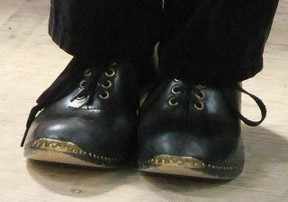
Clogging and buck dancing did not emerge in a vacuum. Their origins are a mosaic of influences, stitched together by the journeys of those who called Appalachia home. The term “clogging” itself likely stems from the Irish and English tradition of step dancing, where wooden-soled shoes—clogs—were worn to accentuate the rhythm of the feet. Yet, the dance was not merely a transplant; it was a reinvention. In the rugged terrain of the Appalachian Mountains, European settlers encountered the percussive traditions of African slaves, whose rhythmic footwork and syncopated beats seeped into the local vernacular. The result? A hybrid form that was neither purely European nor African, but a vibrant synthesis born of necessity and creativity.
Buck dancing, on the other hand, carries a different lineage. Its name is believed to derive from the term “buck,” which in some contexts refers to a lively, energetic movement. Unlike clogging, which often emphasizes uniformity and group coordination, buck dancing is deeply individualistic. It thrives on improvisation, a dancer’s personal flair, and the raw expression of emotion. Historically, buck dancing was the domain of solo performers, often seen in minstrel shows and rural gatherings, where the dancer’s skill was measured not by adherence to a set pattern, but by their ability to captivate and astonish. Here, the body becomes an instrument, and the floor a stage for storytelling without words.
The interplay between these two forms is where the magic lies. In some communities, clogging and buck dancing existed side by side, each serving a different social function. Clogging was the communal glue, a unifying force that brought families and neighbors together in celebration. Buck dancing, meanwhile, was the voice of the individual, a rebellious counterpoint to the structured rhythms of group dance. Together, they formed a dynamic duality—a balance between conformity and self-expression that mirrored the lives of those who practiced them.
The Evolution: From Survival to Spectacle
As the 19th century gave way to the 20th, Appalachia underwent seismic shifts. The industrial revolution beckoned, drawing many mountain dwellers to factories and cities, while railroads carved new paths through the wilderness. These changes did not erase the dances of the past; instead, they propelled them into new arenas. Clogging, once a rural pastime, found its way into schools, festivals, and even Hollywood. The formation of organized clogging teams in the mid-20th century transformed it from a folk tradition into a competitive art form, complete with choreographed routines and synchronized footwork. The dance became a symbol of Appalachian pride, a way to preserve heritage in an era of rapid modernization.
Buck dancing, however, followed a more circuitous route. As minstrel shows faded into obscurity, buck dancing risked being relegated to the annals of history. Yet, it refused to vanish. In the latter half of the 20th century, a revival of interest in American folk traditions breathed new life into buck dancing. Folk festivals and dance camps became stages for this once-marginalized art, where dancers like the legendary Tommy Jarrell and Alcoa “Doc” Alley kept the flame alive. Unlike clogging, which embraced structure, buck dancing remained a bastion of spontaneity. It became a living archive of improvisation, where each dancer added their own chapter to the story.
The contrast between the two is striking. Clogging evolved into a polished performance, its steps codified and its practitioners often wearing elaborate costumes adorned with jingling bells. Buck dancing, in contrast, retained its gritty, unvarnished essence. Dancers performed in everyday clothes, their movements a direct conduit for emotion. Where clogging was a celebration of community, buck dancing was a solo journey—an internal dialogue made visible through the language of the body.
The Cultural Divide: Community vs. Individuality
At the heart of the clogging vs. buck dancing debate lies a fundamental question: What does it mean to dance in a culture? Clogging answers that question with a resounding chorus. It is a dance of togetherness, where every participant moves in harmony with the group. The emphasis is on uniformity, on the collective creation of rhythm. In this way, clogging reflects the communal values of Appalachian society—cooperation, shared labor, and the belief that the individual’s role is to contribute to something greater than themselves. The sound of a clogging team in full swing is not just music; it is a sonic embrace, a reminder that no one dances alone.
Buck dancing, by contrast, is a solo flight. It is the dance of the outsider, the storyteller, the individual who dares to stand apart. In a culture that often prized conformity, buck dancing was a quiet act of defiance—a way to assert one’s presence in a world that sought to silence marginalized voices. The dancer’s body becomes a canvas, and the floor a stage for personal expression. There are no set patterns, no rigid rules—only the dancer’s intuition and the music’s pulse. In this sense, buck dancing is a metaphor for the Appalachian spirit itself: resilient, resourceful, and unapologetically itself.
Yet, the divide between the two is not absolute. In many communities, dancers moved fluidly between clogging and buck dancing, adapting their style to the occasion. A clogger might break into a buck dance during a spontaneous jam session, just as a buck dancer might join a clogging team for a festival performance. This fluidity speaks to the interconnectedness of the two traditions, a reminder that they are not opposing forces but complementary halves of a whole.
The Modern Resurgence: Keeping the Flame Alive
Today, both clogging and buck dancing are experiencing a renaissance. The digital age has connected enthusiasts across continents, fostering a global community of dancers who share a passion for these Appalachian traditions. Clogging, with its structured routines and competitive circuits, has found a new audience among young dancers who see it as both a sport and an art form. Organizations like the Clogging and Flatfooting Council of America have worked to standardize teaching methods while preserving the dance’s historical roots.
Buck dancing, too, has found new life. Folk festivals like the Berea College Celebration of Traditional Music and the National Folk Festival have become incubators for buck dancing, where master dancers pass down their knowledge to eager students. Social media platforms have allowed buck dancers to share their improvisations with the world, turning what was once a localized tradition into a global phenomenon. The dance’s raw, unfiltered energy resonates with modern audiences who crave authenticity in an era of curated performances.
Yet, with this resurgence comes a challenge: how to honor the past while embracing the future. For clogging, the risk lies in becoming too polished, too divorced from its roots in communal celebration. For buck dancing, the challenge is to preserve its improvisational spirit in an age of viral trends and fleeting attention spans. The key, as it has always been, lies in balance—between tradition and innovation, between the individual and the collective, between the past and the present.
The story of clogging and buck dancing is not just a tale of two dances—it is a testament to the power of culture to adapt, endure, and thrive. In their differences, they reveal the complexity of Appalachian identity; in their similarities, they highlight the universal human need for rhythm, expression, and connection. To watch a clogging team perform is to witness the precision of a well-oiled machine, where every dancer moves in harmony with the next. To watch a buck dancer take the floor is to witness a solitary soul communing with the music, their body a vessel for emotion and history.
So the next time you hear the thunderous beat of clogs on a wooden floor or the syncopated shuffle of a buck dancer’s feet, pause and listen. These are not just dances—they are living legacies, echoes of a past that refuses to be forgotten. They are the heartbeat of a region, the voice of a people, and the unbreakable thread that connects us to the stories of those who came before. In their evolution, we find not just a shift in perspective, but a revelation: that tradition is not a relic to be preserved under glass, but a living, breathing force that continues to shape the world around us.


Leave a Comment