

Ever stared at a blank page, pencil trembling in hand, as you grappled with the daunting task of drawing hair that didn’t resemble a tangled mop or a child’s scribble? You’re not alone. Hair, with its cascading strands and intricate textures, often feels like the final frontier of realism—a challenge so formidable it could make even the most seasoned artist question their life choices. But what if I told you that drawing realistic hair isn’t the Herculean task it seems? What if, instead of a labyrinth of frustration, it’s a playground of possibilities waiting to be unlocked? Let’s shatter the myth together and prove that those silky locks, wild curls, or sleek bobs are well within your grasp.
Imagine this: You’re sketching a portrait, and as you near the finish line, you freeze. The eyes? Perfect. The lips? Flawless. But then—disaster strikes. The hair looks like it was drawn by a sleep-deprived raccoon. The strands clump together in unnatural clusters. The highlights vanish into oblivion. Frustration mounts. You sigh, crumple the paper, and vow to “practice more.” But here’s the secret: You don’t need more practice. You need the right technique. And today, we’re diving headfirst into the art of drawing hair that defies the stereotype of “hard.”
The Myth of the Impossible: Why Hair Feels So Tricky
Before we dismantle the challenge, let’s acknowledge the beast we’re facing. Hair isn’t just a collection of lines—it’s a living, breathing entity with volume, movement, and personality. Each strand interacts with light, shadow, and neighboring hairs in a dance so complex it could make a choreographer weep. No wonder artists feel overwhelmed! The problem isn’t your skill; it’s the lack of a roadmap. Without understanding the underlying structure of hair—its flow, its layers, its relationship to the scalp—you’re essentially trying to paint a sunset blindfolded. But fear not. Once you grasp the fundamentals, hair becomes less of a puzzle and more of a delightful puzzle piece.
Think of hair as a river. Just as a river carves paths through a landscape, hair flows in response to gravity, wind, and the contours of the head. Ignoring this flow is like drawing a river with jagged, unnatural edges—it just doesn’t work. The key is to observe how hair behaves in real life. Notice how it parts, how it clumps into sections, and how it catches the light. Hair isn’t a solid mass; it’s a collection of individual strands that group together in bundles. By breaking it down into these bundles, you’ll instantly add realism to your drawings.
The Power of Layers: Building Hair from the Ground Up
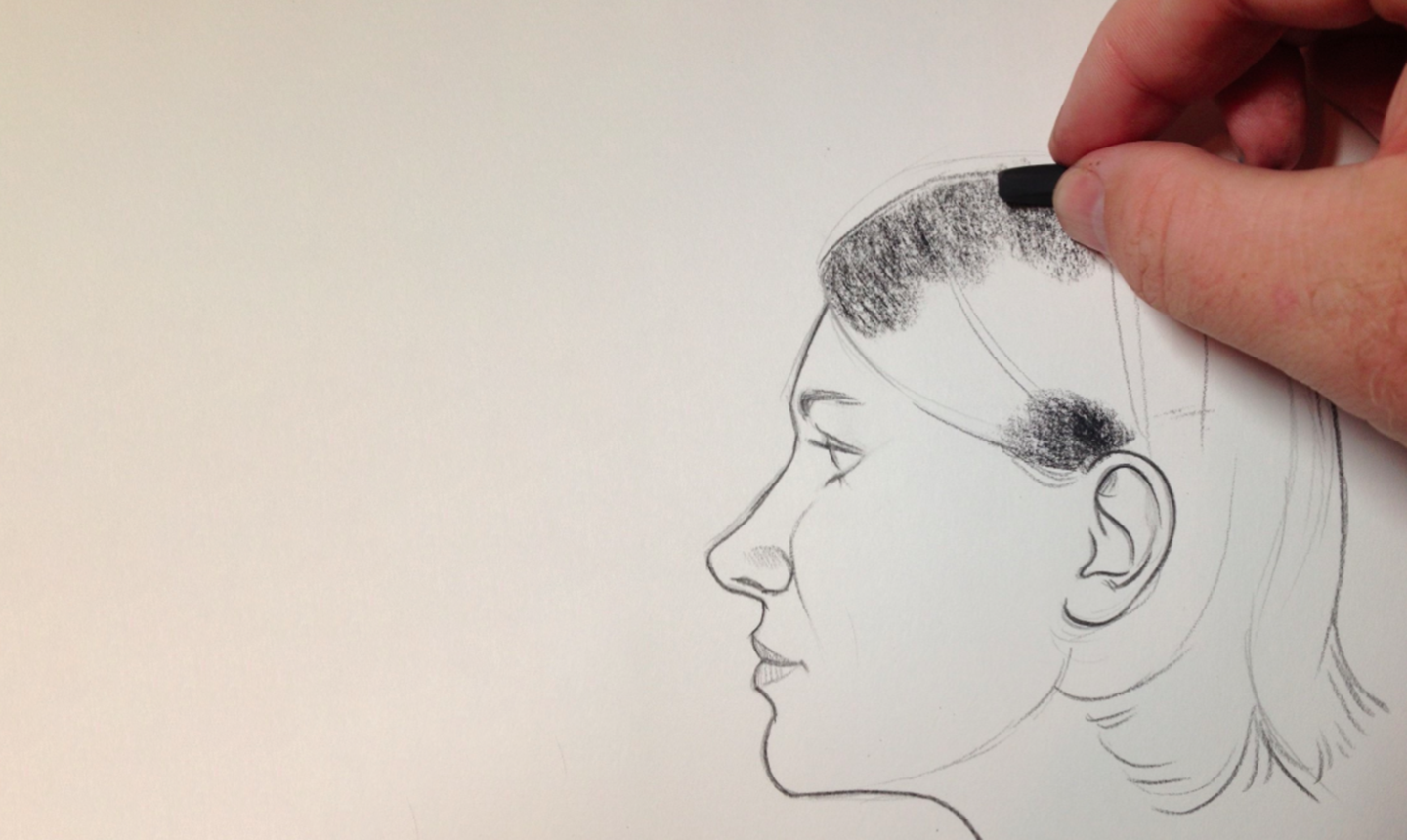
If hair were a cake (and let’s be honest, it often feels as layered as one), you wouldn’t slap frosting on without first baking the layers. Similarly, drawing hair requires a strategic approach. Start with the foundational layer—the scalp. This isn’t just a flat surface; it’s a terrain with hills, valleys, and hidden contours. Sketch these subtle undulations lightly with a pencil, as they’ll dictate how the hair sits and flows. Ignore this step, and your hair will look like a wig plopped onto a mannequin head.
Next, establish the direction of the hair. Hair grows in specific patterns, often radiating from a central point (like a cowlick) or flowing in natural waves. Use light, directional strokes to map out these paths. Don’t worry about perfection—this is your scaffolding. Once the basic flow is in place, you can layer in the strands. Start with the thickest sections first, using confident, sweeping strokes. These are the “guide hairs” that will anchor your drawing. Then, gradually add finer strands to fill in the gaps. Remember: less is more. Overcrowding your hair with too many lines will suffocate its realism.
Texture Tactics: From Silky to Wiry, Mastering the Feel
Hair isn’t monolithic. A sleek bob feels entirely different from a curly afro or a windswept mane. The trick lies in adapting your technique to match the texture. For straight hair, use long, smooth strokes that follow the hair’s flow. The key is consistency—each stroke should feel deliberate, as if you’re gently gliding a comb through the strands. For wavy hair, introduce subtle S-curves into your strokes. These curves mimic the natural undulations of waves, adding dynamism to your drawing. Curly hair? Embrace the chaos. Use tight, spiraling lines to capture the springiness of each curl. The tighter the curl, the more compact your lines should be.
But texture isn’t just about the shape of the strands—it’s about the interplay of light and shadow. Hair isn’t flat; it’s a three-dimensional marvel. To convey this, use a combination of light and dark values. Highlights dance along the edges of strands where light hits, while shadows nestle in the crevices between clumps. Don’t be afraid to leave some areas lighter—real hair isn’t uniformly dark. Think of it as a symphony of contrasts, where each strand plays its part in harmony.
The Illusion of Detail: When to Stop and When to Go
Here’s a paradox: The more detail you add, the less realistic your hair can look. It’s counterintuitive, but true. Hair is a study in controlled chaos. Adding every single strand will clutter your drawing, making it feel stiff and unnatural. Instead, focus on suggesting detail rather than rendering it explicitly. Use a few well-placed strands to imply the rest. This technique, called “suggestive drawing,” is the secret weapon of master artists. It’s not about perfection; it’s about evoking the *essence* of realism.
Another pro tip? Step back frequently. Zoom out mentally to assess the overall flow and balance of your hair. If it feels too dense in one area or too sparse in another, adjust accordingly. Hair should feel organic, not like a helmet glued to a head. Pay attention to the negative space—the gaps between strands—because these spaces are just as important as the strands themselves. They create the illusion of depth and airiness, making your hair look like it’s actually moving.
Lighting and Highlights: The Secret Ingredients for Shine
Ever noticed how hair in real life seems to glow, even in dim lighting? That’s the magic of highlights. Light interacts with hair in fascinating ways, creating a dazzling array of reflections and shadows. To replicate this, observe where the light source is in your drawing. Is it coming from the side? Above? Behind? Use this information to place your highlights strategically. For straight hair, highlights will appear as thin, parallel lines along the edges of strands. For curly hair, they’ll cluster in the curves of each spiral. Don’t overdo it—just a few well-placed highlights can transform your drawing from flat to fabulous.
Shadows, too, play a crucial role. Hair casts shadows not just on itself but also on the face and neck. These shadows add depth and dimension, grounding your drawing in reality. Use a soft pencil or blending tool to gently fade the shadows into the background, creating a seamless transition. Remember: shadows aren’t just dark spots—they’re the bridges that connect your hair to the rest of the portrait.
Practice Makes Progress: Embrace the Journey
If you’re still skeptical, let me leave you with this: Every artist you admire once struggled with the same challenges you face today. The difference between them and you? They didn’t give up. They experimented, made mistakes, and learned from each stroke. So, grab your pencils, fire up your sketchbook, and dive in. Draw hair on different faces, in various styles, under different lighting conditions. The more you practice, the more intuitive it will become. And who knows? In a few months, you might look back at your old sketches and laugh at how far you’ve come.
Realistic hair isn’t about perfection—it’s about capturing the beauty of imperfection. It’s about celebrating the way light dances on a curl or how a strand falls just so across a forehead. So, the next time you pick up your pencil, remember: you’re not just drawing hair. You’re weaving a story, one strand at a time.


Leave a Comment