

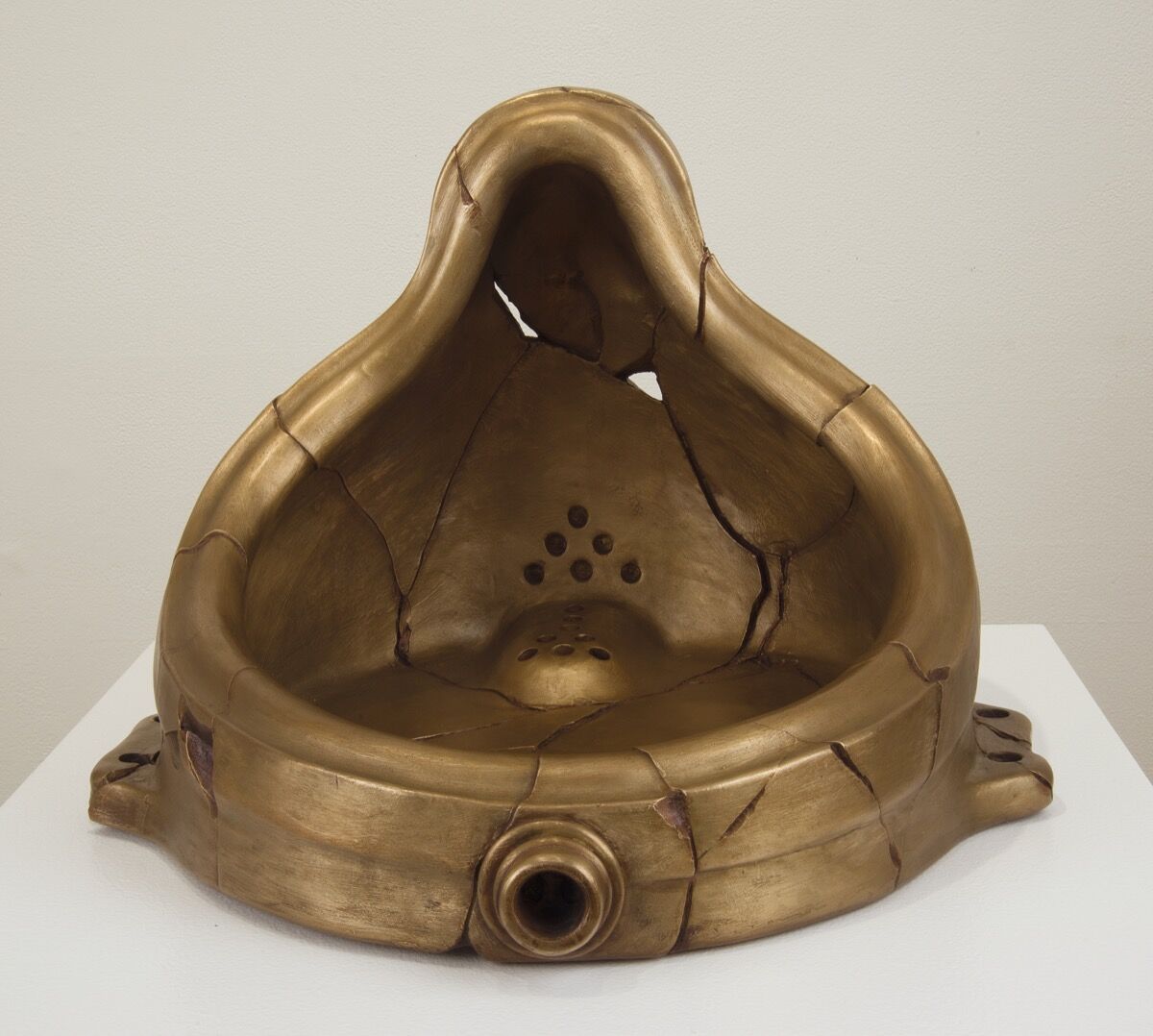
What if I told you that a porcelain urinal, signed “R. Mutt” and placed on a pedestal, could unravel centuries of artistic tradition? That a single object—utterly mundane, utterly unremarkable—could become the most controversial and consequential artwork of the 20th century? This isn’t a joke. It’s not satire for satire’s sake. It’s a radical act of dismantling, a quiet explosion that redefined what art could be, who could make it, and why it mattered. Welcome to the story of Marcel Duchamp’s Fountain—an object so simple, so unassuming, that it forced the art world to confront its own fragility.
Imagine, for a moment, the scene: a group of avant-garde artists in 1917, huddled in New York, plotting to challenge the very foundations of aesthetics. They call themselves the Society of Independent Artists. Their manifesto? No jury, no prizes, no rejection. All submissions accepted. It sounds like a utopia for creative freedom—until Duchamp, a French expatriate with a mischievous glint in his eye, submits a porcelain urinal under the pseudonym “R. Mutt.” The piece is rejected. Not because it’s poorly made—it’s not made at all. It’s bought from a hardware store. And that’s the point. Art, Duchamp seems to whisper, isn’t about skill or beauty. It’s about choice. It’s about intention. It’s about the audacity to declare that anything can be art—if you say so.
But why a urinal? Why not a sculpture, a painting, something crafted with care? Because the urinal is the ultimate anti-sculpture. It’s designed to be ignored, to be functional, to disappear into the background of daily life. By plucking it from its utilitarian context and placing it on a pedestal, Duchamp didn’t just elevate an object—he exposed the pedestal itself as a fragile construct, a pedestal that could be toppled by a single, defiant gesture.
The Myth of the Masterpiece and the Birth of Conceptual Art
For centuries, art had been governed by a sacred trinity: skill, beauty, and genius. The masterpiece was the pinnacle of human achievement—a testament to technical prowess, emotional depth, and divine inspiration. But Duchamp’s Fountain didn’t just question this trinity—it shattered it. It didn’t require brushstrokes or chisels. It didn’t demand years of apprenticeship. It simply required a signature and a declaration: “This is art.”
This wasn’t vandalism. It was liberation. It was the birth of conceptual art—a movement that would eventually declare that the idea behind a work mattered more than its execution. Duchamp didn’t care if you liked Fountain. He didn’t care if it was beautiful. He cared about the ripple effect. If a urinal could be art, then anything could be art. A bottle rack. A snow shovel. A bicycle wheel mounted on a stool. The art world, once a temple of exclusivity, was suddenly a playground where the rules were rewritten by anyone bold enough to pick up a pen and sign their name.
Yet, this liberation came with a price. If anything could be art, then what made art special? Wasn’t the entire edifice of the art world built on the illusion of rarity, of scarcity, of value bestowed by critics and curators? Duchamp’s urinal didn’t just challenge the definition of art—it exposed the arbitrariness of the systems that defined it. And that’s where the real discomfort began.
The Curse of the Readymade: When the Mundane Became Monumental
Duchamp called his urinal a “readymade”—a term that sounds almost clinical, like something off a factory assembly line. But the readymade was anything but ordinary. It was a Trojan horse, sneaking into the hallowed halls of high art disguised as a piece of plumbing. The readymade forced a confrontation: Is art about the object, or is it about the gaze that transforms the object?
Consider the urinal’s journey. It was manufactured in a factory, designed to serve a specific, unglamorous purpose. It was purchased anonymously, signed with a pseudonym, and submitted to an exhibition under a false name. It was rejected. Then, it was photographed, reproduced, and debated for over a century. Its physical form is almost irrelevant now. What matters is the idea it carries—the idea that art is not a thing, but an act of declaration. The readymade didn’t just change what art could be. It changed who could claim the title of artist.
But here’s the paradox: the more the readymade democratized art, the more it reinforced the power of the artist. Because while anyone could declare something art, only Duchamp—only the artist—could imbue it with meaning. The urinal wasn’t art until Duchamp said it was. And that’s the genius of the readymade: it didn’t erase the artist’s role. It redefined it. The artist wasn’t a craftsman. The artist was a magician, pulling meaning out of thin air and convincing the world to believe in the illusion.
The Scandal That Echoed Through the Decades
The rejection of Fountain in 1917 wasn’t just a footnote in art history—it was a cultural earthquake. The board of the Society of Independent Artists, which had promised no rejections, had to justify its decision. Some argued that the urinal was immoral. Others claimed it was a hoax. A few even suggested it was a personal attack on Duchamp himself. But the most telling reaction came from the art critic who dismissed it as “a joke.”
And perhaps it was. But not the kind of joke that ends with laughter. It was a joke with a punchline that took decades to land: art isn’t what you think it is. It never was.
The scandal didn’t die with the rejection. It grew. Over the years, Fountain was lost, then rediscovered, then lost again. Replicas were made—some authorized, some not. Each reproduction carried the weight of the original, each one a reminder that art wasn’t about permanence. It was about presence. It was about the moment of creation, the act of defiance, the willingness to stare into the void and declare, “This is important.”
By the 1960s, Fountain had become a symbol of everything the art world feared and revered. It was cited in manifestos, taught in classrooms, and parodied in pop culture. It was the reason artists like Andy Warhol and Joseph Kosuth could declare that art was about ideas, not objects. It was the reason museums began collecting everything from soup cans to neon signs. It was the reason that, in 2004, a panel of 500 artists and critics voted Fountain the most influential artwork of the 20th century—ahead of Picasso’s Les Demoiselles d’Avignon and Warhol’s Campbell’s Soup Cans.
The Uncomfortable Truth: Art Is a Fragile Fiction
Duchamp’s urinal didn’t just change art—it exposed the fragility of the entire enterprise. Art, it turns out, is a fiction we agree to believe in. It’s a shared hallucination, a collective delusion that certain objects, gestures, and ideas possess an ineffable quality called “aesthetic value.” But Fountain proved that this value isn’t inherent. It’s assigned. It’s negotiated. It’s fought over in the pages of art magazines and the corridors of museums.
This is the uncomfortable truth that Fountain forces us to confront: art isn’t sacred. It’s not a divine revelation. It’s a human construct, and like all human constructs, it can be dismantled. The pedestal isn’t a throne. It’s a stage. And the artist isn’t a priest. The artist is a provocateur, a disruptor, someone who whispers in the ear of culture and says, “What if?”
But here’s the challenge Duchamp left us: if art is just a declaration, then what stops it from becoming meaningless? If anything can be art, then is anything art? The answer isn’t to reject the readymade. The answer is to embrace its lesson: art is only as powerful as the questions it asks. Fountain didn’t just ask, “What is art?” It asked, “Who gets to decide?” And that question is still echoing, still unsettling, still urgent.
The Legacy: A World Where the Urinal Is Everywhere
Today, the spirit of Fountain is everywhere. It’s in the street art that turns a fire hydrant into a monument. It’s in the digital art that repurposes memes and GIFs. It’s in the performance art that turns a simple act into a statement. It’s in the NFTs that declare a digital file worth millions. Duchamp didn’t just predict the future—he invented it. He showed us that art isn’t about the object. It’s about the moment when the object becomes a mirror, reflecting back at us the absurdity, the beauty, and the sheer arbitrariness of our own rules.
So the next time you see a urinal in a museum, don’t laugh. Don’t dismiss it as a joke. Look closer. See the signature. See the pedestal. See the centuries of tradition trembling in the balance. And ask yourself: if a urinal can change art forever, what could you change?
Perhaps the real joke isn’t on Duchamp. Perhaps the joke is on all of us—for believing, even for a moment, that art was ever anything more than a shared illusion. And perhaps the most radical act isn’t to create a masterpiece. It’s to ask the question that makes the masterpiece irrelevant.


Leave a Comment