

What if I told you that a single brushstroke could land you in jail? Not for vandalism, not for theft—but for daring to depict the human form with unflinching honesty? Welcome to the tumultuous world of Egon Schiele, the Austrian expressionist whose art wasn’t just controversial—it was criminalized. In 1912, Schiele found himself behind bars, not for murder or treason, but for the audacity of his drawings. His crime? Creating art that laid bare the raw, unfiltered truth of human existence. Let’s unravel the scandal that shook the art world and ask: when does art stop being a celebration and become a transgression?
The Art That Shocked a Nation: Why Schiele’s Work Was Too Much
Egon Schiele’s arrest wasn’t an isolated incident; it was the culmination of years of pushing boundaries. His work, characterized by jagged lines, emaciated figures, and unapologetic nudity, defied the prudish sensibilities of early 20th-century Vienna. The city, draped in the stifling corset of its own moral hypocrisy, was ill-prepared for Schiele’s unfiltered gaze. His drawings of contorted bodies, often in explicit poses, weren’t just art—they were a rebellion against the sanitized ideals of beauty peddled by the establishment.
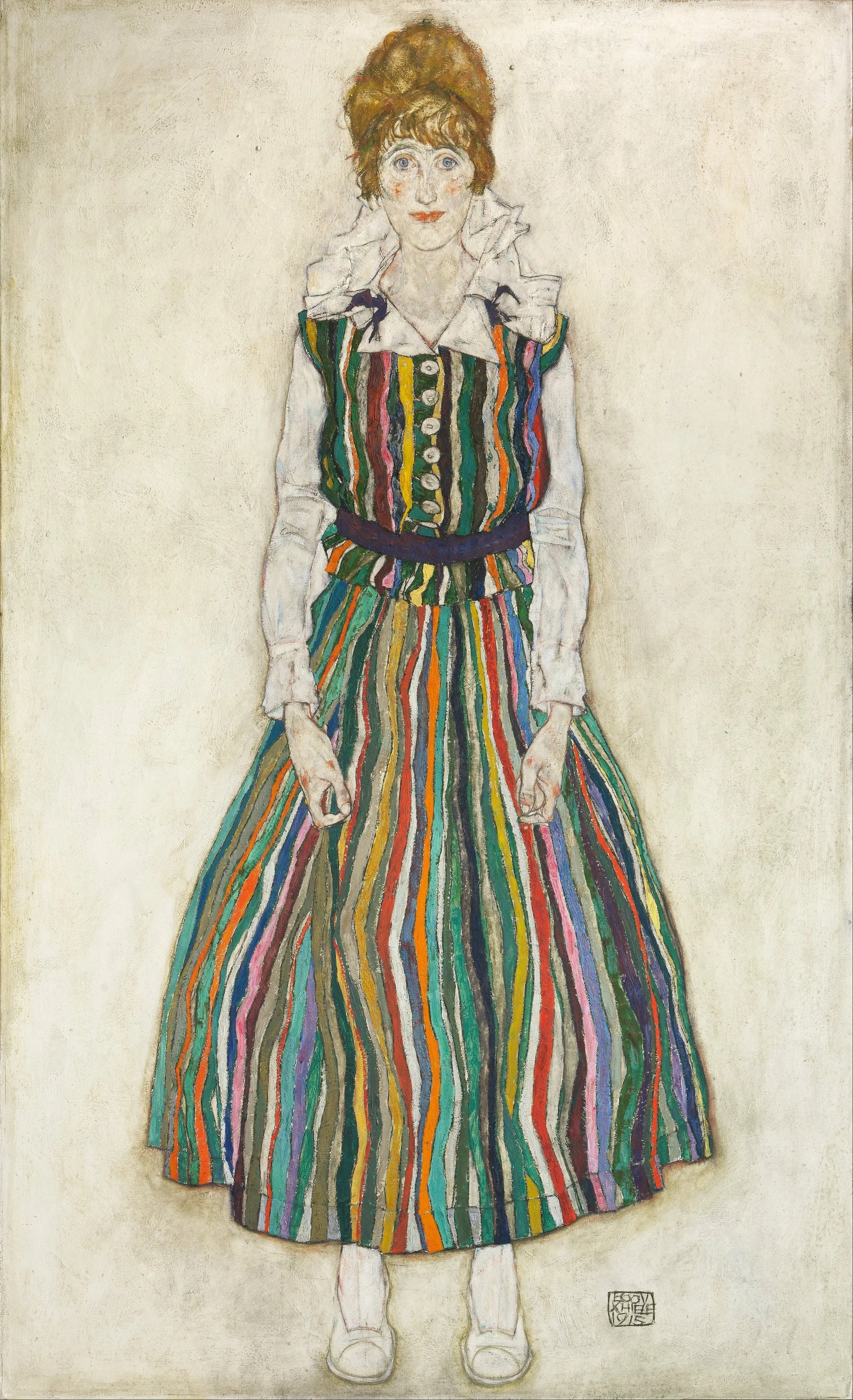
Imagine, if you will, the outrage when Schiele’s Portrait of Edith Schiele—his wife—was displayed in all its unvarnished glory. The public didn’t just recoil; they were scandalized. The authorities, ever the arbiters of decency, saw not a masterpiece but a threat to public morality. Schiele’s art wasn’t just different; it was a direct challenge to the status quo. And in a society that prized decorum over truth, that was unforgivable.
But why did Schiele’s work provoke such visceral reactions? It wasn’t just the nudity—it was the way he depicted it. His figures weren’t idealized; they were raw, vulnerable, and unapologetically human. They weren’t meant to titillate; they were meant to confront. Schiele’s art was a mirror held up to society, reflecting its own discomfort back at it. And Vienna, a city of repressed desires and rigid hierarchies, wasn’t ready to look.
The Arrest: A Trial of Artistic Integrity
The morning of April 13, 1912, began like any other for Egon Schiele—until the knock came. The police, armed with warrants, stormed his studio. Their crime? Obscenity. Their evidence? Sketches and drawings that dared to depict the human body in its most unadorned form. Schiele was dragged away, his art seized, and his reputation dragged through the mud. The charges were clear: his work was a violation of public decency.
But Schiele wasn’t just any artist. He was a man who had already weathered the disdain of critics and the indifference of the public. His arrest wasn’t just an attack on his art; it was an attack on his very existence as an artist. The trial that followed was less about justice and more about morality—a morality dictated by those who saw art as a decorative afterthought, not a force of truth.
During the proceedings, Schiele’s defense was simple: his art was not obscene; it was honest. He argued that his drawings were a reflection of life, not a perversion of it. But the court wasn’t interested in philosophy. They were interested in control. In the end, Schiele was found guilty—not of obscenity, but of distributing indecent materials to minors. The irony? The “minors” in question were likely models he had hired, not children in the legal sense. The verdict was a farce, a thinly veiled attempt to silence an artist who refused to conform.
The sentence? Twenty-four days in prison. A small price, perhaps, for the crime of being too real. But the damage was done. Schiele’s reputation was tarnished, his art confiscated, and his spirit bruised. Yet, in the face of such adversity, he didn’t back down. If anything, the arrest only fueled his determination to create art that was unapologetically his own.
From Prison Walls to Immortality: The Aftermath of Schiele’s Defiance
Prison didn’t break Schiele. If anything, it forged him into the artist we remember today. While behind bars, he continued to sketch, his pencil a defiant act of creation in the face of oppression. The drawings he made during this time—haunting, skeletal, and charged with emotion—are some of his most powerful works. They are not just art; they are a testament to the resilience of the human spirit.
Upon his release, Schiele emerged more determined than ever. He doubled down on his signature style, pushing the boundaries of expressionism further than anyone dared. His art became a beacon for those who saw the world differently, a rallying cry for authenticity in a world that demanded conformity. And though he died tragically young, at just 28, his legacy endured. Today, Schiele is celebrated as a pioneer, a rebel, and a visionary whose work dared to ask: what if art wasn’t meant to please, but to provoke?
But the question lingers: would Schiele’s art still be considered a crime today? In an era where boundaries are constantly being redrawn, where nudity is a click away and controversy is a marketing tool, it’s easy to forget the weight of Schiele’s defiance. His arrest wasn’t just a legal matter; it was a cultural reckoning. It forced society to confront its own hypocrisy, to ask why some truths are deemed obscene while others are celebrated. And in that confrontation, Schiele’s art found its true power—not as a scandal, but as a mirror.
The Legacy: Art as a Crime Against Mediocrity
Egon Schiele’s arrest was more than a legal footnote; it was a cultural earthquake. It exposed the fragility of societal norms, the ease with which art is weaponized against those who challenge it. Schiele’s crime wasn’t obscenity; it was honesty. His sin wasn’t in depicting the human form, but in refusing to sanitize it. And in doing so, he exposed the rot at the heart of a society that preferred illusion to truth.
Today, Schiele’s work hangs in museums, studied and revered. But the question remains: would it still be considered dangerous? In a world where art is often reduced to Instagram aesthetics and marketable trends, Schiele’s unfiltered gaze feels more radical than ever. His art wasn’t just a rebellion against the past; it was a challenge to the present. It asked us to look closer, to see beyond the surface, to embrace the uncomfortable truths that lie beneath.
So the next time you encounter a piece of art that unsettles you, ask yourself: is it the art that’s offensive, or is it the truth it reveals? And if that truth is too much to bear, perhaps the real crime isn’t the art itself—but the fear it exposes.
Egon Schiele’s arrest was a reminder that art has always been a battleground. A battleground between those who seek to control and those who dare to create. Between those who prefer lies and those who insist on truth. And in that battle, Schiele didn’t just defend his art—he defended the very idea that art should be free. Not free from criticism, not free from debate, but free from the shackles of conformity. His legacy is a call to arms for all who believe that the most powerful art is the kind that refuses to apologize.


Leave a Comment