

Have you ever wondered why some musical endings feel so satisfying, so *inevitable*, as if the music couldn’t possibly end any other way? Like the final chord of a symphony is whispering, “Yes, this is it—this is where we were always headed”? That, dear listener, is the magic of the perfect cadence. A musical punctuation mark so potent it has shaped centuries of composition, from the stately halls of Vienna to the pulsating beats of modern hip-hop. But what if I told you that this cadence, so revered and so predictable, is also a sly trickster? What if the perfect cadence isn’t just a resolution—it’s a musical dare, a challenge to composers to outwit expectation? Buckle up. We’re about to trace the 400-year journey of this audacious harmonic device, from its Baroque birth to its rebellious reinvention in today’s beats.
The Baroque Birth: When Rules Became Royalty
Picture the year 1650. The air in Europe is thick with the scent of candle wax and ink. Composers like Johann Sebastian Bach are weaving intricate tapestries of sound, and at the heart of their craft lies the perfect authentic cadence—a harmonic formula so powerful it feels like a musical commandment. In its most basic form, it’s a journey from the dominant chord (V) to the tonic (I), a sonic homecoming that resolves tension with the grace of a returning prodigal son.
But here’s the twist: this cadence wasn’t just a stylistic choice—it was a power move. In the rigid social hierarchies of the Baroque era, music wasn’t just art; it was propaganda. The perfect cadence mirrored the divine order of the cosmos. The dominant chord, unstable and yearning, represented humanity’s struggle, while the tonic chord, stable and serene, symbolized the heavens’ embrace. Composers like Handel used it to underscore triumphant chorales, while Bach wove it into fugues with such precision that listeners felt the hand of God in every resolution.
Yet, even in its infancy, the perfect cadence was a double-edged sword. Its predictability made it a favorite of church composers, but it also risked becoming too predictable. Enter the imperfect authentic cadence, a rebellious cousin that arrived on the scene like a musical prankster. Instead of resolving cleanly to the tonic, it might meander through a deceptive cadence (V–vi), leaving the listener dangling like a marionette with cut strings. Suddenly, the perfect cadence wasn’t just a resolution—it was a setup for a fall.
The Classical Era: The Cadence as a Socialite
Fast-forward to the 18th century, where the perfect cadence has traded its divine robes for a powdered wig. Mozart and Haydn, those maestros of wit and elegance, treat the cadence like a socialite at a ball—always present, always poised, but never without a trick up its sleeve. In a Mozart symphony, the perfect cadence isn’t just an ending; it’s a statement. It’s the musical equivalent of a curtsy after a flawless performance, a nod to tradition that also flaunts innovation.
Consider the finale of Mozart’s Symphony No. 40. The piece builds and builds, tension coiling tighter than a spring, until—there it is. The perfect cadence crashes in like a thunderclap, but Mozart doesn’t let it rest. He follows it with a cheeky codetta, a little musical wink that says, “You thought that was the end? Think again.” This era’s composers understood something crucial: the perfect cadence wasn’t just a tool—it was a game. And they were determined to play it better than anyone.
Haydn, the prankster of the Classical era, took this game to another level. His Surprise Symphony is a masterclass in subverting expectation, and the perfect cadence is his accomplice. He’d lull the audience into a false sense of security with a gentle, predictable resolution—only to yank the rug out with a sudden fortissimo chord, leaving listeners gasping. The perfect cadence, in Haydn’s hands, became a Trojan horse: it promised closure, but delivered chaos.
The Romantic Rebellion: When the Cadence Got Emotional
The 19th century arrived with a storm of emotion, and the perfect cadence was swept up in the tempest. Composers like Beethoven and Chopin treated it not as a rule, but as a canvas. Beethoven, ever the revolutionary, used the perfect cadence to shatter expectations. In his Ninth Symphony, the final movement’s “Ode to Joy” soars with such exultation that the perfect cadence feels like a spiritual awakening. But Beethoven, ever the trickster, delays the resolution, stretching the tension until it’s almost unbearable. When the cadence finally arrives, it’s not just a resolution—it’s a revelation.
Chopin, on the other hand, turned the perfect cadence into a whisper. In his nocturnes and preludes, the cadence isn’t a grand statement; it’s a sigh, a fleeting moment of clarity in a sea of ambiguity. He’d approach the tonic chord, only to veer away at the last second, leaving the listener suspended in a haze of unresolved longing. The perfect cadence, in Chopin’s hands, became a tool of emotional manipulation—a way to make the heart ache just a little longer.
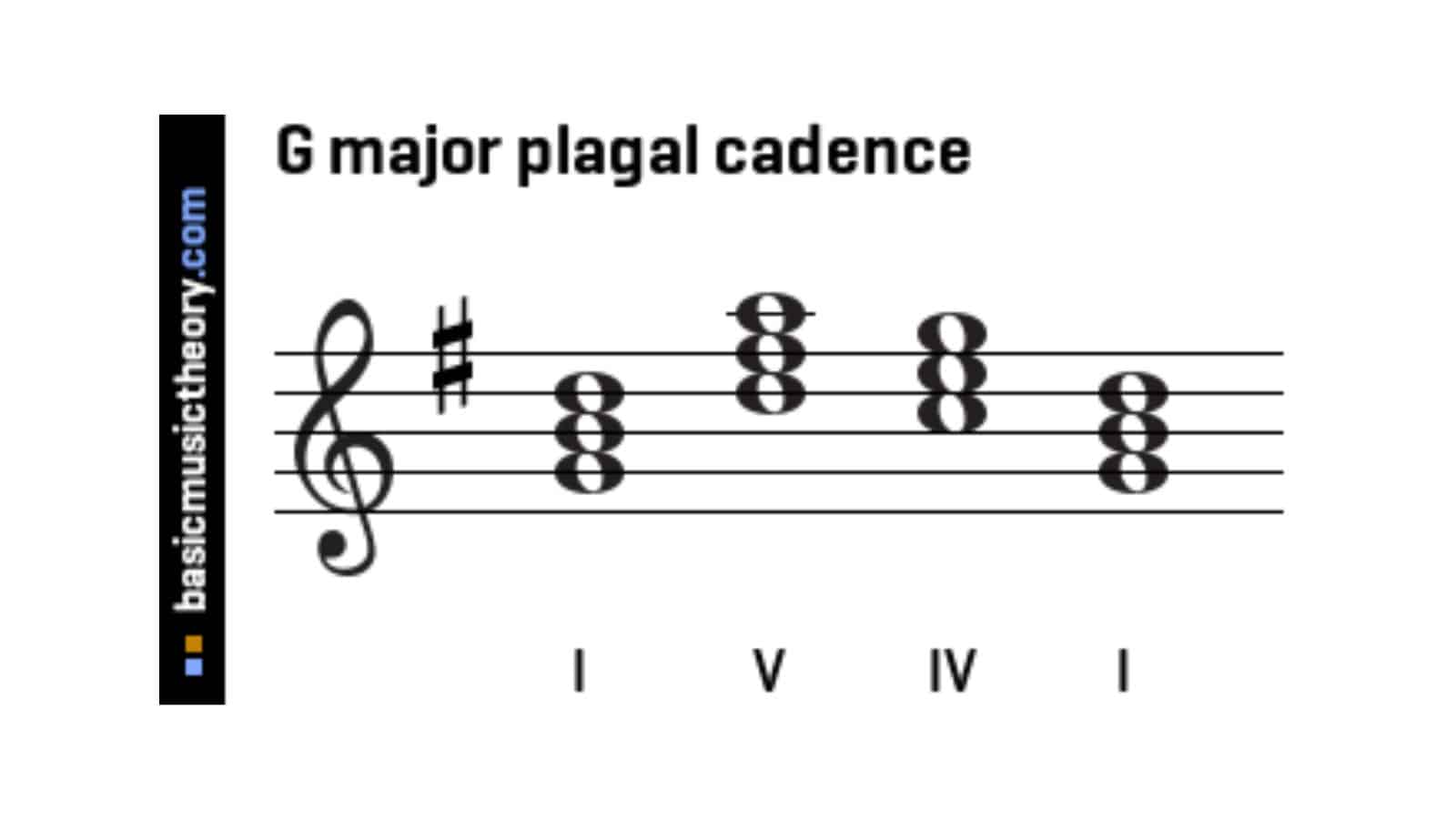
This era also saw the rise of the plagal cadence, a humble cousin of the perfect cadence that would go on to define hymns and gospel music. With its IV–I progression, the plagal cadence feels like a warm embrace, a musical “Amen” that wraps up a phrase with comforting finality. It’s the cadence of choirs and campfires, a reminder that sometimes, the most powerful resolutions aren’t dramatic—they’re gentle.
The 20th Century: The Cadence Goes Rogue
The 20th century was a playground for the perfect cadence, a time when composers gleefully tossed tradition out the window. Stravinsky, that iconoclast, used the cadence like a sledgehammer, smashing it into jagged, dissonant shapes in The Rite of Spring. Schoenberg, the father of atonality, treated it like a relic—something to be mocked or avoided entirely. But even in rebellion, the cadence endured. It became a challenge, a gauntlet thrown down to composers: “Can you make this feel new?”
Jazz musicians took up the challenge with gusto. In the hands of artists like Duke Ellington and Miles Davis, the perfect cadence became a springboard for improvisation. A jazz standard might start with a familiar I–V–I progression, but the soloist would twist it, delay it, or subvert it entirely, turning a simple resolution into a conversation. The cadence wasn’t just an ending—it was an invitation to play.
Meanwhile, in the world of film scores, composers like John Williams and Bernard Herrmann used the perfect cadence to manipulate emotions on a grand scale. In Star Wars, the cadence isn’t just a resolution—it’s a hero’s triumph. In Psycho, Herrmann’s shrieking strings turn the cadence into a scream. The cadence had become a weapon, a tool to control the listener’s heart.
Hip-Hop and the Modern Cadence: When the Beat Plays Tricks
Now, let’s leap into the 21st century, where the perfect cadence has found a new home: in the breakbeats and basslines of hip-hop. Producers like Kanye West, J Dilla, and Madlib have turned the cadence into a rhythmic puzzle, chopping, screwing, and flipping it until it’s barely recognizable. In hip-hop, the perfect cadence isn’t just a harmonic resolution—it’s a groove, a pocket, a moment where the beat feels like it’s locking into place.
Take Kanye’s My Beautiful Dark Twisted Fantasy. The album’s production is a masterclass in subverting expectation. Kanye will set up a perfect cadence, only to undercut it with a sudden shift in rhythm or harmony, leaving the listener off-balance. It’s as if he’s saying, “You thought you had this figured out? Think again.”
J Dilla, the godfather of the “Dilla beat,” took this idea even further. His drum patterns and harmonic progressions are deliberately off-kilter, as if the music is stumbling toward resolution. The perfect cadence, in Dilla’s hands, becomes a tease—a promise of closure that never quite arrives. It’s the musical equivalent of a joke with a punchline that’s always just out of reach.
And then there’s the phenomenon of sample flipping. Hip-hop producers take a snippet of an old soul or jazz record—often built on a perfect cadence—and chop it up, stretch it, or reverse it until the original resolution is unrecognizable. The cadence becomes a ghost, a shadow of its former self, haunting the beat with its unresolved tension. It’s a reminder that the perfect cadence isn’t just a tool—it’s a chameleon, adapting to every era, every genre, every rebellious impulse.

The Cadence’s Ultimate Challenge: Can You Outwit Perfection?
So here we are, 400 years after the perfect cadence first strutted onto the musical stage. It’s been a royal in Baroque courts, a wit in Classical salons, an emotional wrecking ball in the Romantic era, a rebel in jazz and film, and a shape-shifting trickster in hip-hop. But now, I pose you this challenge: Can the perfect cadence ever truly be outwitted?
Some might argue that in an age of algorithmic composition and AI-generated music, the cadence has lost its power. If a machine can spit out a perfect I–V–I progression in seconds, does it still feel magical? But here’s the thing: the perfect cadence’s true magic isn’t in its predictability—it’s in its versatility. It’s a blank canvas, a playground, a dare. Whether it’s used to evoke divine order, emotional turmoil, or rhythmic innovation, its power lies in its ability to adapt, to surprise, to endure.
So the next time you hear a perfect cadence—whether it’s in a Bach fugue, a jazz standard, or a Kanye beat—pause for a moment. Listen not just to the resolution, but to the journey that led to it. Feel the tension, the yearning, the inevitability. And then ask yourself: What’s the trick?
The perfect cadence isn’t just an ending. It’s a conversation. And the best composers? They’re the ones who keep the conversation going.


Leave a Comment