

In the grimy underbelly of 1970s New York City, where subway cars became rolling canvases and alleyways whispered untold stories, a revolution was brewing. It wasn’t the kind that echoed through the halls of power or splashed across newspaper headlines—no, this was a quiet insurrection, painted in spray paint and defiance. A young artist, barely out of his teens, was scribbling cryptic phrases across the urban landscape, marking the birth of a movement that would shatter the boundaries between street art and high art. His name was Jean-Michel Basquiat, and his journey from the graffiti-tagged streets to the hallowed halls of galleries is nothing short of a modern-day alchemy, transforming the mundane into the magnificent.
The story begins not in a studio, but in the cacophony of the city itself. Basquiat, a Haitian-Puerto Rican prodigy, found his voice in the unlikeliest of places: the concrete jungle of Manhattan. By 1977, he and his friend Al Diaz began tagging the city with the enigmatic signature SAMO©, a cryptic moniker that stood for “Same Old Shit.” These weren’t just tags—they were manifestos, social critiques, and poetic jabs at a world that seemed determined to ignore them. SAMO© wasn’t just a name; it was a movement, a whisper of rebellion that spread like wildfire through the city’s underbelts.
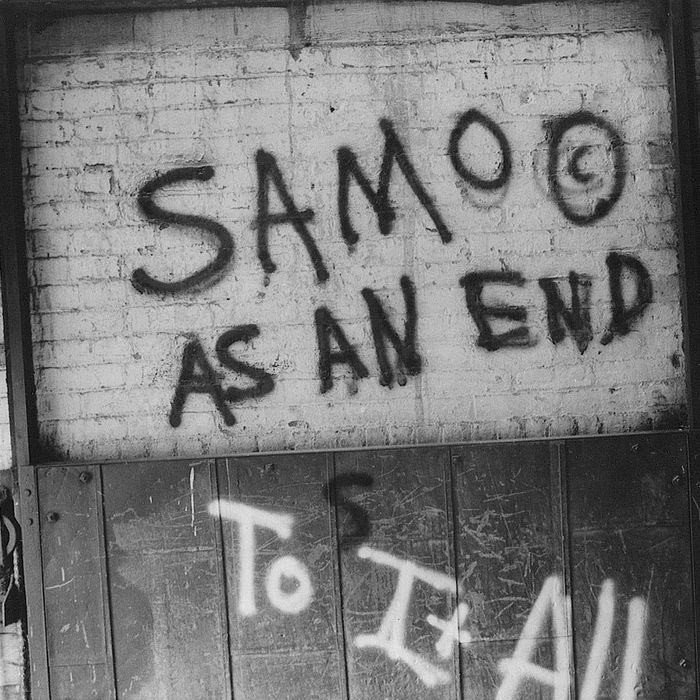
But how does a graffiti artist, whose canvas is the side of a train or a crumbling brick wall, ascend to the rarefied air of the art world? The answer lies in the audacity of youth and the unrelenting hunger for recognition. By the late 1970s, Basquiat’s work had caught the eye of the city’s avant-garde elite. His raw, unfiltered style—part street poetry, part primal scream—began to infiltrate the downtown art scene. Galleries, always on the hunt for the next big thing, took notice. In 1980, at just 21 years old, Basquiat became the youngest artist ever invited to documenta, the prestigious contemporary art exhibition in Kassel, Germany. The world was beginning to take him seriously.
The transition from street to studio wasn’t seamless. Basquiat’s early works were a chaotic symphony of words, symbols, and figures, a visual cacophony that mirrored the city’s frenetic energy. Critics were divided—some saw genius, others dismissed his work as mere vandalism elevated to high art. But Basquiat didn’t care. He was on a mission, a one-man crusade to drag art out of its gilded cages and into the streets where it belonged. His paintings became denser, more layered, each stroke a rebellion against the sterile conventions of the art world. He incorporated everything from anatomy textbooks to jazz records, weaving a tapestry of Black culture, history, and identity into his work.
By the mid-1980s, Basquiat was a superstar. His collaborations with Andy Warhol—another icon who had once been dismissed as a commercial hack—sent shockwaves through the art world. Their joint exhibitions were sell-out events, with collectors clamoring to own a piece of this new phenomenon. Basquiat’s paintings fetched tens of thousands of dollars, a staggering sum for an artist who had once slept on friends’ couches to avoid the cold. But fame came at a price. The art world’s glare was intense, and the pressure to maintain his meteoric rise weighed heavily on him. He grappled with addiction, isolation, and the crushing weight of expectation, all while continuing to produce work that was as haunting as it was brilliant.

The 1980s were a whirlwind of excess, and Basquiat was at its epicenter. He partied with Madonna, collaborated with Warhol, and became a fixture in the downtown scene that pulsed with creativity and self-destruction. But beneath the glamour, Basquiat was grappling with the ghosts of his past—the racism, the poverty, the erasure of Black voices in the art world. His work became a catharsis, a way to exorcise the demons that haunted him. Paintings like Untitled (Skull) (1982), which sold for a record $110.5 million in 2017, are more than just masterpieces; they are time capsules of a man’s soul laid bare.
Basquiat’s death in 1988 at the age of 27 cemented his legend. He became a martyr for the idea that art could be both raw and refined, that rebellion and genius could coexist. In the decades since, his influence has only grown. Street artists like Banksy and KAWS cite him as a major inspiration, while museums around the world clamor to exhibit his work. His paintings, once dismissed as the scribblings of a vandal, now hang in the Louvre and the Museum of Modern Art, their value soaring into the stratosphere.
But Basquiat’s legacy is more than just monetary. It’s a testament to the power of authenticity. He refused to be boxed in, refused to play by the rules of a world that had never made space for someone like him. His journey from the streets to the stratosphere is a reminder that art isn’t confined to galleries or museums—it’s in the cracks of the sidewalk, the scrawls on a subway car, the defiant flick of a wrist. Basquiat didn’t just make art; he redefined what art could be.
Today, as we walk past those same subway cars he once tagged, it’s impossible not to feel the weight of his presence. His work is a mirror, reflecting back at us the beauty and brutality of the world he inhabited. It’s a challenge, daring us to see beyond the surface, to question the narratives we’ve been fed. And it’s a promise—a promise that even the most unlikely of us can leave an indelible mark on the world.
So the next time you see a piece of graffiti, don’t just walk past it. Stop. Look. Listen. You might just hear the echo of Basquiat’s voice, whispering from the past, urging you to see the world differently.


Leave a Comment