

The minor key, a musical mode that exudes melancholy, introspection, and emotional depth, has long been a staple in classical compositions and modern ballads alike. Yet, in the digital age, it has transcended its sonic origins to become a cultural phenomenon—a meme that resonates across platforms, genres, and generations. The phrase “in minor keys” has evolved from a technical descriptor to a shorthand for life’s bittersweet moments, artistic expression, and even existential musings. This transformation is a testament to the internet’s ability to repurpose and amplify cultural artifacts, turning a centuries-old musical concept into a universal language of relatability.
But how did a term rooted in music theory become a meme? The journey is as layered as a Bach fugue, weaving through the internet’s chaotic creativity, the rise of irony-laden humor, and the human need to find meaning in shared experiences. From the piano keys of viral meme generators to the abstract canvases of digital artists, “in minor keys” has become a canvas for expression—one that invites audiences to laugh, reflect, and connect. Let’s explore the multifaceted world of this meme, dissecting its forms, its cultural significance, and the diverse content it inspires.
The Birth of a Meme: From Music Theory to Digital Irony
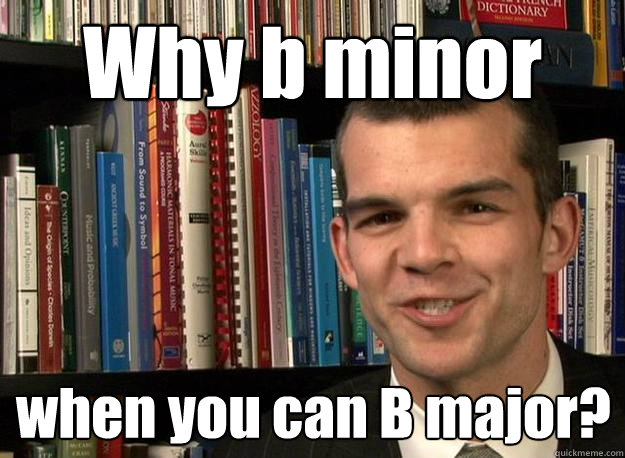
The minor key’s memeification began not with a grand declaration but with a whisper—a subtle shift in how people perceived its emotional weight. In music, a minor key is often associated with sadness, tension, or unresolved longing, a contrast to the brightness of major keys. This emotional duality made it ripe for irony in an era where internet culture thrives on juxtaposing the profound with the absurd. Early memes leveraged the minor key’s reputation for melancholy, using it as a punchline for mundane frustrations or exaggerated tragedies. A spilled coffee? In minor keys. A canceled plan? In minor keys. The phrase became a meme template, a way to signal that life’s disappointments, no matter how trivial, were being framed through a lens of dramatic, almost musical despair.
This ironic appropriation was amplified by the rise of platforms like Imgflip and Quickmeme, where users could slap captions onto images with minimal effort. The meme’s simplicity made it accessible, turning a complex musical concept into a one-size-fits-all emotional descriptor. The humor lay in the over-the-top seriousness with which the phrase was deployed, a digital wink that acknowledged the absurdity of taking life’s small failures too seriously. Yet, beneath the irony, there was a kernel of truth: the minor key’s association with sadness made it a relatable shorthand for anyone who has ever felt the weight of their own emotions.

The Visual Lexicon: Art, Memes, and the Aesthetic of Melancholy
As the phrase “in minor keys” gained traction, it spawned a visual lexicon that expanded far beyond text-based memes. Digital artists and illustrators began creating original artwork that embodied the meme’s essence, often blending surrealism with a melancholic aesthetic. One standout example is a piece featuring a character with a piano for a head, their fingers dancing over the keys in a way that suggests both creativity and constraint. The image is a visual metaphor for the minor key’s duality—freedom within structure, expression within limitation.
These artworks often employ a muted color palette, with blues, purples, and grays dominating the scene. The choice of colors isn’t arbitrary; they evoke the emotional palette of minor keys in music, where dissonance and harmony coexist. The imagery also leans into the surreal, with elements like floating keys, ghostly hands, or abstract shapes that defy logical explanation. This surrealism mirrors the internet’s own chaotic creativity, where meaning is often found in the unexpected and the nonsensical. The minor key meme, in its visual form, becomes a bridge between the structured world of music theory and the unstructured, rule-breaking nature of digital art.
Another layer of the visual lexicon is the use of abstract or symbolic imagery. A common motif is the juxtaposition of light and dark, where a bright, sunny scene is disrupted by a single, ominous shadow—or vice versa. This contrast mirrors the emotional journey of a piece written in a minor key, where moments of brightness are fleeting and tension lingers. The meme’s visual language is thus a tapestry of contradictions, reflecting the complexities of human emotion and the internet’s penchant for layering meaning.

Narrative and Parody: The Minor Key as a Storytelling Device
Beyond its visual and textual forms, the minor key meme has also seeped into narrative-driven content, where it serves as a framing device for stories, jokes, and even social commentary. One popular format is the “minor character” trope, where a seemingly insignificant or overlooked individual becomes the focal point of a dramatic, often tragic, narrative. The phrase “I’m a big fan of this minor character” plays on the double meaning of “minor”—both in the musical sense and as a descriptor for someone or something of lesser importance. The meme twists this trope into a celebration of the underdog, framing their struggles as epic and emotionally resonant.
This narrative approach extends to parody as well. In a world where everything from corporate jargon to personal anecdotes is ripe for satire, the minor key meme provides a template for exaggerating the gravity of mundane situations. A corporate email about a meeting reschedule becomes a Shakespearean tragedy. A text from a friend canceling plans is reimagined as a heartbreaking ballad. The humor lies in the contrast between the trivial subject matter and the over-the-top emotional delivery, a digital form of catharsis that allows people to laugh at life’s absurdities.
Moreover, the minor key meme has found a home in social commentary, where it’s used to highlight systemic issues or cultural trends. For example, a meme might depict a minor key soundtrack playing over a montage of mundane office tasks, sarcastically framing the daily grind as a symphony of despair. This use of the meme underscores its versatility—it can be a tool for humor, a lens for critique, or a way to find beauty in the mundane. The minor key, in this context, becomes a metaphor for the collective sigh of a generation grappling with the complexities of modern life.
The Cultural Ripple: Why the Minor Key Resonates Across Generations
The minor key meme’s enduring appeal lies in its ability to transcend generational and cultural boundaries. For older generations, the phrase may evoke nostalgia for the emotional depth of classical music or the introspective lyrics of folk and rock ballads. For younger audiences, it’s a digital shorthand for emotional expression in an era where mental health and self-awareness are increasingly discussed openly. The meme bridges these worlds, offering a shared language that is both nostalgic and contemporary.
Its resonance also stems from the minor key’s inherent versatility. In music, a minor key can convey sadness, anger, mystery, or even triumphant resilience. This emotional range allows the meme to adapt to countless contexts, from lighthearted jokes to poignant reflections. The minor key becomes a mirror, reflecting the user’s emotional state back at them and the audience. In a world where emotions are often compartmentalized or suppressed, the meme provides a safe, humorous outlet for processing feelings.
Additionally, the minor key meme thrives in the internet’s ecosystem of remix culture. Users constantly recontextualize and reimagine the phrase, ensuring it remains fresh and relevant. Whether it’s a new image macro, a viral TikTok trend, or an original piece of digital art, the meme evolves with each iteration. This dynamism keeps it from becoming stale, allowing it to remain a staple of online humor and expression. The minor key, in its meme form, is not static—it’s a living, breathing entity that grows and changes with the internet itself.
The minor key meme’s cultural ripple extends beyond humor, too. It has inspired music, literature, and even fashion, with brands and creators incorporating its aesthetic into their work. The phrase has become a cultural touchstone, a way to signal that something is imbued with emotional weight, whether seriously or sarcastically. In this way, the minor key meme is more than just a joke—it’s a cultural artifact that reflects the internet’s unique ability to repurpose and redefine the world around us.
The minor key’s journey from a musical term to a digital meme is a testament to the internet’s power to transform the mundane into the meaningful. What began as a technical descriptor has blossomed into a multifaceted cultural phenomenon, one that invites audiences to laugh, reflect, and connect. Whether through visual art, narrative parody, or social commentary, the minor key meme continues to evolve, proving that even the most niche concepts can find a home in the vast, chaotic landscape of online culture. In a world where emotions are often complex and difficult to articulate, the minor key offers a simple, relatable shorthand—a way to say, “I feel this too,” without needing to say it at all.


Leave a Comment