

In the grand tapestry of human expression, few threads weave as deeply into the soul as the interplay between minor keys and the visual arts. It’s a relationship that transcends mere aesthetics, burrowing into the psyche to reshape how we perceive form, emotion, and even the boundaries of reality itself. When the haunting cadence of a minor key takes center stage, it doesn’t just alter the soundtrack of our lives—it redefines the very canvas upon which we project our innermost visions. This is the story of how minor keys became the silent architects of a perceptual revolution, one that continues to echo through galleries, films, and the quiet corners of our imagination.
Imagine standing before a monochrome landscape, where the absence of color isn’t a void but a portal. The minor key, with its inherent melancholy and unresolved tension, acts as the invisible brushstroke that guides the viewer’s gaze beyond the surface. It whispers of stories untold, of emotions too complex for words. This isn’t just about music—it’s about a paradigm shift in how art communicates. The minor key doesn’t just accompany the visual; it amplifies it, turning passive observation into an active dialogue with the unseen.
The Alchemy of Emotion: How Minor Keys Transmute Visual Narratives
Art has always been a vessel for emotion, but minor keys elevate this exchange to an almost alchemical process. When a minor key infiltrates a visual narrative, it doesn’t merely underscore the mood—it transmutes it. Consider the way a film’s score in a minor key can make a mundane scene feel laden with foreboding or nostalgia. The same principle applies to static art. A painting that might otherwise be dismissed as merely somber becomes a vessel of profound introspection when paired with the right harmonic language. The minor key acts as a catalyst, transforming the ordinary into the extraordinary by inviting the viewer to peer beneath the surface.
This emotional transmutation isn’t confined to the realm of the dramatic. Even in minimalist art, where less is often more, the minor key can introduce a subtle unease—a tension that lingers like a half-remembered dream. It’s the difference between a serene landscape and one that feels haunted by the ghosts of what once was. The minor key doesn’t just describe emotion; it excavates it, forcing the viewer to confront the rawness of human experience in all its unfiltered glory.
The Illusion of Depth: Minor Keys as the Architects of Perceptual Layers
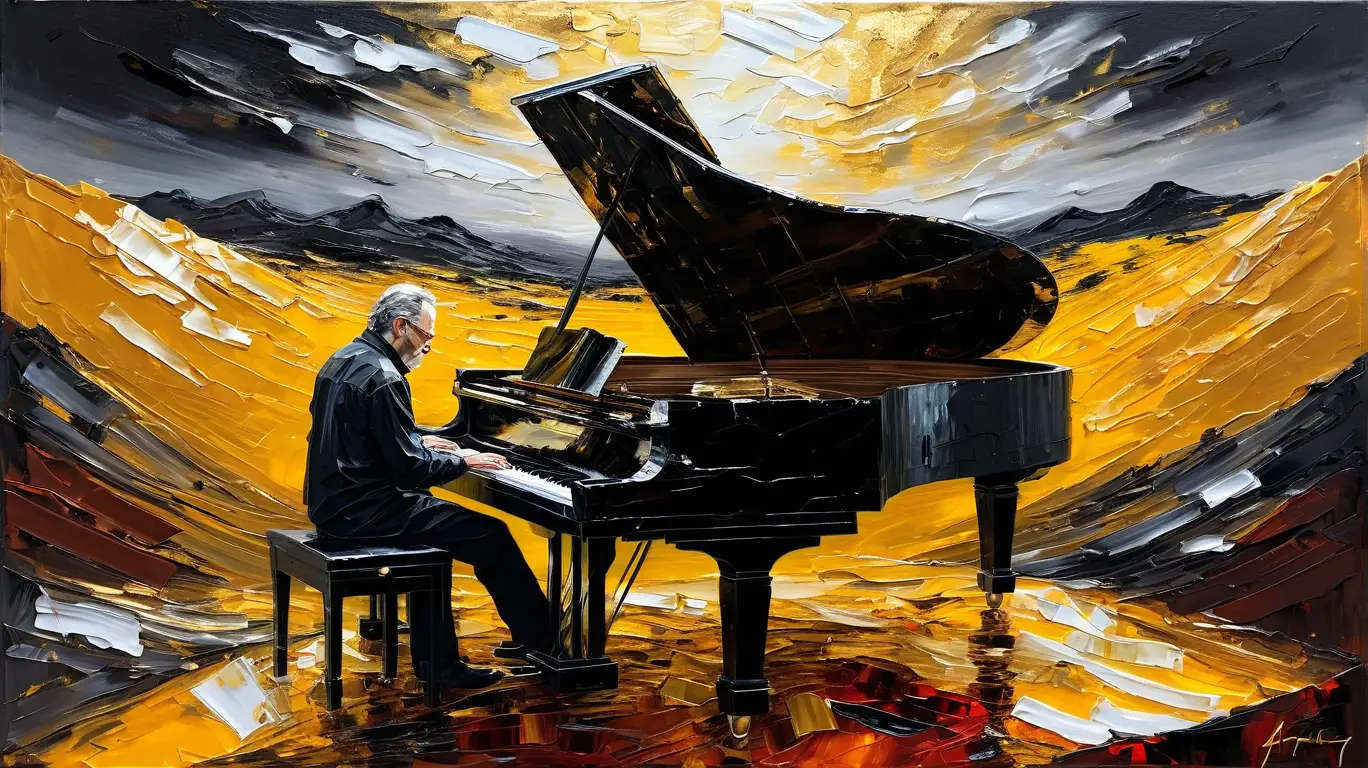
One of the most fascinating ways minor keys reshape our perception is by introducing a sense of depth that feels almost tactile. In visual art, depth is typically conveyed through perspective, shading, or contrast. But when a minor key enters the equation, it adds a psychological layer—a depth that exists not in space, but in time. The unresolved nature of minor chords creates a yearning, a pull toward something just out of reach. This yearning, when applied to visual art, transforms static images into dynamic experiences. A simple still life becomes a moment frozen in a larger, unfolding narrative. A portrait’s gaze feels heavier, as if the subject is silently pleading for resolution.
This perceptual trickery isn’t limited to traditional media. In digital art and animation, minor keys are often used to guide the viewer’s emotional journey through a sequence of frames. The absence of resolution in the music mirrors the absence of resolution in the visual, creating a symbiotic relationship where each element reinforces the other. The result is an immersive experience that feels less like observing and more like participating in a story that’s still being written.
The Subversion of Expectations: Minor Keys as the Great Disruptors
Art thrives on disruption, and minor keys are the ultimate disruptors. They refuse to play by the rules of harmony, instead embracing dissonance and ambiguity. This rebellious spirit has bled into visual art, where minor keys inspire artists to challenge conventions. A brightly colored abstract piece might suddenly feel somber when paired with a minor-key soundtrack. A traditionally cheerful subject—like a child’s playground—can take on a sinister edge when the underlying music is steeped in melancholy. This subversion isn’t just clever; it’s a testament to the power of art to recontextualize reality.
The disruption goes deeper still. Minor keys force the viewer to confront the uncomfortable, the unresolved, the things we’d rather ignore. In a world that often prioritizes resolution and clarity, the minor key reminds us that beauty can exist in ambiguity. It’s the visual equivalent of a poem that ends on an ellipsis, leaving the reader to fill in the blanks. This isn’t just a stylistic choice—it’s a philosophical stance, one that champions the incomplete as a valid and vital form of expression.
The Unseen Thread: Minor Keys in the Fabric of Modern Aesthetics
To understand the full impact of minor keys on visual art, we must zoom out and examine their role in shaping modern aesthetics. From the moody chiaroscuro of Baroque paintings to the neon-drenched despair of cyberpunk films, minor keys have been the silent collaborators in some of the most iconic visual movements. Even in contemporary design, where minimalism and maximalism often clash, the minor key’s influence is undeniable. It’s there in the muted palettes of Scandinavian interiors, the brooding cinematography of noir-inspired photography, and the haunting melodies that underscore avant-garde performances.
This isn’t a fleeting trend—it’s a fundamental shift in how we engage with art. The minor key’s ability to evoke complexity with simplicity makes it a powerful tool for artists seeking to communicate across cultural and linguistic barriers. It’s a universal language, one that speaks directly to the subconscious. Whether it’s the eerie stillness of a Hopper painting or the pulsating dread of a Lynchian dreamscape, the minor key is the thread that stitches together disparate visual experiences into a cohesive emotional tapestry.
The Future of Perception: What Lies Beyond the Minor Key
As we stand on the precipice of a new era in art and technology, the minor key’s role is only set to expand. With the rise of virtual and augmented reality, artists are experimenting with immersive environments where sound and visuals merge seamlessly. In these spaces, the minor key isn’t just an accompaniment—it’s an active participant in the creation of meaning. Imagine walking through a virtual gallery where the ambient music shifts from major to minor as you approach a particular artwork, altering your perception in real time. The minor key becomes a dynamic force, shaping not just the mood but the very structure of the experience.
Even in the realm of artificial intelligence, where algorithms generate art based on data, the minor key’s influence is palpable. AI-driven compositions often default to minor keys when tasked with creating emotionally resonant pieces, a testament to the enduring power of this harmonic language. The future of art may be digital, but the minor key ensures that it remains deeply human—a bridge between the tangible and the intangible, the seen and the unseen.
The minor key is more than a musical device; it’s a perceptual catalyst. It doesn’t just change how we see art—it changes how we see the world. By embracing its unresolved harmonies, we open ourselves to a richer, more nuanced understanding of beauty, emotion, and the stories that bind us all. So the next time you find yourself standing before a piece of art, listen closely. The music may not be playing, but the minor key is there, whispering in the silence, urging you to look deeper, feel more, and see beyond the obvious.


Leave a Comment