

What if the fragmented, dream-like imagery of surrealism is exactly the visual lexicon that a generation craving authenticity and emotional complexity has been yearning for? How has this once-radical art movement, famous for its melting clocks and impossible landscapes, become the go-to medium for Gen Z’s therapeutic expression? The answer lies deep within the interplay between art, identity, and mental health, revealing surrealism not just as an aesthetic choice but as a vital form of communication—a visual language that mirrors the tumultuous inner world of young adults navigating a kaleidoscope of anxieties and aspirations.
The Surreal Charm: Why Gen Z Finds a Mirror in Distortion
In a world oversaturated with polished illusions and curated realities, the poetic disarray of surrealism offers a refreshing divergence. It refuses to conform to neat narratives or simplistic truth. Instead, surrealism thrives on ambiguity, paradoxes, and juxtapositions, making it exceptionally suited to the psychological landscape of Gen Z. This generation contends with mental health challenges — anxiety, depression, identity fragmentation — often experienced as confusion, dislocation, or the feeling of living between realities. Surreal art embodies these sensations visually, creating spaces where contradictions coexist and the subconscious mind reigns supreme.

The deliberate distortion of familiar forms in surrealism acts as a metaphor for internal chaos, offering a kind of cognitive resonance. Unlike traditional realism, which demands clarity and order, surrealism invites viewers to embrace uncertainty, evoking a deep emotional acknowledgement rather than surface-level comprehension. For Gen Z, grappling with the paradoxical nature of existence and selfhood, this artistic ambiguity serves as a balm and a beacon.
Visual Therapy: Surrealism as a Vehicle for Mental Health Expression
With rising awareness and destigmatization of mental health issues, creative outlets have become indispensable therapeutic tools for young adults. Surrealism’s embrace of the irrational and the dreamlike enables users to externalize abstract feelings that are otherwise difficult to articulate. The subconscious, often repressed or misunderstood, finds a vivid voice through surreal imagery.
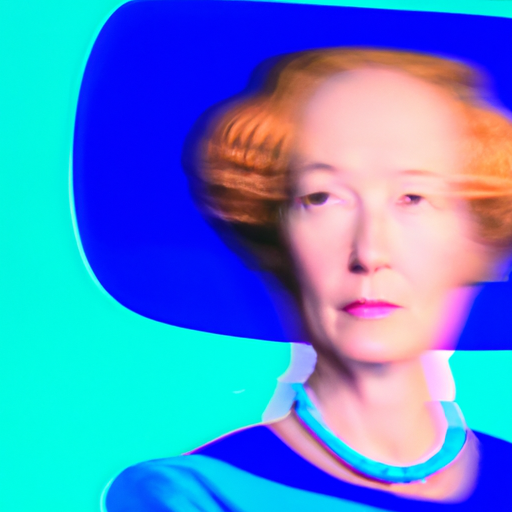
Digital platforms, social media communities, and online galleries provide fertile ground for surreal artworks that double as personal narratives or therapeutic snapshots. By crafting and sharing surreal art, young people negotiate their internal discomfort and vulnerability, turning intangible emotions into tangible forms. This visual storytelling cultivates empathy, breaks isolation, and nurtures self-reflection. In this way, surrealism transcends aesthetic function and becomes a dynamic form of mental health practice, a coded language where feelings of fragmentation or dissociation can be safely explored and understood.
The Challenge of Decoding: Does Surrealism Speak Too Cryptically?
But here arises a curious challenge: can the enigmatic symbols and obscure metaphors of surrealism sometimes alienate rather than connect? This art form’s strength — its ambiguity — can become a double-edged sword. When an image is too abstract or obscure, it risks remaining inscrutable, leaving the viewer alienated or puzzled rather than comforted or healed.
Gen Z’s affinity for surrealism demands a balance — maintaining the evocative mystery while fostering accessibility. One solution lies in combining digital interactivity and mixed media, such as augmented reality or layered storytelling, which creates multiple entry points for engagement. The language of surrealism adapts, evolves, and sometimes clarifies without losing its quintessential openness.
Brands Embracing Surrealism: Normalizing the Weird in Wellness
Commercial entities have also taken notice, harnessing surreal aesthetics to resonate with a generation that prizes authenticity and emotional depth. This strategic embrace by brands underscores a cultural shift where unconventional visuals are no longer niche but aspirational. The bizarre and uncanny are tools to evoke curiosity, ignite conversations around wellness, and destigmatize mental health dialogues.

By aligning themselves with surrealism’s liberating ethos, brands forge emotional connections that transcend transactional relationships. This cultural permeation not only elevates surrealism from avant-garde art to widespread visual vernacular but also signals a broader acceptance of mental health struggles as universal and worthy of expressive exploration.
Surrealism as a Contemporary Tool for Self-Discovery
Beyond therapy and commerce, surrealism functions as a playground for self-invention and exploration—a critical aspect for a generation confronting questions of identity at unprecedented scale. In an era where digital personas can be fluid and fragmented, surreal imagery offers a symbolic toolkit to reimagine and reconstruct the self.
This manifests in intensely personalized artworks where dream logic and bizarre symbolism unlock hidden aspects of personality, desires, and fears. It allows individuals to transcend the limitations of conventional expression, tapping into archetypal narratives and personal mythologies, which are cathartic, empowering, and ultimately, transformative.
In countless ways, surrealism’s permeation into Gen Z’s cultural and emotional fabric reveals a profound truth: our inner worlds are not linear or logical, and the maps we use to navigate them must be as mutable and enigmatic as the terrain itself. As a visual language of therapy, surrealism invites us to embrace the fluidity of identity and the healing potential of imaginative chaos.
Indeed, the question then isn’t whether surrealism is too cryptic for mental health expression, but whether traditional modes of communication can still capture the complex, often contradictory, experience of being young today. In this challenge lies the answer: surrealism’s eccentric charm is not a barrier, but a bridge. It is a language of cracks and fissures, where the unseen is illuminated and the unsayable finds form.


Leave a Comment