

Have you ever wandered through a city and stumbled upon an art installation that made you pause, tilt your head, and reconsider everything you thought you knew about the space around you? Not just a fleeting moment of intrigue, but a lingering sense of wonder that lingers like the aftertaste of a perfectly brewed cup of coffee? That’s the magic of Theaster Gates’ guerrilla installations—a phenomenon that has quietly reshaped neighborhoods, one audacious intervention at a time.
For over a decade, Gates has wielded art not as a passive observer of urban decay, but as a dynamic force of reclamation. His work doesn’t just decorate; it transforms. It doesn’t just critique; it rebuilds. And in doing so, it poses a playful yet profound challenge: What if art wasn’t just for galleries, but for the very streets we walk every day?

The Alchemy of Abandonment: Turning Neglect into Narrative
Gates’ installations often begin in the unlikeliest of places—vacant lots, boarded-up storefronts, or the skeletal remains of defunct buildings. These aren’t just physical spaces; they’re canvases of collective memory, waiting to be rewritten. Take, for instance, his project Gone are the Days of Shelter Martyr, where a derelict structure was draped in salvaged materials, transforming it into a monument to resilience. The juxtaposition is deliberate: the starkness of abandonment against the vibrancy of artistic intervention. It’s as if Gates is whispering to the city, “Look closer. This isn’t just a ruin—it’s a story waiting to be told.”
The genius lies in his use of found objects. Discarded doors, rusted metal, and weathered wood aren’t just repurposed—they’re recontextualized. A broken window becomes a frame for light. A crumbling wall becomes a canvas for community voices. Gates doesn’t just recycle materials; he recycles meaning. Each installation becomes a palimpsest, layering new narratives over the scars of the past.
The Guerrilla Tactics: Art as a Subversive Act
Gates’ approach is nothing short of guerrilla warfare—artistic, yes, but with the precision of a strategist. He doesn’t ask for permission; he occupies the silence. His installations often appear overnight, like urban apparitions, forcing passersby to confront the unexpected. This isn’t art for the elite; it’s art for the people, planted in the cracks of everyday life.
Consider the challenge he poses to traditional notions of ownership. When Gates transforms a vacant lot into a temporary gallery, who owns the space? The city? The landlord? The artist? The community? His work thrives in this ambiguity, turning the act of creation into a communal act of reclamation. It’s a reminder that public space isn’t just something we pass through—it’s something we can shape.
The Neighborhood as a Living Canvas: Beauty as a Catalyst for Change
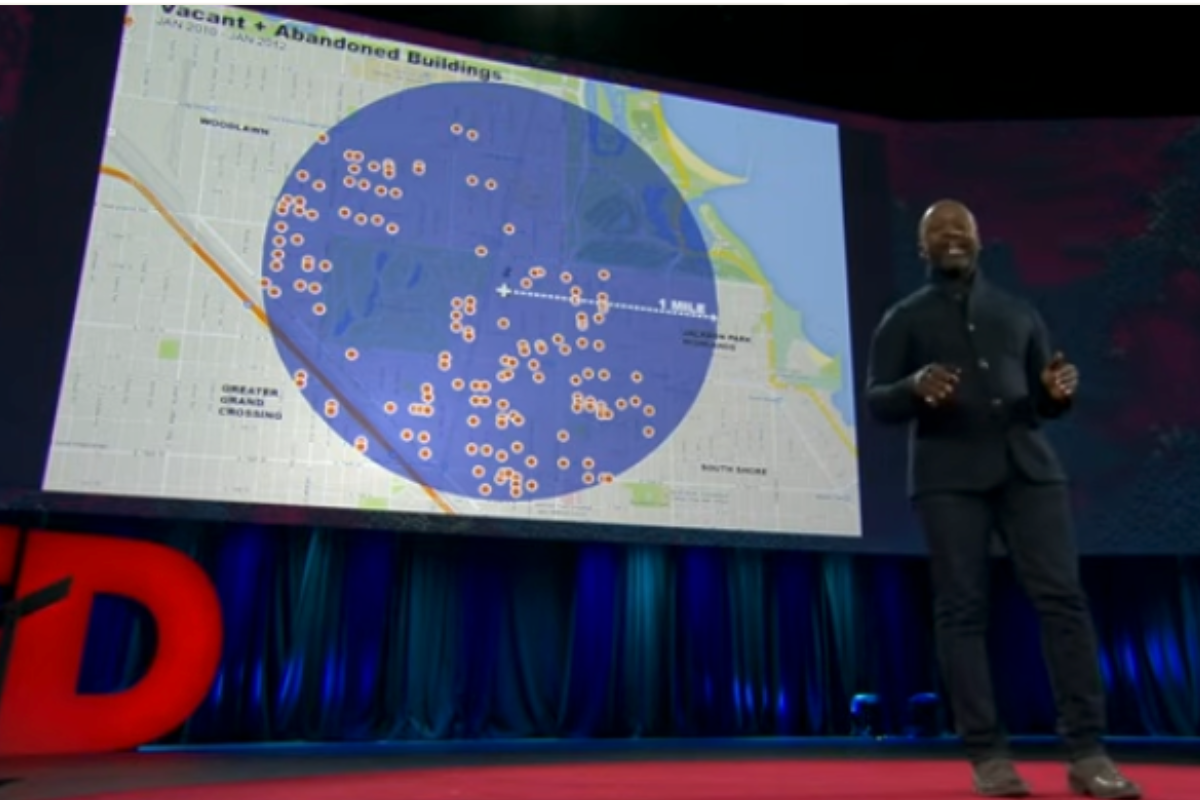
Gates doesn’t just install art; he installs possibility. His work in neighborhoods like Chicago’s Dorchester Projects is a masterclass in how beauty can catalyze transformation. By introducing striking visuals—mosaics, sculptures, and murals—he doesn’t just beautify; he redefines what a neighborhood can be. The installations become landmarks, rallying points, and symbols of pride.
But here’s the twist: Gates’ art isn’t just about aesthetics. It’s about agency. His projects often involve local residents in the creation process, turning spectators into participants. When a community helps build a sculpture or paints a mural, they’re not just contributing to a project—they’re investing in their own future. It’s a subtle but powerful shift: from passive observers to active creators of their environment.
The Paradox of Permanence: When Art Outlasts Its Intent
Of course, no discussion of guerrilla art would be complete without addressing its fragility. Gates’ installations are often temporary, designed to evolve or fade. But what happens when the art outlasts its original intent? When a once-vibrant mural becomes a backdrop for graffiti? When a sculpture, meant to inspire, becomes a target for neglect?
This is where Gates’ work transcends the visual. His installations aren’t just objects; they’re conversations. They challenge us to ask: What do we value? What do we preserve? And perhaps most importantly, what do we leave behind? The impermanence of his work isn’t a flaw—it’s a feature. It reminds us that art, like life, is a series of fleeting moments, each one a chance to redefine our surroundings.

The Ripple Effect: How One Installation Inspires Another
The true measure of Gates’ impact isn’t just in the installations themselves, but in the ripple they create. His work has inspired a generation of artists to see the city not as a static backdrop, but as a dynamic stage for intervention. From pop-up galleries in subway stations to guerrilla knitting on construction barriers, his influence is everywhere.
But perhaps the most enduring legacy is the way his art challenges us to see the world differently. It asks us to look at a boarded-up window and imagine a stained-glass masterpiece. It asks us to see a vacant lot and envision a community garden. It asks us to consider that the spaces we take for granted might be the most fertile ground for transformation.
So, the next time you walk past a drab alley or a forgotten corner of your city, ask yourself: What would Theaster Gates do? Would he leave it as is, or would he drape it in color, in meaning, in possibility? The answer, of course, is up to you.
The streets are waiting. The canvases are blank. The challenge has been issued.


Leave a Comment