

In the labyrinth of human experience, darkness often serves as the crucible where raw emotion and profound insight are forged. Yet, even in these shadowed corridors, laughter can emerge—not as a betrayal of sorrow, but as a defiant spark in the void. Humor, when wielded with precision, doesn’t dilute the gravity of hardship; it transmutes it, offering readers a lantern to navigate their own emotional terrain. Whether you’re crafting a memoir, penning a novel, or composing a poignant essay, infusing levity into the bleakest moments can transform your writing from mere catharsis into a resonant symphony of resilience. Here’s how to harness humor’s alchemy to illuminate the darkest corners of your narrative.
The Subversive Charm of Dark Comedy
Dark comedy thrives in the paradox of laughter amid despair, a literary sleight-of-hand that disarms readers before revealing the knife’s edge beneath. When wielded judiciously, it can underscore the absurdity of suffering, rendering it less monolithic and more human. Consider the protagonist who cracks a joke while staring into the abyss—suddenly, their vulnerability becomes a shared experience. This isn’t about trivializing pain but about exposing its jagged edges to the light, where it can be examined without flinching. To master this, study the cadence of gallows humor: the pause before the punchline, the understated delivery, the way a single word can pivot tragedy into something almost bearable. The key lies in timing—too soon, and you risk callousness; too late, and the moment loses its sting.

Satire as a Mirror for Societal Shadows
Satire doesn’t just mock—it dissects, holding up a warped funhouse mirror to society’s darkest hypocrisies. When the world feels like a dystopia, satire becomes a scalpel, slicing through pretension to reveal the rot beneath. Think of the bureaucrat who insists on filling out forms in triplicate while the protagonist’s life unravels, or the corporate jargon that reduces human tragedy to buzzwords. The humor here isn’t gentle; it’s a Molotov cocktail wrapped in silk, designed to detonate in the reader’s mind. To employ satire effectively, immerse yourself in the absurdities of your subject matter. Exaggerate the mundane until it becomes grotesque, then let the reader’s discomfort do the rest. The goal isn’t to make them laugh for laughter’s sake, but to force them to confront the uncomfortable truths hiding in plain sight.
Irony: The Unseen Hand of Fate
Irony is the literary equivalent of a plot twist where the universe itself seems to be in on the joke. When life’s cruelties align with cruel precision—like the person who loses their job the same day they win the lottery—irony doesn’t just describe the moment; it exposes the cruel caprice of existence. In writing, irony can be a narrative device, a thematic undercurrent, or a character’s coping mechanism. The key is to let the irony speak for itself, without over-explaining. The reader should feel the sting of recognition, the sudden realization that life’s script is written by a mischievous hand. Use irony to highlight the disconnect between expectation and reality, whether in a protagonist’s internal monologue or the external events of your story. The humor lies in the gap between what is and what should be—and the reader’s complicity in recognizing it.
Absurdism: Finding Laughter in the Void
Absurdism embraces the chaos of a world without inherent meaning, where laughter becomes an act of defiance against the void. This is humor stripped of pretense, raw and unfiltered, like the protagonist who talks to their houseplant during a breakdown or the bureaucrat who insists on following protocol while the sky is falling. The absurd doesn’t offer solutions; it offers release. To write in this vein, lean into the surreal, the illogical, the downright ridiculous. The more outlandish the situation, the more potent the humor—provided it’s grounded in emotional truth. The reader should laugh, then pause, then feel the weight of what they’ve just witnessed. This isn’t about making light of suffering; it’s about acknowledging that suffering, in all its absurdity, is part of the human condition.
Self-Deprecation: The Humility of Shared Vulnerability
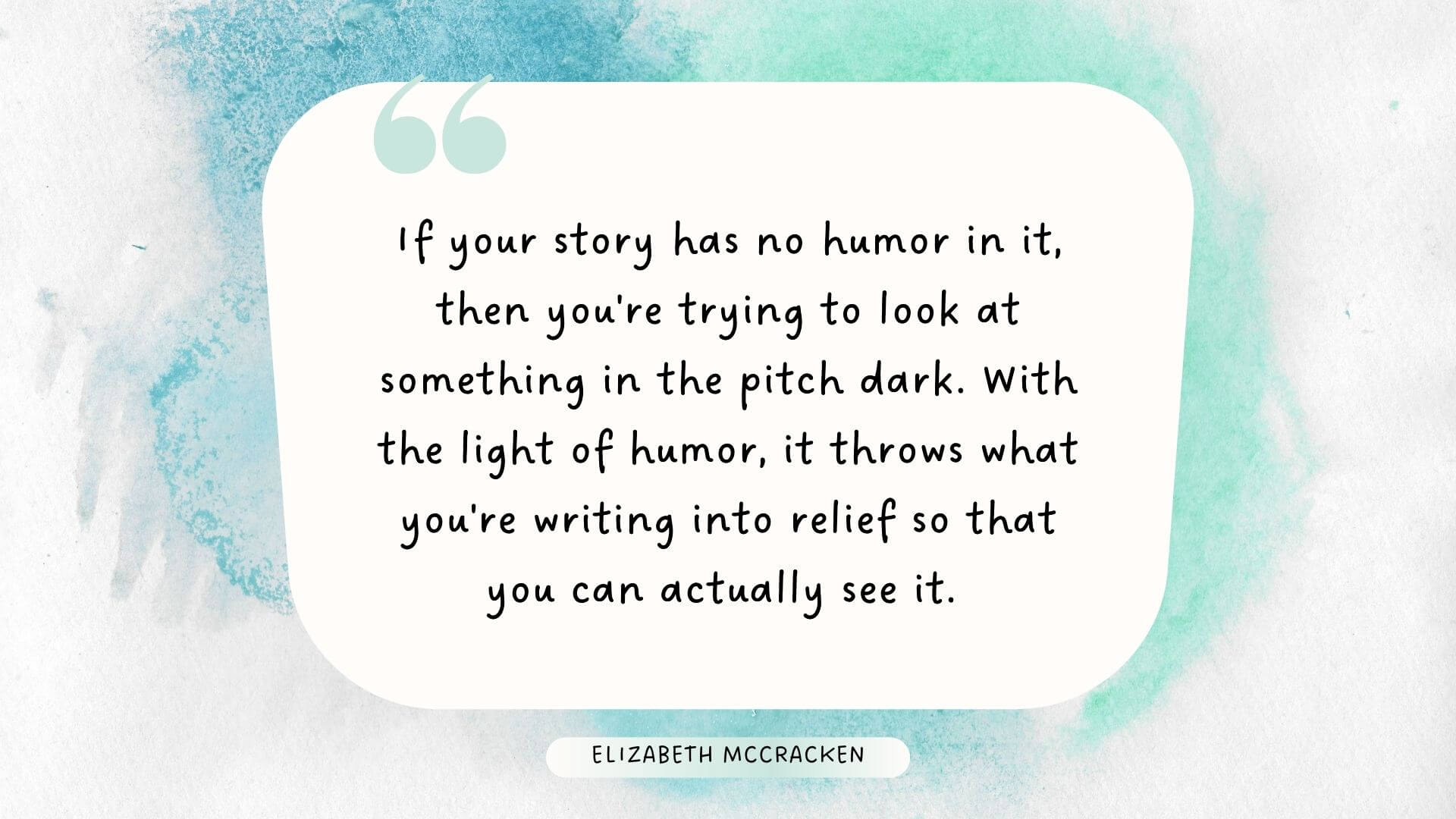
Self-deprecating humor is a bridge between writer and reader, a shared laugh at the expense of our own flaws. When a character or narrator pokes fun at their own misfortunes, it disarms the reader, making them more receptive to the heavier themes that follow. This isn’t about false modesty or wallowing in self-pity; it’s about recognizing that everyone stumbles, and sometimes the best way to move forward is to laugh at the stumble. Use self-deprecation to humanize your protagonist, to show their resilience in the face of their own shortcomings. The humor should feel earned, not forced—a natural outgrowth of their personality and circumstances. The reader will see themselves in the joke, and in that shared laughter, find a moment of connection.
Wordplay and Linguistic Mischief
Language is a playground, and in the darkest moments, wordplay can be a sanctuary. Puns, double entendres, and malapropisms aren’t just linguistic flourishes; they’re tools to reframe pain. A character who mishears a diagnosis as a “diagnosis of doom” isn’t just being funny—they’re reclaiming agency over a situation that feels uncontrollable. To wield wordplay effectively, immerse yourself in the nuances of language. Play with homophones, twist idioms, and let the absurdity of words mirror the absurdity of life. The key is to keep the humor organic to the character’s voice and the story’s tone. A well-timed pun can lighten the mood without undermining the gravity of the moment, leaving the reader with a smile and a sigh.
Character-Driven Humor in Desperate Times
Humor is most potent when it’s inseparable from character. A stoic protagonist who suddenly delivers a deadpan one-liner in the face of disaster reveals more about their resilience than pages of exposition ever could. To craft character-driven humor, dig into their backstory, their quirks, and their coping mechanisms. Does your character use sarcasm as armor? Do they find solace in poking fun at their own flaws? Let their humor be an extension of who they are, and the dark moments will feel more authentic for it. The reader should recognize the humor as a natural part of the character’s journey, not an artificial addition tacked on to lighten the mood.
Balancing Tone: When to Laugh and When to Mourn
The tightrope of balancing humor and gravity is where the most compelling narratives are forged. The key is to let the humor arise organically from the story’s emotional core, not to force it as a distraction. A well-placed joke can punctuate a somber scene, giving the reader a moment to breathe before diving back into the depths. But timing is everything. The humor should feel earned, a natural outgrowth of the character’s voice or the situation’s absurdity. If the laughter feels forced or out of place, it can undermine the story’s emotional impact. Trust your instincts—if a moment feels too heavy for humor, let it breathe. If it begs for levity, lean into it. The goal is to create a rhythm where laughter and sorrow coexist, each enhancing the other.
Writing about the darkest moments doesn’t mean surrendering to despair. It means embracing the full spectrum of human experience, where laughter and tears are not opposites but dance partners in the grand ballet of existence. Humor, when wielded with intention and respect, can be a beacon in the gloom, a reminder that even in our darkest hours, we are not alone. So pick up your pen—or open your laptop—and let the words flow. Let the humor rise like steam from a kettle, sharp and unexpected, but always, always honest. The world needs your stories, and some of them, perhaps, need to be told with a smile.


Leave a Comment