

I stepped into the studio, my sneakers squeaking against the polished floor. The air hummed with anticipation, a low murmur of voices blending into the scent of sweat and possibility. Around me, bodies swayed in quiet conversation, their postures loose, their laughter easy. I had no idea what I was in for—but I knew one thing for certain: trust was about to become my new language.
Contact Improvisation (CI) isn’t just a dance form; it’s a conversation without words, a negotiation of weight and momentum, a surrender to the unknown. It’s the art of falling and being caught—not just physically, but emotionally. My first time trying it was less about skill and more about surrender. And what unfolded was nothing short of revelatory.
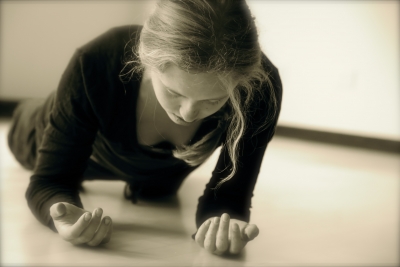

The Studio as a Crucible of Trust
The moment the facilitator called us to gather, the room shifted. Bodies gathered in a loose circle, hands resting on shoulders, eyes scanning the space with a mix of curiosity and caution. This wasn’t a dance class where you learned steps. There were no mirrors, no rigid choreography—just bodies learning to listen. The first exercise was simple: stand in pairs, palms touching, and let the other person guide your movement. No words. Just touch.
At first, it felt awkward. My partner’s hands were warm, slightly damp. I could feel the hesitation in their pressure—just as I’m sure they felt mine. But then, something shifted. A subtle shift in weight. A lean. A response. The room began to breathe. Trust wasn’t something we declared; it was something we built, millimeter by millimeter, through the quiet language of contact.
This is where CI begins—not with technique, but with presence. The studio becomes a laboratory of trust, where every touch is an experiment, every fall a lesson in letting go. The floor isn’t an enemy; it’s a partner. The weight of another body isn’t a burden; it’s an invitation.
The Physics of Surrender: Falling as a Revelation
Then came the falls. Not the dramatic, theatrical kind—these were gentle, almost imperceptible descents into the arms of a stranger. The instruction was clear: let yourself be supported. Don’t brace. Don’t resist. Just fall.
My first attempt was a disaster. I tensed up, my muscles locking in preparation for impact. My partner, sensing my rigidity, adjusted their stance, cradling me with more effort than grace. “You’re fighting the fall,” they murmured. “The floor isn’t going to hurt you. Let it hold you.”
I exhaled. And then—something extraordinary happened. I let go. Not all at once, but in increments. My body remembered what it was like to trust gravity, to trust another person’s hands, to trust that the floor would catch me. The fear didn’t vanish, but it transformed. It became part of the dance, a shadow that moved with me, guiding rather than restricting.
This is the alchemy of CI: falling isn’t failure; it’s collaboration. The ground becomes a cradle, the partner a co-conspirator in defying the illusion of control. In that moment, I understood why CI practitioners speak of it as a metaphor for life—because trust isn’t about never falling. It’s about knowing you’ll be caught.
The Unspoken Dialogue: Reading Bodies Like Poetry
As the session progressed, the exercises grew more complex. We moved from static contact to rolling, from standing to spiraling across the floor. Each transition required a new kind of listening—not just to the music (though there was always music, a pulsing undercurrent of sound), but to the subtle shifts in breath, muscle tension, and intention.
One exercise stood out: the “blind lead.” Partners took turns guiding each other through space, one with eyes closed, the other using only touch to communicate direction. My first attempt was a comedy of errors. I misread a gentle nudge as a command to turn left when my partner meant right. We collided. Laughed. Tried again.
But gradually, something shifted. I began to feel the difference between a hesitant touch and a decisive one. I learned to distinguish between a partner’s curiosity and their caution. The body, it turns out, is an eloquent storyteller—if you know how to listen.
This is the heart of CI: it teaches you to read the unspoken. In a world where words often fail us, where misunderstandings fester in silence, CI offers a different kind of communication. It’s raw, immediate, and profoundly vulnerable. There’s no hiding behind technique or performance. Just two people, negotiating space, weight, and trust in real time.

The Emotional Undercurrent: Fear, Joy, and the Space Between
Of course, it wasn’t all grace and revelation. There were moments of frustration, of doubt, of the creeping fear that I wasn’t “doing it right.” CI doesn’t reward perfection. It rewards presence. And presence is messy.
I remember a particularly challenging exercise where we were asked to maintain contact while moving through the space, our bodies constantly adjusting to each other’s rhythms. My partner was tall, lean, and moved with a dancer’s precision. I, on the other hand, am built like a brick wall—solid, unyielding. The disparity in our movement styles created friction. I could feel my frustration rising, my breath quickening. “Why isn’t this working?” I thought. “Am I too heavy? Too clumsy?”
But then, something shifted. My partner slowed down. They adjusted their stance, giving me more room to move. They didn’t try to “fix” me. They simply met me where I was. And in that adjustment, the dance found its rhythm again. Not because I had changed, but because we had both surrendered to the process.
This is the emotional core of CI: it’s not just about physical trust, but about emotional resilience. It asks you to confront your insecurities, to sit with discomfort, to find joy in the imperfect. There’s no “right” way to do it. There’s only the way that emerges in the moment, shaped by the people in the room and the energy they bring.
The Aftermath: A Body That Remembers
When the session ended, my body felt different. Not just tired, but *alive* in a way I hadn’t experienced before. My muscles ached in places I didn’t know existed. My mind buzzed with a strange clarity, as if I’d just woken up from a dream I couldn’t quite remember but knew had changed me.
I walked out of the studio with a new awareness of my body—not as something to be controlled or perfected, but as something to be listened to. The way my shoulders tensed when I was anxious. The way my breath quickened when I was excited. The way my weight shifted when I was unsure. CI had given me a language to understand these signals, to respond to them with curiosity rather than judgment.
That night, I dreamed of falling. But this time, I wasn’t afraid. I was caught.
Contact Improvisation isn’t for everyone. It demands vulnerability, patience, and a willingness to embrace the unknown. But for those who dare to try, it offers something rare: the chance to experience trust not as a concept, but as a living, breathing reality. It’s a reminder that connection isn’t about perfection—it’s about presence. And in a world that often feels fragmented and hurried, that’s a gift worth exploring.
So if you ever find yourself in a studio, surrounded by strangers who are about to become your partners in trust, take a deep breath. Let go. Fall. And trust that you’ll be caught.


Leave a Comment