

The Venice Biennale has long been a luminary in the world of contemporary art, serving as a pulsating heart that beats to the rhythm of innovation, tradition, and societal reflection. Yet, the 2026 edition unveils something profoundly new—a thematic overture titled “In Minor Keys” that beckons audiences to embrace melancholy, vulnerability, and the oft-neglected realm of emotional surrender. This Biennale challenges us not to celebrate triumph or spectacle exclusively, but rather to pause, delve deeper, and—most intriguingly—cry. It is an invitation to recalibrate our sensory and emotional palettes, to experience sorrow not as a weakness, but as a catalytic force for understanding and regeneration.
Embracing the Sublime: The Art of Melancholy
At the heart of “In Minor Keys” lies a radical shift away from the exuberant bravura typically associated with monumental art exhibitions. Instead, the Venice Biennale invites a nuanced reflection on subtlety, ambiguity, and the ineffable beauty found in sadness and quiet introspection. The phrase “minor keys” itself is a deliberate metaphor, drawn from music theory, where minor scales evoke poignant, contemplative, or somber moods—a stark contrast to major keys’ joyous, buoyant tone.
This conceptual pivot encourages visitors to engage with art that does not necessarily seek to inspire happiness or awe but to pierce deeper emotional strata. It is a call for empathy and vulnerability in an age frequently dominated by spectacle and surface-level engagement. By highlighting the aesthetic and philosophical significance of melancholy, the exhibition promises a sensory experience that is as much about feeling as it is about viewing.
A Curated Symphony of Artworks: Navigating Emotional Complexity
The curation of “In Minor Keys” masterfully constructs an exhibition that traverses the diverse manifestations of sorrow, loss, nostalgia, and longing. Each artwork has been selected not just for its aesthetic merit but for its capacity to resonate on a psychological and emotional plane. Visitors will find immersive installations that envelop them in muted sonic landscapes, paintings drenched in twilight hues, and sculptures that evoke fragility and impermanence.
These works meld disparate mediums, drawing from the collective unconscious, weaving narratives that transcend cultural and geographical boundaries. The exhibition frames melancholy as a universal language, a shared human experience that can foster connection amidst fragmentation. Through this eclectic symphony of artistic expressions, the Biennale offers a profound meditation on the multifaceted nature of sorrow and its power to illuminate the overlooked domains of human emotion.
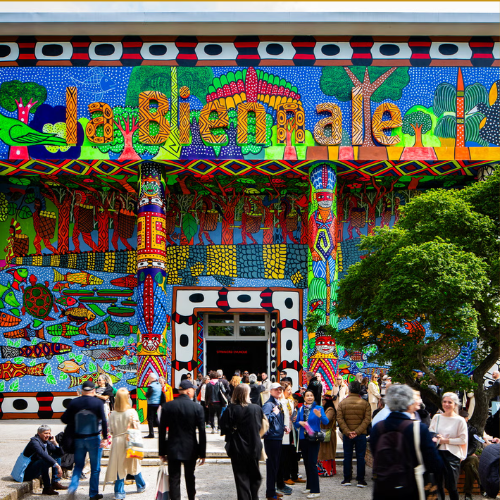
Why Cry? The Radical Act of Emotional Openness
In contemporary society, tears are too often stigmatized or dismissed as a sign of defeat. The 2026 Venice Biennale subverts this cultural norm by embracing crying as a radical and potent act—one that disrupts the emotional armor many of us wear. The exhibition asserts that tears catalyze authenticity and deepen our connection to art and to ourselves.
This outright acceptance of emotional vulnerability challenges visitors to shed the bravado of stoicism and enter spaces where grief, regret, and yearning are not only acknowledged but revered. Embracing such profound emotions in public spaces recalibrates the ways we understand resilience and strength. It suggests that healing and insight are often found in the willingness to confront our own depths rather than avoiding them.
Shifting Perspectives: The Societal Implications of Mourning Art
“In Minor Keys” transcends the personal and speaks to broader societal currents. The global fabric is woven with threads of collective trauma, ecological anxiety, and sociopolitical turmoil. In this context, mourning becomes a communal experience, enabling new dialogues about loss and recovery on a cultural scale.
The Biennale’s focus catalyzes discussions on how art can mediate processing grief in times marked by so much uncertainty and upheaval. Rather than offering easy solace, the exhibition challenges visitors to acknowledge uncomfortable realities through an aesthetic prism, one that makes room for complexity and ambiguity. Such a shift posits that our cultural frameworks might evolve by integrating the recognition of shadow and sorrow into public consciousness.
Art as a Mirror and a Map
“In Minor Keys” not only reflects the emotional terrain of individuals and societies but also functions as a cartographic device navigating the precarious geography of human experience. Art becomes a mirror, reflecting our internal states and encouraging introspection, but also a map guiding us through the labyrinthine challenges of emotional and existential crises.
The Biennale’s installations, performances, and curated pieces encourage a form of active engagement, a journey through layers of feeling, thought, and memory. Visitors are invited to linger in these liminal spaces, to surrender to the flux of emotions and emerge with fresh perspectives—on art, on pain, and on the elusive nature of beauty itself.

A Collective Experience of Quietude and Reflection
Ultimately, “In Minor Keys” delivers a moment of collective quietude amid the usual frenzy of the Venice Biennale. It encourages slow contemplation, fostering environments where silence and tears coexist with multisensory encounters. This intentional deceleration enables the public to rethink their engagement with art and with the invisible emotional undercurrents in daily life.
The power of this Biennale lies not only in its innovative artworks but in its invitation to a radically altered mode of perception—one that values the understated, the intangible, and the emotionally fraught. It promises a cultural experience that lingers long after the event itself has ended, offering visitors new tools for empathy and self-awareness.
As the 2026 Venice Biennale unfolds, “In Minor Keys” stands as a beacon for those willing to explore the depths of human feeling. It pulls us away from clamor and distraction, guiding us toward emotional honesty and shared vulnerability. In doing so, it redefines what it means to experience art in the modern age—to stop, to look, and yes, to cry. Such an exhibition promises not simply to show us new art, but to transform the very way we relate to ourselves and the world around us.


Leave a Comment