

In the grand symphony of global art, where each biennale acts as a resounding gong, the Venice Art Biennale has always been the crescendo—a moment when the world pauses to listen. And now, as the 2026 edition looms on the horizon, the baton has been passed to a conductor whose name itself hums with resonance: Koyo Kouoh. Her theme, “in minor keys,” isn’t just a musical metaphor—it’s a provocation, a whisper that may soon roar through the halls of history like a forgotten melody resurfacing in a dusty attic. What happens when the world’s most prestigious art exhibition decides to play in the shadows of sorrow, the echoes of dissent, and the quiet persistence of the unheard? Let’s tune our ears and step into the resonance of Kouoh’s vision.
Imagine, for a moment, standing in the cavernous halls of the Arsenale or the stately Giardini, where the weight of centuries presses down like the low notes of a cello. The air is thick with anticipation, the kind that precedes a performance not just of art, but of intention. Kouoh’s theme—“in minor keys”—invites us to consider art not as a triumphant fanfare, but as a lament, a meditation, a murmur that lingers long after the audience has left. It’s an audacious choice. In a world that often rewards spectacle over substance, can the Biennale—a stage traditionally reserved for the monumental—embrace the subtle, the unresolved, the melancholic? Or will the minor keys be drowned out by the clamor of the market, the glare of the spotlight, the relentless demand for the new?
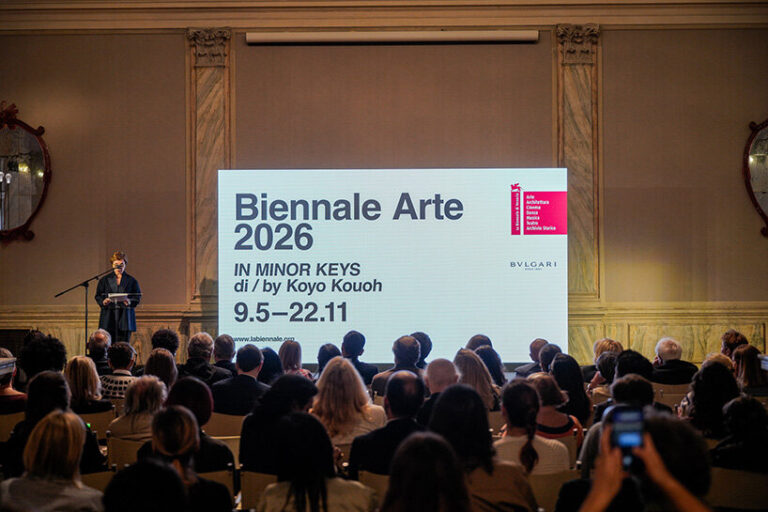
The Minor Keys as a Mirror: Reflecting What the World Ignores
Minor keys in music are not merely scales; they are emotional palettes. They carry the weight of longing, the ache of loss, the quiet defiance of those who refuse to be silenced. Kouoh’s choice to anchor the Biennale in this tonality is not accidental—it’s a deliberate act of centering what the art world has historically sidelined. Think of the minor keys as the visual equivalent of a poem written in the margins of history, where the stories of the displaced, the marginalized, and the forgotten are finally given a voice. This Biennale could become a sanctuary for the unsung, a place where the narratives of Africa’s diaspora, Indigenous struggles, or the silent erosion of ecosystems are not just represented but revered.
Yet, here lies a playful challenge: Can the Biennale, with its centuries-old tradition of European-centric narratives, truly pivot to the minor without losing its own melody? The risk is real. The minor keys demand patience, a willingness to sit with discomfort, to listen rather than to perform. Will the audience—hungry for the next Instagram moment—have the stamina to engage with art that refuses to shout? Or will the minor keys be reduced to a trend, a fleeting aesthetic, rather than a transformative experience?
The Curator’s Baton: Kouoh’s Legacy in the Making
Koyo Kouoh is not a newcomer to the art world’s grand stage. As the former director of the Zeitz MOCAA in Cape Town, she has already proven her ability to orchestrate exhibitions that resonate beyond the gallery walls. Her curatorial voice is one of intersectionality, where art, activism, and academia collide in a vibrant, sometimes dissonant, harmony. Under her guidance, the 2026 Biennale could transcend its role as a mere exhibition and become a living archive of resistance, a testament to the power of art to challenge, to heal, and to reimagine.
But leadership is a double-edged sword. Kouoh’s vision will be scrutinized, dissected, and, inevitably, politicized. Will her emphasis on the minor keys be seen as a bold reclamation of narrative or as a divisive departure from tradition? The art world thrives on debate, but it also fears the unknown. What if the minor keys are misinterpreted as weakness, as a retreat from the bold strokes of modernism? Kouoh’s challenge is not just to curate an exhibition—it’s to redefine what an exhibition can be in the 21st century.
The Ghosts in the Gallery: Who Will Haunt the Biennale?
Every Biennale carries the specters of its past. The 2026 edition will be no different. The minor keys suggest a haunting—not in the horror-movie sense, but in the way that history’s unresolved tensions refuse to stay buried. Who are the ghosts Kouoh intends to summon? Perhaps they are the artists of the African diaspora whose works have been sidelined by Eurocentric canons. Maybe they are the environmental activists whose warnings have been ignored until it’s too late. Or could they be the women artists of the 20th century whose contributions were erased by patriarchal structures?
This Biennale could become a séance, a ritual where the past and present collide in a cacophony of sound and silence. But here’s the rub: ghosts are unpredictable. They don’t follow scripts. They appear when least expected, and their messages are often ambiguous. Kouoh’s task is to guide this spectral gathering without letting it spiral into chaos. Can she balance reverence for the past with the urgency of the present? Can the Biennale become a space where the minor keys are not just heard but felt, where visitors leave not just informed but transformed?

The Audience’s Role: Will They Listen or Just Look?
The success of Kouoh’s Biennale hinges on one critical factor: the audience. Art, after all, is a dialogue, not a monologue. The minor keys demand active listening, a willingness to sit with ambiguity, to embrace the unresolved. But in an era of fleeting attention spans and algorithm-driven engagement, will visitors have the patience? Or will they treat the Biennale like a buffet, sampling only the most visually arresting pieces before moving on to the next cultural hotspot?
This is where the playful challenge becomes a serious one. Kouoh’s Biennale could be a masterclass in slowing down, in savoring the nuances of art that refuses to be consumed quickly. But it could also be a cautionary tale about the limits of institutional change. If the minor keys are drowned out by the noise of the crowd, what then? Will the Biennale revert to its old habits, or will it prove that even the most prestigious institutions can evolve?
The Ripple Effect: Beyond Venice’s Canals
The impact of Kouoh’s Biennale won’t be confined to the lagoon. It will send ripples across the art world, challenging curators, collectors, and critics to reconsider their own roles in the grand composition. Will galleries begin to program more exhibitions in minor keys? Will collectors seek out artists who work in the shadows rather than the spotlight? Will the art market, often criticized for its myopia, finally acknowledge the value of the quiet, the introspective, the unresolved?
There’s a delicious irony here. The minor keys, traditionally associated with sorrow and introspection, could become the most radical force in contemporary art. In a world obsessed with virality and instant gratification, Kouoh’s Biennale might just be the antidote we need—a reminder that art’s true power lies not in its ability to dazzle, but in its capacity to linger, to unsettle, to change us.
As the 2026 Biennale approaches, one thing is certain: Koyo Kouoh’s “in minor keys” is not just a theme. It’s a dare. A dare to the art world to listen more deeply, to value more sincerely, and to embrace the beauty of the unresolved. Whether it will ring through history as a triumphant chord or fade into obscurity remains to be seen. But for those willing to lean in, to let the minor keys wash over them like a slow, insistent tide, the experience promises to be nothing short of revelatory.
So, as you wander through the halls of the Arsenale or the Giardini next year, ask yourself: Are you here to see, or to truly listen? The answer may just change the way you experience art forever.


Leave a Comment