

There is an undeniable allure to the interplay of layering and erasure—this dynamic dance captivates our collective imagination, summoning our curiosity and compelling us to look beyond the surface. It’s a phenomenon that resonates deeply within artistic expression, cultural discourse, and even our personal experiences. At the heart of this fascination lies an intricate toolkit wielded by what one could aptly term the “Chaosist”: an architect of complexity, ambiguity, and transformation. By weaving together seemingly contradictory elements, the Chaoticist blurs lines, provoking us to question what remains, what is lost, and what emerges anew. This article delves into the multifaceted world of layering and erasure, unearthing the reasons behind their magnetic potency and exploring the chaotic genius that navigates their entangled currents.
Layering: The Architecture of Complexity
Layering is far more than mere accumulation; it is the deliberate superimposition of ideas, images, and narratives that construct a multi-dimensional tapestry. Think of it as an architectural endeavor—each stratum adding depth, context, and nuance while resisting simple reduction. From botanical practices such as bulb layering, where diverse varieties combine harmoniously within a single pot, to conceptual layering in literature and philosophy, the process beckons observation. It invites viewers and readers alike into a labyrinth where meaning shifts depending on one’s vantage point.

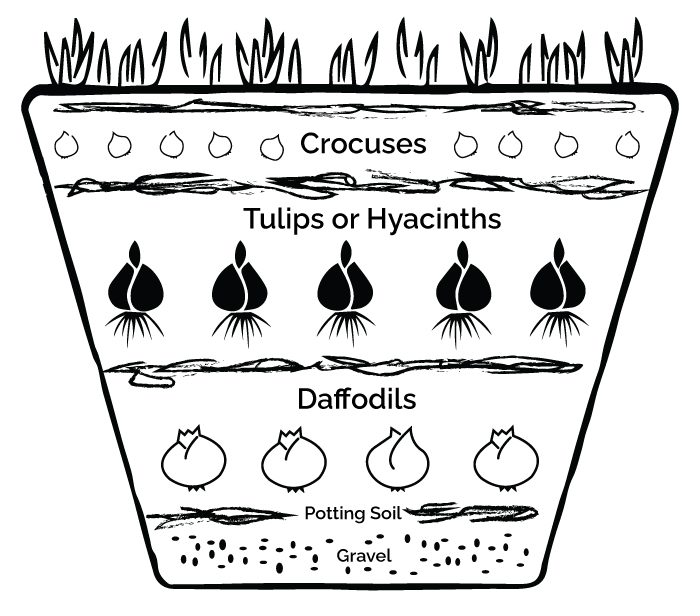
In this botanical analogy, the layering acts as a metaphor for our layered realities—each bulb pushing through the soil at different intervals, creating an evolving tableau of blossoms. Similarly, in cultural and cognitive frameworks, layering nurtures complexity. Multiple perspectives brew together and clash, gradually revealing latent connections otherwise hidden beneath monolithic narratives. It is here that the Chaoticist thrives—embracing multiplicity in pursuit of a richer unfolding.
Erasure: The Invisible Counterpart
Contrary to the additive nature of layering, erasure functions as a radical subtraction—a strategic void carving out space for new insights. But erasure is far from obliteration. It is a nuanced act that does not simply annihilate but carefully edits history, memory, and identity. This tension between presence and absence generates a potent friction that both unsettles and fascinates. The Chaoticist wields erasure not as a tool of censorship but as an instrument of revelation. By obscuring selected layers, underlying patterns are thrown into sharp relief.
Consider instances within sociopolitical realms, such as female erasure in narratives and histories, where the systematic removal of voices produces dissonance yet invites urgent reevaluation. Erasure disrupts the norm, questioning whose stories endure and whose are rendered invisible. In this way, it becomes an act of rebellion and rewriting, vital to the continual reassembling of collective memory.
The Dance of Layering and Erasure: A Chaoticist’s Practice
The coexistence of layering and erasure is inherently dialectical—two forces in constant flux, entangled in a creative tension that defines the chaotic aesthetic. This duality challenges the orthodoxies of linear progression and singular truths by festooning ambiguity, contradiction, and flux. The Chaoticist embraces this uncertainty, harnessing it to dismantle fixed hierarchies and open portals to alternative understandings.

The image above epitomizes this cosmic juggling act—four overlapping layers embodying varied horizons, perspectives, questions, and tensions. Each layer simultaneously obscures and clarifies elements beneath and beyond it, creating a kaleidoscopic effect. As each layer shifts, new configurations arise, compelling a ceaseless reinterpretation rather than a static comprehension.
Such shifts mirror how the Chaoticist’s toolkit defies simplification. It is neither destructive nor purely constructive; it configures and reconfigures. It leverages erasure to resist ossification while employing layering to impart sedimented richness. Ultimately, this practice manifests as an embodied inquiry into the fragility and resilience of meaning itself.
Why We Are Drawn to the Chaoticist’s Toolkit
The magnetic pull of layering and erasure lies not only in their aesthetic or conceptual intrigue but also in their profound psychological resonance. In a world increasingly saturated with information and ambiguity, our desire to parse complexity finds a mirror here. The Chaoticist’s toolkit offers a mode of engaging with chaos that is neither paralyzing nor reductive. It invites active participation, compelling us to embrace uncertainty as a vital space for creativity and transformation.
Moreover, layering and erasure reflect the human condition’s core paradoxes: we are beings of memory yet bound to forget; builders of elaborate identities yet subject to fragmentation; seekers of truth yet invariably entangled in fiction. This toolkit acknowledges and honors those tensions, illuminating the liminal spaces where meaning is both lost and born.
Conclusion: Embracing the Chaos
Layering and erasure, in their vibrant interplay, compose a manifesto for embracing complexity rather than fleeing it. The Chaoticist, armed with this paradoxical toolkit, navigates landscapes of ambiguity with deliberate grace—balancing creation and obliteration, presence and absence, clarity and confusion. This balancing act is not simply an artistic or intellectual exercise but a necessary strategy for understanding an ever-shifting world.
Our fascination with these processes points to a deeper longing: to unravel the tangled skeins of experience and knowledge, to witness the simultaneous construction and dismantling that fuels growth. In acknowledging the power of layering and erasure, we unlock new potentialities for seeing, thinking, and being—inviting each of us to become custodians of chaos in our own right.


Leave a Comment