

In the pantheon of modern design, few objects command the reverence of Marcel Breuer’s S 64 Tubular Steel Chair. It is not merely a chair—it is a manifesto in steel, a silent ode to industrial ingenuity, and a testament to how a humble bicycle handlebar could redefine the very essence of furniture. When Breuer, a young Bauhaus student in 1925, first bent a steel tube into a chair frame, he didn’t just create seating; he forged a new visual language, one that whispered of speed, precision, and the unyielding spirit of modernity. This is the story of how a mundane bicycle component became the DNA of modern design, embedding itself into the DNA of our daily lives.
The fascination with Breuer’s chair often begins with its striking appearance—a skeletal frame of gleaming steel, suspended in mid-air, as if defying gravity. It is a paradox: a chair that looks weightless yet supports weight effortlessly. This visual contradiction is no accident. Breuer, inspired by the bicycle’s tubular steel construction, sought to liberate furniture from the heavy, ornate traditions of the past. The bicycle handlebar, with its strength-to-weight ratio and ergonomic curves, became the perfect muse. By repurposing it into a chair, Breuer didn’t just borrow its form; he distilled its essence—functionality fused with elegance, stripped of all superfluity. The result was a piece that didn’t just sit in a room; it seemed to levitate, challenging the very notion of what furniture could be.
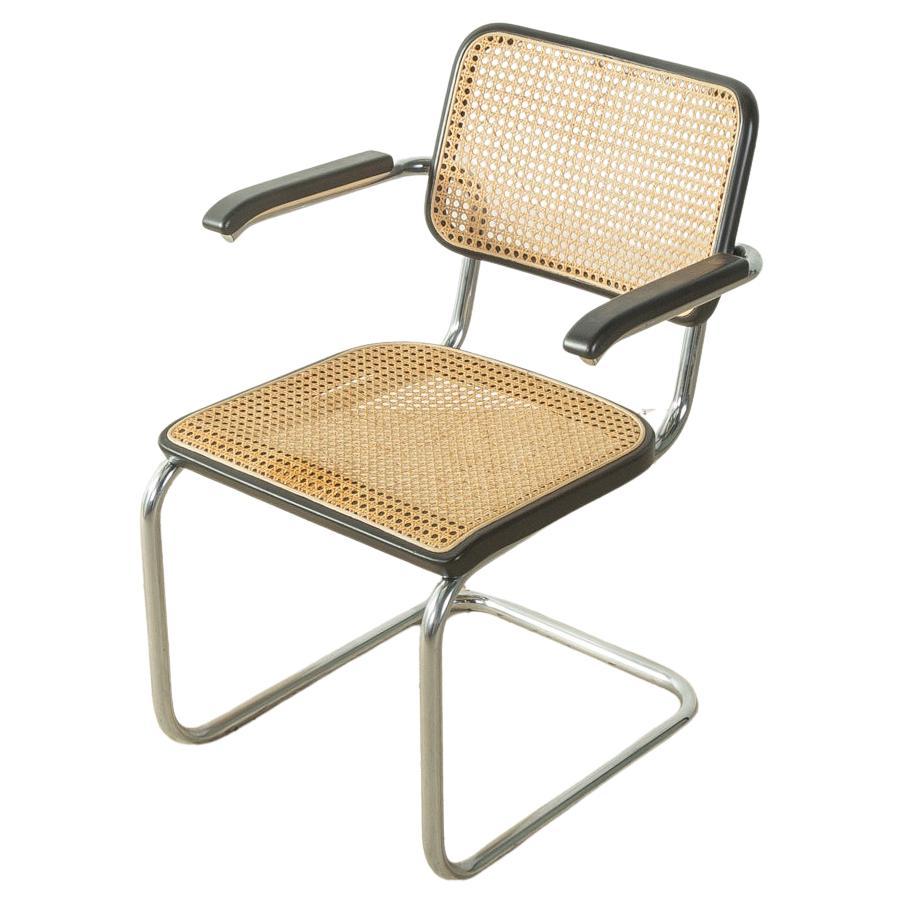
The Alchemy of Materials: Steel as the New Marble
To understand the S 64 Chair’s revolutionary impact, one must first grasp the audacity of its material choice. In the early 20th century, steel was the domain of bridges, skyscrapers, and industrial machinery—not domestic interiors. Breuer’s decision to use it for a chair was nothing short of heretical. Yet, this was no mere rebellion; it was a calculated act of redefinition. Steel, with its tensile strength and malleability, allowed Breuer to craft a chair that was both delicate and indomitable. The tubular frame, bent into graceful arcs, echoed the curves of Art Nouveau but stripped of its decorative excess. This was steel as sculpture, as architecture, as something that belonged not just in factories but in the most refined of salons.
The choice of material was also a philosophical statement. Breuer, a student of the Bauhaus ethos, believed in the unity of form and function. Steel, with its cold precision, embodied this principle. It was a material that spoke of progress, of a world hurtling toward the future. Yet, in Breuer’s hands, it also became something tactile, almost sensual. The cool touch of steel against skin, the way light played across its curves—these were not incidental qualities but integral to the chair’s allure. It was as if Breuer had taken the industrial and infused it with humanity, proving that modernity could be both rigorous and inviting.
The Cantilever Revolution: Defying Gravity, Redefining Seating
The S 64 Chair’s most arresting feature is its cantilevered design—a single, uninterrupted arc of steel that extends from the backrest to the front legs, eliminating the need for traditional supports. This was not just a stylistic flourish; it was a radical departure from centuries of chair-making. Before Breuer, chairs relied on four legs, a backrest, and often, elaborate joinery to hold them together. The cantilever, by contrast, was a study in structural efficiency. It distributed weight through tension and compression, creating a chair that seemed to float above the ground. This was not just a chair; it was a feat of engineering, a testament to the power of minimalism.
The cantilever’s origins lay in the world of bridges and cranes, but Breuer adapted it for human scale. The result was a chair that defied expectations. Sit in one, and you feel the subtle give of the steel, the way it responds to your weight like a living thing. There is a sense of trust in the design—an unspoken promise that the chair will hold you, even as it appears to hover. This interplay between fragility and strength is what makes the S 64 Chair so mesmerizing. It is a reminder that true innovation often lies not in adding more, but in subtracting until only the essential remains.
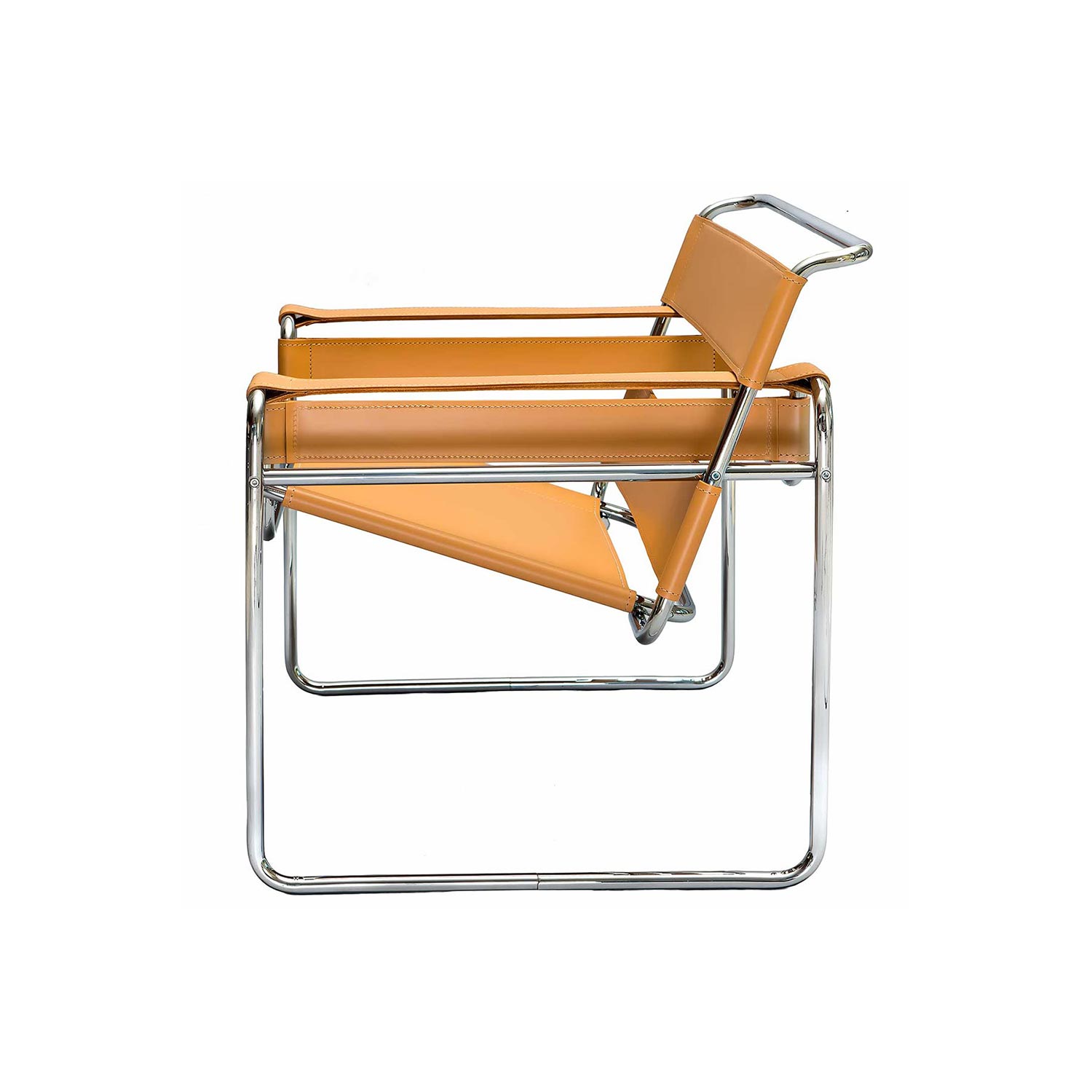
From Bauhaus to the World: The Spread of a Design Ethos
Breuer’s tubular steel chairs did not remain confined to the Bauhaus workshops. They escaped, proliferated, and infiltrated the global consciousness. By the 1930s, his designs had crossed the Atlantic, finding eager patrons in America. The S 64 Chair, in particular, became a symbol of the transatlantic exchange of ideas, a bridge between European modernism and American pragmatism. It adorned the homes of architects, artists, and intellectuals, becoming a shorthand for sophistication and forward-thinking. Yet, its appeal was not elitist; it was democratic. The chair’s modular nature allowed for mass production, making it accessible to a wider audience without sacrificing its integrity.
This global dissemination was not merely a commercial success; it was a cultural shift. The S 64 Chair became a visual shorthand for modernity itself. In films, photographs, and advertisements, it appeared as a prop, a backdrop, a silent character in the narrative of progress. Its presence in a room could instantly convey a sense of zeitgeist—a commitment to innovation, to breaking free from the past. Even today, when we encounter a cantilevered chair in a café or a corporate lobby, we recognize it as a descendant of Breuer’s vision. It is a design that has transcended its time, becoming a timeless archetype.
The Legacy: How a Bike Handle Shaped Our Visual World
The influence of Breuer’s S 64 Chair extends far beyond furniture. It is a foundational element in the DNA of modern design, a precursor to everything from Eames chairs to Apple’s minimalist products. The principles Breuer established—structural honesty, material innovation, and the fusion of art and utility—have become the bedrock of contemporary design. Even in fields as disparate as automotive engineering and digital interfaces, we see echoes of his ethos. The sleek curves of a Tesla, the clean lines of a smartphone—these are all distant cousins of the tubular steel chair, bound by the same commitment to form following function.
Yet, the chair’s legacy is not just in its aesthetics but in its philosophy. Breuer’s work challenged the notion that design must be static, that it must adhere to tradition. Instead, he proved that design could be dynamic, that it could evolve with the times. The S 64 Chair was not just a product of its era; it was a catalyst for the eras that followed. It taught us that innovation is not a destination but a process, a constant reimagining of the world around us. In an age where sustainability and adaptability are paramount, Breuer’s chair remains a masterclass in how to build something that endures.

There is a quiet magic in Marcel Breuer’s S 64 Tubular Steel Chair. It is not the kind of magic that dazzles with spectacle, but the kind that lingers in the mind, subtly reshaping how we see the world. It reminds us that great design is not about grand gestures but about the alchemy of turning the ordinary into the extraordinary. A bicycle handlebar, a material meant for industry, a radical structural idea—these were the humble ingredients Breuer wielded to create something timeless. In doing so, he didn’t just design a chair; he designed a future. And that future, in all its gleaming, cantilevered glory, is still unfolding before us.


Leave a Comment