

In the realm of modern dance, few names resonate with the same electrifying clarity as Merce Cunningham. His work wasn’t just a dance—it was a revolution, a defiance of gravity, expectation, and the very notion of what movement could be. Among his most audacious innovations was the Chance Dance, a method where spontaneity reigned supreme, guided not by the rigid hand of choreography but by the whims of fate itself. Imagine a dance where the roll of dice dictates every step, where the artist surrenders control to the cosmos, and where each performance becomes a living, breathing organism, unique as a fingerprint. This was Cunningham’s genius: turning chaos into choreography, and in doing so, he didn’t just dance—he redefined the boundaries of art.
The allure of Cunningham’s Chance Dance lies in its paradoxical nature. It is both meticulously structured and delightfully unpredictable, a dance that dances itself into existence. Picture a stage where the dancers are not puppets of a predetermined script but co-creators in a grand, unfolding experiment. The music, the movements, even the sequence of events—all are determined by the roll of dice, the flip of a coin, or the toss of a coin. It’s as if Cunningham invited the universe to choreograph alongside him, blending human artistry with the serendipity of chance. This wasn’t just dance; it was a dialogue between the artist and the unknown, a celebration of the unplanned, the unscripted, the beautifully unpredictable.
The Philosophy Behind the Dice: Embracing the Unplanned
At the heart of Cunningham’s Chance Dance was a radical philosophy: art need not be tethered to intention. For centuries, dance had been a medium of narrative, emotion, and precision. Cunningham shattered that mold. His work suggested that beauty could emerge from randomness, that meaning could be found in the absence of control. The dice weren’t just tools; they were collaborators, silent partners in the creation of something transcendent. Each roll was a moment of surrender, a leap of faith into the void where only the dance existed.
This philosophy wasn’t born in a vacuum. Cunningham was deeply influenced by the avant-garde movements of the mid-20th century, where artists like John Cage—his lifelong collaborator—were exploring similar ideas in music. Cage’s compositions, like 4’33”, embraced silence as a form of sound, challenging audiences to find meaning in absence. Cunningham took this ethos further, applying it to movement. If music could be a conversation with silence, dance could be a conversation with stillness. The Chance Dance was Cunningham’s way of saying: Let go. Trust the process. The dance will find you.
The dice, in this context, were more than randomizers—they were metaphors for life itself. Life, after all, is a series of chance encounters, unexpected detours, and unplanned moments. Cunningham’s work was a mirror held up to existence, reflecting its inherent unpredictability. By incorporating chance into his choreography, he wasn’t just creating art; he was inviting audiences to see the world differently. Suddenly, a stumble wasn’t a mistake—it was a choice. A pause wasn’t a flaw—it was a statement. The Chance Dance taught us that perfection wasn’t the goal; discovery was.
The Mechanics of Chance: How Dice Shaped the Dance
To understand the Chance Dance, one must first grasp its mechanics. Cunningham didn’t simply toss dice onto the stage and let the dancers improvise willy-nilly. Instead, he used chance as a system, a structured framework within which spontaneity could thrive. The process often began with a series of decisions—how many dancers? How long should the piece be? What kind of movements are allowed?—each of which was then subjected to the roll of dice or the flip of a coin. The results dictated everything from the order of movements to the spatial relationships between dancers.
For example, a dancer might roll a die to determine how many steps they take before changing direction. Another might flip a coin to decide whether to leap or crawl. The music, too, was often composed using chance operations, ensuring that the auditory and visual elements of the performance were in constant, unpredictable dialogue. The result was a dance that felt alive, as if it were evolving in real-time, a living organism responding to its own heartbeat.
This method wasn’t just about randomness for its own sake. Cunningham was meticulous in his approach, often spending hours mapping out the possibilities before a single dancer took the stage. The dice were tools of precision, not chaos. They allowed him to create a dance that was both deeply personal and universally relatable. Because the movements were not predetermined, each performance became a unique event, a snapshot of a moment that would never repeat. Audiences were not just watching a dance; they were witnessing the birth of something ephemeral, something that existed only in that instant.
The Aesthetic of the Unpredictable: Beauty in the Breakdown
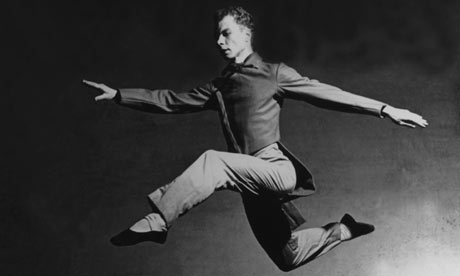
The visual appeal of the Chance Dance lay in its stark contrast to traditional ballet or modern dance. There were no grand narratives, no emotional arcs, no climactic finales. Instead, there were moments—fleeting, fragmented, and often disorienting. A dancer might suddenly freeze mid-leap, or a group of performers might scatter across the stage in seemingly random directions. The beauty of it was in the tension between control and chaos, the way the dancers’ precision clashed with the unpredictability of their movements.
Cunningham’s choreography often played with asymmetry, with dancers moving in counterpoint to one another, their paths crossing and diverging like the trajectories of celestial bodies. The stage became a canvas of kinetic energy, where every gesture was both intentional and accidental. It was a dance that demanded active engagement from the audience, who were forced to abandon their expectations and simply be in the moment. There was no time to analyze, to critique, to dissect. The Chance Dance was a visceral experience, one that could only be felt, not explained.
This aesthetic wasn’t just about shock value. Cunningham was exploring the limits of human perception, challenging audiences to find meaning in the seemingly meaningless. In a world where art was often expected to be beautiful, his work was a reminder that beauty could also be unsettling, disruptive, even ugly. The Chance Dance didn’t just push boundaries—it obliterated them, leaving behind a trail of questions: What is dance? What is art? What is beauty? And perhaps most importantly, who gets to decide?
The Legacy of the Dice: How Cunningham Changed Dance Forever
The impact of Cunningham’s Chance Dance extends far beyond the stage. His work paved the way for generations of artists who sought to break free from convention, from the Judson Dance Theater in the 1960s to contemporary choreographers like William Forsythe and Anne Teresa De Keersmaeker. By proving that dance could be a medium of exploration rather than expression, Cunningham liberated the art form from its traditional constraints. He showed that dance didn’t need a story, a message, or even a recognizable structure to be powerful. It just needed to move.
Beyond the dance world, Cunningham’s embrace of chance influenced fields as diverse as music, visual art, and even technology. His collaborations with John Cage demonstrated how interdisciplinary art could thrive when boundaries were dissolved. His use of chance operations anticipated the randomness of digital algorithms, foreshadowing the way technology would later shape creativity. And his insistence on the ephemeral nature of performance challenged the very idea of art as something permanent, something to be preserved. Cunningham’s work was a testament to the power of the moment, the fleeting nature of existence, and the beauty of letting go.
Today, Cunningham’s Chance Dance remains a touchstone for artists and audiences alike. It is a reminder that art doesn’t have to be controlled, that spontaneity can be a form of mastery, and that the most profound experiences often come from surrendering to the unknown. In a world that often feels overly planned, overly scripted, overly predictable, Cunningham’s work is a breath of fresh air—a dance that dances on the edge of chaos, and in doing so, finds its own kind of grace.
The Audience’s Role: Participating in the Unfolding
One of the most revolutionary aspects of Cunningham’s Chance Dance was its invitation to the audience. Unlike traditional performances where spectators are passive observers, Cunningham’s work demanded active participation. Audiences were not just witnesses to a dance—they were part of it. The unpredictability of the performance meant that no two showings were alike, and each audience member’s experience was uniquely their own. A dancer’s stumble might become a focal point for one viewer, while another might be captivated by the way the music seemed to sync with the movements by pure chance.
This interactive element transformed the act of watching into an act of creation. The audience wasn’t just consuming art; they were co-creating it. Cunningham understood that art doesn’t exist in a vacuum. It is a dialogue, a conversation between the artist and the observer. By removing the safety net of predictability, he forced audiences to engage with the performance on a deeper level. There was no time for distraction, no room for detachment. The Chance Dance was an immersive experience, one that pulled viewers into its orbit and refused to let go.
This participatory aspect also democratized the art of dance. In Cunningham’s world, there were no stars, no prima donnas—just dancers moving in response to the whims of chance. The hierarchy of performance was flattened, and the focus shifted from individual virtuosity to collective spontaneity. It was a radical idea, one that challenged the very foundations of what dance could be. And in doing so, Cunningham didn’t just change the way we watch dance—he changed the way we think about art itself.

Why the Chance Dance Still Matters Today
In an era dominated by algorithms, curated feeds, and hyper-personalized experiences, Cunningham’s Chance Dance feels more relevant than ever. It is a rebellion against the tyranny of control, a celebration of the unplanned, the unexpected, the beautifully flawed. In a world where everything is optimized for efficiency, Cunningham’s work reminds us that sometimes the most profound experiences come from letting go of the reins. It’s a lesson in trust—trust in the process, trust in the unknown, trust in the dance itself.
The Chance Dance also speaks to the human desire for authenticity. In a culture that often feels scripted, staged, and performative, Cunningham’s work was a breath of raw, unfiltered creativity. It was art without pretension, without artifice. And in that rawness, it found its power. The dice weren’t just tools; they were symbols of freedom. They represented the idea that art doesn’t have to be perfect to be meaningful. It just has to be real.
For those willing to embrace its chaos, the Chance Dance offers something rare and precious: the chance to experience art as a living, breathing thing. It’s a reminder that life—and art—isn’t about control. It’s about surrender. It’s about rolling the dice and seeing where they land. And in that surrender, Cunningham found not just a new way to dance, but a new way to live.
So the next time you find yourself craving something unpredictable, something unscripted, something truly alive—remember the dice. Remember Merce Cunningham. And let the dance begin.


Leave a Comment