

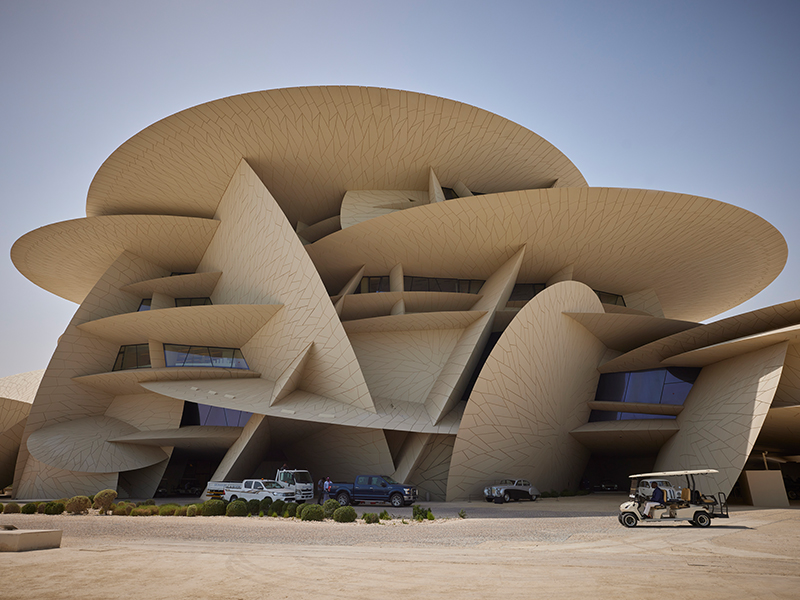
Can architecture harbor ambition? Especially in the Middle East, where the sands of time meet shimmering skylines, museums have become more than mere repositories of artifacts — they are audacious statements of identity, innovation, and cultural renaissance. These grand edifices pose a compelling challenge: Can physical spaces embody the spirit of a region rapidly reimagining itself without losing touch with its profound heritage? As the new Middle East rises, its museums serve as architectural sonnets to ambition, narrating stories that are as complex as the desert landscapes that surround them.
Historical Resonance Meets Contemporary Vision
The museums of the Middle East are not simply buildings; they are dialogues between past and present. These cultural institutions deftly balance timeworn traditions with avant-garde designs. The region’s rich tapestry of history—from ancient trade routes and early civilizations to modern geopolitical shifts—forms the backbone of each structure’s conceptual framework. Yet, designers and curators refuse to be shackled by the weight of antiquity. Instead, they harness it to propel future-oriented narratives that celebrate the Middle East as a nexus of global culture and knowledge.
Many museums in this region exemplify a harmonious syncopation between the classical motifs derived from Islamic art and visionary, almost futuristic architectural elements. Expansive glass facades and sweeping curves juxtapose with traditional geometric patterns and intricate latticework, evoking the timeless interplay of light and shadow that has long fascinated artists and architects alike.
Museums as Catalysts for Cultural Diplomacy
Beyond their physical grandeur, museums in the Middle East function as powerful tools of cultural diplomacy and soft power. In a region often perceived through the lens of conflict and volatility, these institutions offer an alternative narrative—one steeped in creativity, inclusivity, and interconnectedness. They serve as bridges linking local communities to global networks, transforming cultural consumption into a shared global experience.
This role challenges curators and architects alike: how to craft spaces that are not only visually striking but also deeply engaging for an international audience? Answering this question requires a deft orchestration of exhibitions, programming, and design that welcomes diverse perspectives while championing indigenous stories. The architecture itself becomes a language of welcome—inviting visitors to explore the multifaceted identities of the Middle East.
The Intersection of Innovation and Sustainability
Ambition in Middle Eastern museum architecture transcends aesthetic appeal and cultural messaging; it embraces ecological responsibility at its core. In an era threatened by climate change and resource scarcity, the very construction and operation of buildings must reflect sustainable principles. Innovative strategies such as passive cooling systems inspired by ancient desert architecture, solar panel integration, and water conservation techniques have become hallmarks of the region’s museum projects.
This integration of cutting-edge technology with environmental sensitivity introduces a novel challenge: How to innovate boldly without eroding the natural fabric of the desert environment? Architectures that soar into the air must also root themselves gently within the earth, respecting the delicate ecosystem surrounding them. Successfully solving this puzzle transforms museums into living testaments of sustainable ambition.
The Role of Museums in Shaping National and Regional Identity
As governments across the Middle East double down on diversifying their economies and fostering creative sectors, museums emerge as vital instruments in sculpting both national pride and regional cohesion. These institutions crystallize aspirations to transcend oil dependency by becoming hubs for education, tourism, and cultural production.
Frequently, the museums act as narrative arbiters, selectively highlighting historical epochs and artistic achievements that underscore unity and resilience. This intentional storytelling governs not only exhibitions but also architectural symbolism—from monumental entrances evoking fortresses of knowledge, to contemplative courtyards reminiscent of traditional gathering places. Each spatial decision intricately weaves identity narratives into tangible form, inviting introspection and dialogue.
Challenges on the Horizon: Preservation Versus Progress
Yet, the ambitious drive to erect new cultural landmarks introduces an inherent tension: the preservation of heritage versus the unstoppable tide of modernization. Rapid urban development and globalization place tremendous pressure on traditional crafts, local communities, and archeological sites. Museums, paradoxically, must act as custodians of history while simultaneously standing as beacons of progress.
Within this balancing act lays a profound question: Can architecture foster innovation without erasing the invaluable traces of the past? Finding this equilibrium demands profound collaboration between architects, historians, technologists, and the public. Adaptive reuse of historical structures, integration of digital technologies for immersive experiences, and community-centric programming are some of the strategies emerging to address these dilemmas.
A Visionary Future Carved in Stone and Steel
The museums of the new Middle East encapsulate a visionary future carved meticulously in stone, glass, and steel. They embody a region’s audacity to dream beyond the ordinary—to harness ambition not merely as rhetoric but as palpable spatial poetry. Each museum is a manifesto: a bold declaration that culture, heritage, and innovation can coexist in dynamic harmony.
As visitors traverse their halls, they too become part of this unfolding narrative, witnesses to a region that is rewriting its story one ambitious structure at a time. The challenge now is to sustain this momentum, ensuring that architecture remains not only a symbol of aspiration but a living, breathing vessel of shared human experience.
In the grand tapestry of global culture, these museums remind us that ambition wears many faces—and perhaps nowhere is this truth more beautifully embodied than in the evolving architectural landscapes of the Middle East.


Leave a Comment