

The moment you unravel the first skein of that gloriously voluminous arm-knitted blanket, you know you’re in for a love-hate relationship. One minute, it’s draped over your shoulders like a cloud of cashmere; the next, your living room resembles a tumbleweed graveyard, with tufts of yarn clinging to everything from your dog’s fur to the ceiling fan. Welcome to the paradox of the arm-knitting blanket—a cozy masterpiece that transforms your home into a shedding sanctuary. But why does this happen? And why, despite the chaos, do we keep coming back for more?
Arm-knitting blankets have surged in popularity, not just for their rapid construction or Instagram-worthy drape, but for the sheer, unapologetic drama they bring into our lives. They’re the knitted equivalent of a golden retriever in shedding season: impossible to ignore, difficult to contain, and somehow, inexplicably, beloved. Let’s dive into the tangled web of reasons behind this phenomenon, from the allure of instant gratification to the deeper psychological hooks that keep us hooked.
The Allure of Instant Gratitude: Why We Crave the Quick Fix
In a world where instant gratification is the currency of choice, arm-knitting blankets offer a rare and intoxicating rush. Unlike traditional knitting, which demands months of meticulous stitching, arm-knitting allows you to transform a single skein of bulky yarn into a blanket in the span of an afternoon. The result? A tangible, oversized trophy of your productivity—one that you can wrap around yourself before the sun even sets.
This speed isn’t just practical; it’s psychological. Our brains are wired to seek rewards, and the faster we receive them, the more dopamine we release. Arm-knitting blankets deliver that dopamine hit in spades. There’s no waiting for a project to “grow” or for stitches to accumulate. Instead, you’re greeted with immediate, tactile progress. Each row you knit is a step closer to a finished product, and each finished product is a testament to your ability to create something substantial without the usual time investment. It’s the crafting equivalent of a microwave meal—fast, filling, and satisfying, even if the aftermath is a little messy.
The psychological appeal extends beyond the craft itself. In an era where we’re constantly bombarded with the idea that good things take time, arm-knitting blankets offer a rebellious counter-narrative. They say, “Why wait when you can have it now?” And in a culture that glorifies hustle and productivity, that message is intoxicating. It’s no wonder these blankets have become a staple of cozy aesthetics and self-care routines alike.
The Shedding Phenomenon: When Cozy Becomes a Crime Scene
Of course, no discussion of arm-knitting blankets would be complete without addressing the elephant in the room—or rather, the tuft of yarn on the couch. Shedding is the Achilles’ heel of these blankets, a side effect so pervasive that it’s practically a rite of passage. But why do they shed so much? The answer lies in the very fibers that make them so irresistibly soft and voluminous.
Most arm-knitting blankets are made from super bulky yarns, often composed of synthetic fibers like acrylic or blends that prioritize fluffiness over durability. These fibers are designed to mimic the plushness of natural wool but lack the structural integrity to stay put. When you knit with them, the friction from handling and use causes the fibers to loosen and break free, resulting in a slow-motion snowstorm of yarn confetti. Add to that the fact that arm-knitting relies on loose, chunky stitches that create more surface area for shedding, and you’ve got a recipe for a shedding disaster.
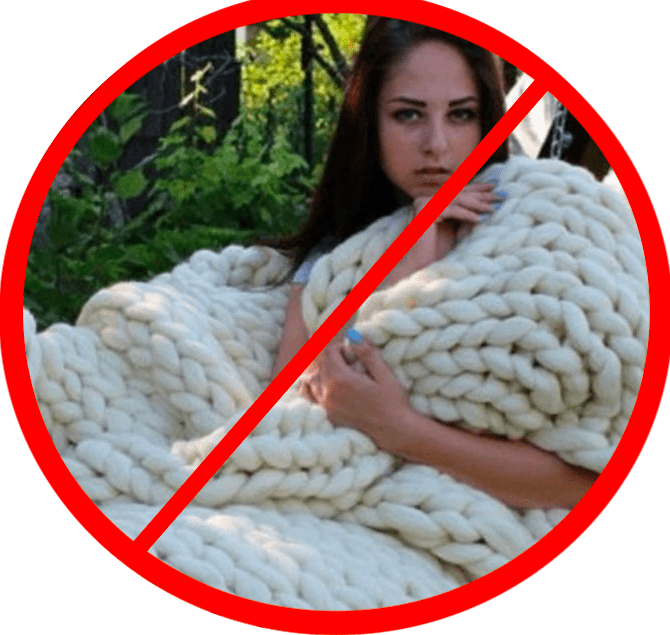
But shedding isn’t just a byproduct of the materials; it’s also a symptom of how we use these blankets. Arm-knitting blankets are often draped over furniture, wrapped around our bodies, or even used as makeshift pet beds. Each movement agitates the fibers, exacerbating the shedding process. It’s a vicious cycle: the more we love and use our blankets, the more they fall apart. Yet, we persist. Why?
The answer may lie in the concept of “benign masochism,” a term coined by psychologist Paul Rozin to describe the pleasure we derive from activities that are technically unpleasant but ultimately rewarding. Shedding blankets are a perfect example. The act of vacuuming up tufts of yarn or lint-rolling your sweater becomes a ritual, a small price to pay for the comfort and joy the blanket provides. It’s a reminder that even in our pursuit of coziness, we’re willing to embrace a little chaos—so long as the payoff is worth it.
The Aesthetic of Controlled Chaos: Why We Love a Little Mess
There’s something deeply satisfying about the controlled chaos of an arm-knitting blanket. On one hand, it’s a masterpiece of texture and volume, a statement piece that demands attention. On the other, it’s a living, breathing entity that evolves over time, its appearance shifting as fibers migrate and settle. This duality is part of its charm. It’s not a static object; it’s a dynamic one, a testament to the impermanence of all things.
In a world that often feels overly curated and polished, the arm-knitting blanket offers a refreshing dose of authenticity. It’s soft but slightly unruly, cozy but not pristine. It’s the crafting equivalent of a lived-in sweater—comfortable precisely because it’s not perfect. This aesthetic of controlled chaos resonates with a growing cultural shift toward embracing imperfection. From the rise of “cottagecore” to the popularity of “ugly” but functional home decor, we’re increasingly drawn to things that feel real, tactile, and a little bit messy.
There’s also a subversive joy in the way these blankets defy traditional expectations. A well-made, tightly woven blanket is often prized for its durability and lack of shedding. But an arm-knitting blanket flips that script. Its shedding becomes a feature, not a bug. It’s a reminder that not everything needs to be permanent or flawless. Sometimes, the beauty lies in the process—the way the blanket changes over time, becoming softer and more personalized with each use. It’s a living document of your relationship with it, a physical manifestation of the care and attention you’ve poured into it.
The Social Ritual: How Arm-Knitting Blankets Bring People Together
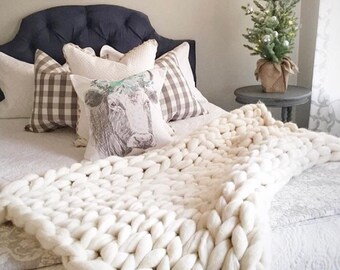
Beyond their individual appeal, arm-knitting blankets have become a social phenomenon, a catalyst for connection and shared creativity. Knitting circles, once the domain of grandmothers and purists, have evolved into inclusive spaces where people of all ages and skill levels gather to work on projects together. Arm-knitting, with its accessibility and speed, has democratized this experience, making it easier than ever to participate.
The act of knitting together fosters a sense of community and camaraderie. There’s something inherently comforting about sitting in a circle, needles clicking or hands working in unison, while sharing stories and laughter. Arm-knitting blankets, with their bold and immediate results, become a tangible symbol of these gatherings. They’re not just blankets; they’re mementos of shared experiences, each stitch a memory of the time spent creating them.
This social aspect also extends to the online world. Platforms like Instagram and TikTok have become hubs for arm-knitting enthusiasts, where creators share their projects, tips, and the inevitable shedding aftermath. The community aspect is amplified by the fact that arm-knitting is so photogenic. A single blanket can spark conversations, inspire others, and even lead to collaborations. It’s a reminder that crafting isn’t just a solitary pursuit; it’s a way to connect with others, even across vast distances.
The Psychological Comfort: Why We Cling to Our Shedding Blankets
At the heart of our fascination with arm-knitting blankets is the psychological comfort they provide. In a world that’s increasingly fast-paced and digital, these blankets offer a tactile, grounding experience. The act of knitting itself is meditative, a way to slow down and focus on the present moment. The physicality of the process—feeling the yarn between your fingers, the rhythmic motion of your arms—anchors you in the here and now.
But the comfort extends beyond the act of creation. Arm-knitting blankets are often associated with warmth, both literal and emotional. They’re draped over shoulders on chilly evenings, wrapped around loved ones, or used as a makeshift hug when words fail. In this way, they become more than just objects; they’re symbols of care, protection, and connection. The shedding, while frustrating, is a small price to pay for the emotional resonance they provide.
There’s also a sense of nostalgia tied to these blankets. They evoke a simpler time, when handmade items were a staple of daily life and the act of creating something with your own hands was a given. In a world of mass-produced goods, an arm-knitting blanket is a rebellion against disposability. It’s a reminder that things of value are often made with intention and care, even if they’re not perfect.
The Future of Arm-Knitting: Will the Shedding Ever Stop?
As arm-knitting continues to captivate crafters around the world, the question remains: will the shedding ever be tamed? The short answer is probably not. The very qualities that make these blankets so appealing—their bulkiness, their softness, their rapid construction—are the same ones that contribute to their shedding. But that’s part of their charm. The shedding is a reminder that these blankets are alive, evolving, and deeply personal.
That said, there are ways to mitigate the shedding. Choosing higher-quality yarns, washing blankets gently, and using lint rollers or fabric shavers can help keep the chaos at bay. But perhaps the most important lesson is to embrace the shedding as part of the journey. After all, a blanket that never sheds is a blanket that never gets used. And what’s the point of a blanket if it doesn’t bring you comfort, even if that comfort comes with a side of lint?
In the end, the arm-knitting blanket is more than just a cozy accessory. It’s a symbol of our desire for instant gratification, our love of tactile experiences, and our willingness to embrace imperfection. It’s a testament to the power of crafting to bring people together and the comfort of creating something with your own hands. And yes, it’s a shedding nightmare—but that’s all part of the fun. So go ahead, wrap yourself in that cloud of yarn. Just keep a lint roller handy.


Leave a Comment