

The art of concealment in design is not merely about hiding flaws—it is about orchestrating an illusion so flawless that the observer forgets they are being deceived. Hidden seams and blind hinges are the unsung virtuosos of this deception, performing a silent symphony of precision that transforms the mundane into the extraordinary. They are the architectural equivalent of a magician’s sleight of hand, where the absence of visible joints becomes the most compelling feature of all. In a world where every surface tells a story, these subtle engineering marvels rewrite the narrative, making the invisible not just present, but irresistibly intriguing.
Imagine walking into a room where the walls seem to float, where cabinetry dissolves into the backdrop, and where doors glide open without a whisper of their mechanism. This is not the work of magic—it is the result of meticulous cosmetic engineering, where hidden seams and blind hinges act as the invisible threads weaving together an aesthetic of seamless perfection. The allure lies not in what is seen, but in what is deliberately omitted, creating a visual poetry that speaks volumes through its silence.
The Alchemy of Invisibility: How Hidden Seams Redefine Perception
Hidden seams are the chameleons of design, blending into their surroundings with such subtlety that they cease to exist in the viewer’s consciousness. They are the result of advanced joinery techniques, where materials are fused or aligned with such precision that the transition between surfaces becomes imperceptible. Think of them as the seams in a fine suit—when executed flawlessly, they disappear, allowing the fabric of the design to take center stage.
In woodworking, for instance, hidden seams often employ techniques like spline miters or lock miters, where interlocking grooves create a bond so tight that the joint becomes a whisper rather than a line. In metalwork, laser welding or chemical bonding can achieve a similar effect, leaving no trace of the seam’s existence. The magic lies in the way these techniques manipulate light and shadow, ensuring that the seam does not cast a telltale line or disrupt the flow of the material’s grain. It is a dance of angles and adhesives, where the seam’s absence becomes its most powerful presence.
Consider the way a hidden seam transforms a kitchen countertop. Instead of the jarring interruption of a visible seam, the surface flows like a river of stone or wood, unbroken and uninterrupted. This continuity doesn’t just please the eye—it soothes the mind, creating a sense of order and tranquility. The hidden seam is not just a technical achievement; it is a psychological one, offering the rare comfort of a world where edges do not exist.
Blind Hinges: The Silent Architects of Seamless Movement
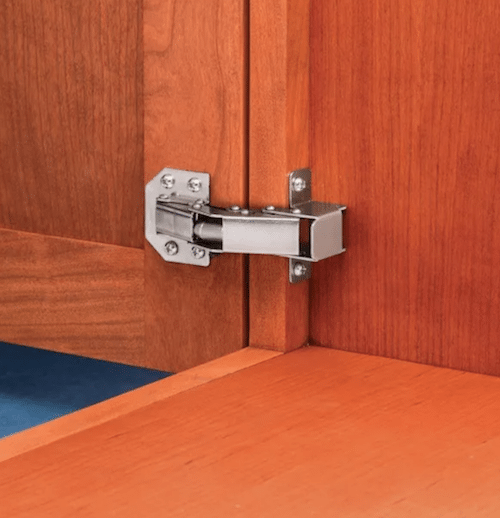
If hidden seams are the static guardians of invisibility, blind hinges are their dynamic counterparts, orchestrating motion with the grace of a shadow. These hinges are the unsung heroes of furniture and cabinetry, allowing doors and panels to pivot without betraying their presence. Unlike traditional hinges, which announce themselves with protruding knuckles and visible screws, blind hinges tuck themselves away, becoming part of the furniture’s anatomy rather than its ornamentation.
The elegance of a blind hinge lies in its ability to disappear when the door is closed, only revealing its existence when the door is in motion. This is achieved through a combination of clever geometry and strategic placement. European-style hinges, for example, are recessed into the door and frame, their mechanisms hidden from view. The hinge’s arm extends invisibly, pulling the door into alignment with a precision that borders on telepathy. When the door is closed, it appears to float, as if held in place by an unseen force.
But the true artistry of blind hinges lies in their adaptability. They can be adjusted to ensure a perfect fit, compensating for the slightest imperfections in alignment. This adjustability is not just a functional boon—it is a testament to the hinge’s role as a silent problem-solver, ensuring that the door’s movement is as smooth as the seam’s invisibility. In high-end cabinetry, blind hinges are often paired with soft-close mechanisms, creating a symphony of silence where the door’s closure is as gentle as a sigh.

The Psychology of Absence: Why We Are Drawn to the Unseen
The human brain is wired to seek patterns and completeness. When a seam or hinge is missing from our visual field, our minds fill in the gaps, creating a sense of wholeness that is deeply satisfying. This phenomenon, known as the Gestalt principle of closure, explains why hidden seams and blind hinges exert such a powerful pull on our perception. They tap into a primal desire for order and harmony, offering a visual experience that feels both natural and extraordinary.
There is also an element of intrigue at play. The absence of a seam or hinge invites curiosity—how is this possible? What lies beneath the surface? This curiosity is not just intellectual; it is emotional. The hidden seam and blind hinge become metaphors for the unseen forces that shape our world, from the invisible threads of gravity to the subconscious currents of human behavior. They remind us that reality is often more nuanced than it appears, and that beauty can thrive in the spaces between what we see and what we know.
In interior design, this psychological appeal translates into a sense of luxury and exclusivity. Spaces that employ hidden seams and blind hinges feel curated, intentional, and almost sacred. They are the hallmarks of bespoke craftsmanship, where every detail is considered and nothing is left to chance. The result is an environment that feels both intimate and expansive, as if the walls themselves are holding their breath to maintain the illusion of perfection.
Materials and Techniques: The Building Blocks of the Invisible
The magic of hidden seams and blind hinges is not conjured from thin air—it is built from a foundation of advanced materials and techniques. The choice of material plays a crucial role in the seam’s invisibility. For example, in woodworking, the grain pattern of the wood must align perfectly across the seam, ensuring that the transition is seamless. This often requires selecting boards from the same log or using engineered wood products that mimic the natural grain with uncanny precision.
In metalwork, the challenge is even greater. Metals expand and contract with temperature changes, making it difficult to maintain a hidden seam over time. To overcome this, designers often use techniques like friction stir welding or adhesive bonding, which create joints that are both strong and visually imperceptible. The metal’s surface is then finished to match the surrounding material, ensuring that the seam does not betray its presence through differences in texture or sheen.
For blind hinges, the materials must be both durable and discreet. High-strength alloys and precision-engineered plastics are common choices, as they can withstand the repeated stress of opening and closing without wearing down or becoming visible. The hinge’s finish is also critical—it must blend seamlessly with the surrounding surfaces, whether that means matching the wood’s stain or the metal’s patina. In some cases, the hinge is even coated with a material that mimics the texture of the adjacent surface, making it virtually undetectable.
The Future of Invisibility: Where Technology Meets Craftsmanship
As technology advances, so too does the art of the hidden seam and blind hinge. 3D printing, for instance, has opened new possibilities for creating complex geometries that were once impossible to achieve with traditional methods. Designers can now print entire panels with integrated hinges and seams, eliminating the need for separate components and further enhancing the illusion of invisibility.
Smart materials are also entering the fray. Shape-memory alloys, which can change shape in response to temperature or electrical stimuli, are being explored as a way to create hinges that adjust themselves for a perfect fit. Imagine a door that automatically aligns itself with its frame, its hinges fine-tuning their position with the precision of a Swiss watch. This is not science fiction—it is the future of design, where the boundaries between technology and craftsmanship blur into a single, seamless experience.
The rise of augmented reality (AR) is another game-changer. Designers can now use AR to visualize hidden seams and hinges before they are built, ensuring that every detail is perfect before a single cut is made. This not only saves time and resources but also allows for a level of experimentation that was previously unimaginable. The invisible is no longer a mystery—it is a canvas for innovation.
The Timeless Allure of the Unseen
Hidden seams and blind hinges are more than just technical achievements—they are a testament to humanity’s relentless pursuit of beauty and perfection. They challenge our perceptions, inviting us to see the world not as it is, but as it could be. In a culture that often prioritizes the spectacular over the subtle, these elements offer a quiet rebellion, a reminder that the most powerful design choices are not always the loudest.
There is a profound elegance in the way hidden seams and blind hinges transform our surroundings. They turn ordinary spaces into sanctuaries of calm, where the eye is free to wander without interruption. They elevate the mundane into the extraordinary, proving that the most compelling stories are often those left untold. And in a world that is increasingly cluttered with noise and distraction, they offer a rare moment of stillness—a visual whisper that speaks volumes.
So the next time you encounter a door that glides open without a sound, or a countertop that flows like liquid stone, take a moment to appreciate the invisible artistry at work. These are not just design choices; they are invitations to see the world differently. They are the silent architects of a more beautiful, more harmonious reality—one where the seams and hinges of existence are not just hidden, but celebrated.


Leave a Comment