

The Venice Film Festival is not merely an event—it is a temporal fissure, a suspended moment where the boundaries between reality and reverie blur. For ten days each September, the Lido de Venezia transforms into a cinematic dreamscape, where celluloid dreams are projected onto the salty air, and the Adriatic whispers secrets to the stars. Here, the ordinary dissolves into the extraordinary, and the audience becomes both voyeur and participant in a grand, collective hallucination. To attend is to step into a liminal realm where time bends, where the past and future coalesce in the flicker of a projector’s beam, and where every film promises not just a story, but a perceptual shift.
This is the Venice Film Festival: a place where cinema does not merely entertain—it transfigures. It is a festival that does not merely showcase films; it incubates them, nurturing their raw potential into something transcendent. The promise of Venice is not just in the awards or the premieres, but in the alchemy of its atmosphere—a crucible where art and audience collide to birth new ways of seeing. To walk its red carpet is to tread the edge of a waking dream, where every glance, every murmur, every frame carries the weight of possibility.

The Lido as a Cinematic Threshold
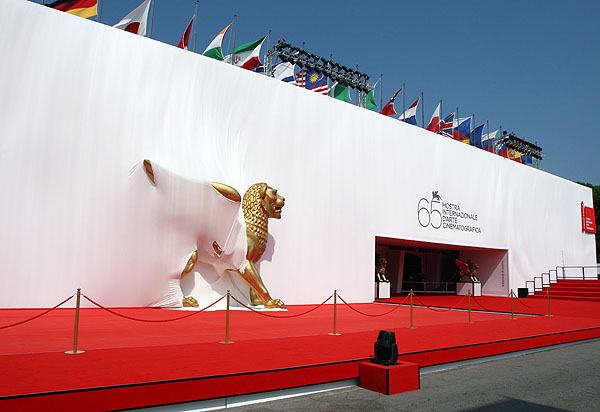
The Lido de Venezia is no ordinary island. It is a threshold—a narrow strip of land where the lagoon kisses the sea, where the scent of salt mingles with the aroma of espresso from outdoor cafés, and where the past lingers in the faded grandeur of Art Nouveau facades. This is where the Venice Film Festival unfolds, in a place that feels suspended between centuries. The festival’s home, the Palazzo del Cinema, stands like a sentinel of dreams, its modernist lines cutting through the Venetian sky, while the beachfront becomes a stage for the world’s most dazzling illusions.
To arrive on the Lido is to cross into a liminal space where the rules of the everyday no longer apply. The island’s geography enforces this separation: cut off from the mainland by water, it becomes a self-contained universe, a cinematic Narnia where only the initiated may enter. The vaporetto ride across the lagoon is a ritual of anticipation, a slow unspooling of time as the skyline of Venice recedes and the Lido’s low-slung buildings emerge from the mist. By the time you step onto the island, you are already halfway into another world.
The festival’s venues—from the historic Sala Grande to the open-air cinema on the beach—are carefully chosen to heighten this sense of displacement. The Sala Grande, with its sweeping staircase and velvet drapes, feels like a palace of illusions, while the beach screen, where films are projected against the darkening sky, turns the act of watching into a communal dream. Here, the boundary between spectator and spectacle dissolves. You are not just watching a film; you are part of its unfolding reality.
The Golden Lion: A Symbol of Alchemical Transformation
The Leone d’Oro, the Golden Lion, is more than an award—it is a talisman, a promise of metamorphosis. Since its inception in 1949, the trophy has become synonymous with cinematic transcendence, a beacon that lures filmmakers and audiences alike into its orbit. To win the Golden Lion is to be anointed, to have one’s work deemed not just worthy, but revelatory. It is a rite of passage, a mark of having touched something ineffable, something that lingers long after the credits roll.
The lion itself is no mere gilded statue. Its design—a roaring beast with a mane that seems to ripple in the wind—evokes the raw power of cinema. It is a creature of myth, a guardian of the dream realm. When a film is crowned with this symbol, it is not just recognized; it is consecrated. The Golden Lion does not merely honor excellence—it transforms it. A film that wins here does not just enter the canon; it becomes a part of the festival’s living mythology, a touchstone for future generations of storytellers.
But the lion’s power lies not just in its prestige, but in its ambiguity. The Golden Lion does not always go to the most conventional films. It favors those that dare to challenge, to disrupt, to redefine the language of cinema. In 2023, the award went to a black-and-white meditation on memory and loss; in 2019, it honored a surreal, dreamlike fable that defied easy categorization. This unpredictability is part of its magic. The Golden Lion is not just a prize—it is a siren call, a promise that the next great cinematic revelation might be hiding in plain sight.

The Unseen Currents: Venice’s Role in Shaping Cinema’s Future
Venice is not just a festival—it is a crucible of cinematic evolution. While Cannes dazzles with glamour and Berlin thrives on political urgency, Venice has always been the place where the avant-garde and the mainstream collide, where the next wave of filmmaking is often first glimpsed. It is here that the boundaries between genres blur, where a documentary might feel like a fever dream, where a horror film might unfold like a Shakespearean tragedy, and where a romance could be told in fragmented, non-linear bursts.
This year, the festival’s lineup might include a film shot entirely in infrared, its images glowing like embers in the dark. Next year, it could premiere a work that uses AI-generated visuals to reimagine classical mythology. Venice does not just reflect the state of cinema—it accelerates it. The festival’s programmers have a sixth sense for the zeitgeist, sniffing out trends before they fully materialize. They seek out films that do not just entertain, but unsettle, that do not just tell stories, but redefine how stories can be told.
Consider the impact of past Venice discoveries. In 2011, a low-budget, black-and-white film called The Artist premiered here, a silent homage to the golden age of Hollywood. Within months, it had become a global phenomenon, sweeping the Oscars and redefining the possibilities of modern cinema. Or take Roma, which debuted in Venice in 2018, its black-and-white grandeur and deeply personal storytelling redefining the boundaries of the epic. These films did not just win awards—they changed the conversation.
Venice’s influence extends beyond the screen. The festival’s industry events, from the Venice Film Market to the Biennale College Cinema, serve as incubators for bold new voices. Here, first-time directors rub shoulders with legends, and emerging technologies are deployed in ways that feel almost alchemical. The promise of Venice is not just in what you will see—but in what you might help create.
The Audience as Co-Conspirator
To attend the Venice Film Festival is to become part of its dream logic. The audience is not passive; it is complicit. The collective gasp when a film’s twist unfolds, the hushed silence during a devastating monologue, the spontaneous applause that erupts at the end of a masterpiece—these are not just reactions. They are rituals, acts of communion that bind strangers into a temporary tribe. In Venice, the line between critic and cinephile, between filmmaker and fan, dissolves. Everyone is a participant in the same grand illusion.
This is why the festival’s Q&As are so electric. When a director takes the stage after a screening, the air crackles with anticipation. The questions are not just about technique or intent—they are about meaning, about truth, about the very nature of reality. A filmmaker might be asked why their film feels like a dream, why the narrative unfolds like a fever, why the characters seem to exist just beyond the edge of sleep. These are not idle musings. They are invitations to dive deeper, to question, to see the world anew.
The audience’s role is not just to watch, but to dream along. Venice rewards those who surrender to its logic. The films here are not just stories—they are experiences, designed to linger in the mind like half-remembered dreams. A movie that premieres on the Lido might haunt you for years, its images and sounds resurfacing in unexpected moments. This is the festival’s true magic: it does not just show you films. It rewires your perception.
The Afterglow: Why Venice Lingers
The Venice Film Festival does not end when the last film has played. Its influence lingers, a quiet hum in the back of the mind, a whisper that refuses to be silenced. Months after the awards have been handed out and the crowds have dispersed, the films from Venice continue to reverberate. They appear on streaming platforms, in repertory theaters, in late-night screenings that feel like secret rituals. They become touchstones, references, shared languages among those who were there.
This is the promise of Venice: that cinema is not just a pastime, but a transformative force. It is a place where the ordinary becomes extraordinary, where the mundane is transmuted into the magical, where every frame is a portal to another world. To experience the festival is to be changed—not just as a viewer, but as a human being. You leave with a new way of seeing, a new set of questions, a new hunger for the stories that have yet to be told.
Venice does not just promise entertainment. It promises revelation. It promises that the next time you sit in a darkened theater, you might see the world differently. It promises that the next time you pick up a camera—or simply close your eyes and dream—you might create something that echoes through time. This is the dream logic of the Venice Film Festival: a place where cinema does not just reflect reality, but reshapes it.
The Lido’s golden sands, the Adriatic’s endless blue, the flicker of the projector’s light—these are not just backdrops. They are ingredients in a spell, a ritual of transformation. To attend Venice is to step into the dream. To leave is to carry the dream with you.


Leave a Comment