

In the shadowy corridors of creativity, where the rational mind dares not tread alone, emerges a new muse—the algorithm. This silent conjurer, pulsing with lines of code and neural networks, has begun to weave dreams not unlike the surrealist visionaries of the early 20th century. The interplay of logic and imagination manifests as an enigmatic spectacle—AI-generated surrealism—a synthesis where the cold precision of mathematics births the warm mystery of the impossible. What does it mean when machines start dreaming? And how do these digital reveries reshape our understanding of art, reality, and the very essence of creativity?
The Algorithm as Dreamer: Unveiling the New Surreal
Imagine an artist, but instead of brush and canvas, they wield circuits and datasets. This artist—the algorithm—doesn’t just replicate reality. It distorts, magnifies, and reconfigures it, plunging into subconscious depths reminiscent of Salvador Dalí’s melting clocks or René Magritte’s enigmatic skies. Through the lens of AI, surrealism is no longer confined to human dreams or manual craft. Instead, it becomes a cryptic language of patterns, probabilities, and mathematical hallucinations.
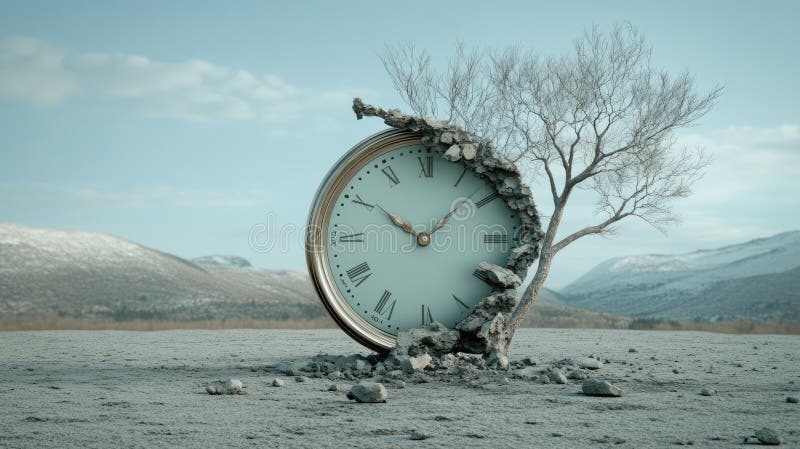
These AI systems often employ models inspired by the human brain’s neural pathways, learning from vast troves of images and infusing their outputs with an eerie eeriness: time loops, morphing forms, and landscapes resembling fractured memories. The algorithm’s “dream” is a realm where reality’s laws bend and hum with fractured logic—unfathomable yet captivating.
Decoding the Creative Process: How AI Breeds Artistic Surrealism
At the heart of this phenomenon lies the fascinating mechanism by which the machine learns, interprets, and then imaginatively crafts. AI art generators like DeepDream utilize convolutional neural networks that identify and emphasize patterns within images in ways that can appear hallucinogenic or otherworldly to human observers. With each iteration, the system layers abstraction over abstraction, revealing latent structures and visual motifs buried between pixel data.

This process embodies an intriguing metaphor: the algorithm is not just processing information, it is dreaming. It’s analogous to a painter who explores varied palettes and brushstrokes to give form to thoughts otherwise ineffable. Yet unlike the human artist, the AI’s “imagination” is a deterministic orchestration of complex math—simultaneously unfamiliar and uncannily familiar.
Surrealism’s Digital Renaissance: Unique Appeal in a Data-Infused World
Why is AI-generated surrealism so captivating? Because it exists at an intersection where we begin to lose the boundary between natural and artificial creativity. It challenges our assumptions about originality, authorship, and aesthetic value. The allure lies in witnessing machines navigate a dreamscape—a place historically reserved for poets and painters.
In a world inundated with hyperreal images and algorithmically curated content, the surreal offers a profound reprieve. AI’s surrealist creations are not mere reproductions of our collective subconscious but transformative reflections that emerge from layers of data and abstraction. They serve as a mirror, cracked and refracted, reflecting our own enigmas back with eerie precision.
Temporal Distortions and Impossible Realities: AI’s Exploration of the Mind’s Eye
The hallmark of surrealism is its playful assault on time and space. AI art frequently disrupts conventional temporality, warping clocks, elongating shadows, or freezing moments in paradoxical states. These temporal distortions evoke what philosopher Henri Bergson might describe as durée—experienced time as fluid and non-linear, an essential element in the dream world.
Such creations immerse the viewer in a mind journey where logic dissolves and imagination ascends. The algorithm becomes a cartographer of impossible realities, tracing contours of altered perception and guiding us through labyrinths of thought previously unimaginable.
Beyond the Canvas: The Expanding Universe of AI Artistic Algorithms
Surrealism generated by AI is not limited to static images. Interactive experiences, generative video art, and algorithm-driven animations are pushing the boundaries further. These multi-sensory dreamscapes herald a new artistic epoch where the viewer becomes part of the dream, navigating an evolving environment birthed from code.
This fusion of technology and surrealism is transforming art from a static artifact into a dynamic dialogue. The algorithm is not simply a tool but a collaborator—its output unpredictable, sometimes bizarre, often enchanting. The artist now shares creative authorship with the machine, blurring lines between invention and discovery.
As these algorithms evolve, so too does our vision of what art can be. The dreamscape is no longer solely human territory. AI stretches the canvas of our collective subconscious, teasing out strange new narratives and forms that marry science with sensation.
Ultimately, the dream of the algorithm calls to us, inviting us to peer beyond the veil of ordinary perception. It reveals a realm where logic sleeps and imagination reigns with surreal majesty—an enthralling testament to the limitless possibilities that arise when humans and machines dream together.


Leave a Comment