

Have you ever wondered what it would be like to taste the color of a sunset or hear the scent of rain? For most of us, the senses remain stubbornly segregated—bound by the unyielding walls of biology. But what if I told you that centuries before Instagram filters and AI-generated art, a composer dared to shatter those walls, weaving sound and color into a single, transcendent experience? Enter Alexander Scriabin, the Russian maestro whose symphonies didn’t just *sound* like they looked—they *were* visions in sonic hues, a phenomenon we now recognize as synesthesia, long before the term even entered the lexicon of modern psychology.
Imagine, if you will, a concert hall bathed in swirling crimson and violet as a crescendo erupts, the air thick with the scent of burning incense. The musicians play not just for the ears but for the eyes, their instruments conjuring a chromatic dream that dances across the retina. This wasn’t mere metaphor for Scriabin; it was his reality. And in the late 19th and early 20th centuries, when the world was still grappling with the rigid boundaries of perception, Scriabin’s audacious fusion of music and color wasn’t just avant-garde—it was a rebellion against the very notion of sensory isolation.

The Alchemy of a Maverick: Scriabin’s Synesthetic Genesis
Born in 1872, Scriabin was a man of contradictions—a mystic in a world of materialists, a visionary who saw music as a gateway to the divine. His synesthesia wasn’t a fleeting curiosity; it was the bedrock of his artistic philosophy. Unlike the casual associations many synesthetes experience—where, say, the letter “A” might always appear red—Scriabin’s synesthesia was a meticulously mapped cosmos. He assigned specific colors to each musical key, a system so precise that his Prometheus: Poem of Fire (1910) included a “light keyboard” to project hues in real time, synchronizing sound and color like a celestial metronome.
But here’s the twist: Scriabin didn’t just *see* colors when he heard music. He believed the two were inextricably linked in a grand, cosmic harmony. To him, the universe was a symphony of vibrations, and color was merely the visible manifestation of those vibrations. This wasn’t just artistic whimsy; it was a radical reimagining of reality itself. In an era when science was still dissecting the senses into neat, isolated compartments, Scriabin proposed a radical alternative: what if perception was a spectrum, not a silo?
His most ambitious work, Mysterium, was to be a seven-day performance that would dissolve the boundaries between art and life, culminating in the apotheosis of humanity. Though unfinished at his death in 1915, the score hints at a world where music, color, scent, and even tactile sensation merged into a single, overwhelming experience. Imagine, if you dare, a performance so immersive that it didn’t just entertain—it *transformed*.
The Color-Key Code: Deciphering Scriabin’s Chromatic Language
Scriabin’s color-key associations were no arbitrary whims. They were a deeply personal lexicon, rooted in his synesthetic experiences but refined through years of obsession. For instance, the key of C-sharp minor—home to the brooding, introspective Piano Sonata No. 9—was a “reddish violet,” a hue that pulsed with both passion and melancholy. In contrast, F major, bright and luminous, shimmered in a “golden yellow,” evoking the warmth of sunlight on wheat fields.
But why these specific pairings? Scriabin’s synesthesia was likely influenced by a mix of neurological wiring and cultural context. Theosophy, a spiritual movement that blended Eastern mysticism with Western esotericism, fascinated him. Figures like Helena Blavatsky spoke of a “universal vibration” that connected all things, and Scriabin’s color-key system can be read as a musical translation of this idea. To him, C major wasn’t just a scale—it was a portal to the divine, a sonic key that unlocked the heavens.
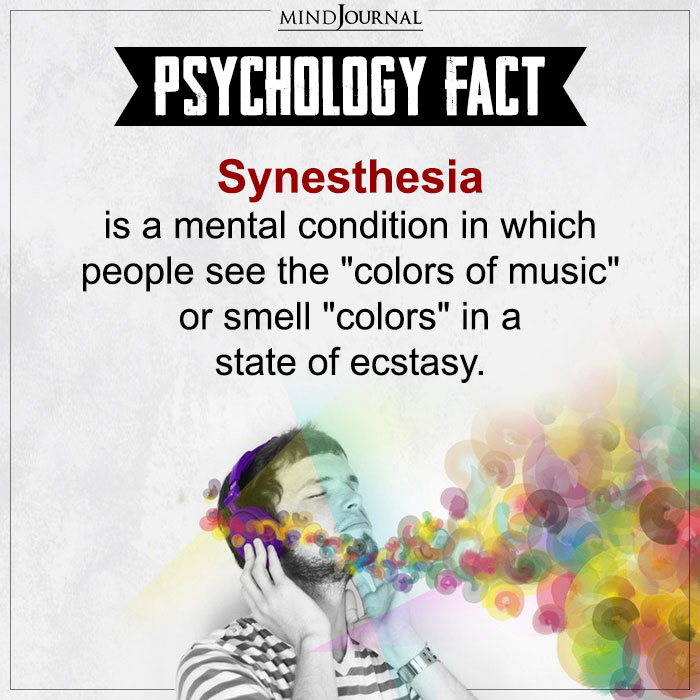
Critics of the time dismissed his system as pretentious or even delusional. How could a single key evoke the same color for everyone? Yet, modern neuroscience suggests that synesthesia is far more common than once believed—up to 4% of the population may experience some form of it. Scriabin’s genius wasn’t just in his synesthesia, but in his refusal to let it remain a private quirk. He turned it into a language, a way to communicate not just emotion, but a *vision* of reality.
The Challenge of the Unseen: Why Scriabin’s Vision Was (and Still Is) Radical
Here’s a question that haunts musicologists and philosophers alike: If Scriabin’s synesthesia was real to him, does it matter whether it’s “objectively” true? In a world where art is often reduced to data and algorithms, Scriabin’s work forces us to confront a disquieting truth—what if the most profound art isn’t about replicating reality, but about *revealing* it? His compositions weren’t just heard; they were *felt* in ways that transcended the auditory.
Yet, this radicalism came at a cost. Scriabin’s contemporaries struggled to reconcile his synesthetic scores with traditional musical forms. How do you conduct a symphony when the conductor’s baton is also a paintbrush? His Prometheus required a “tastiera per luce” (light keyboard) to project colors, a technological marvel for its time. But without the right equipment, the piece was incomplete—a ghost of its intended grandeur. Even today, performances of Prometheus are rare, often reduced to a pale imitation of Scriabin’s vision.
And then there’s the challenge of *translation*. Synesthesia, by its nature, is deeply personal. Scriabin’s “red” might not be your “red.” So how do you convey an experience that exists at the intersection of biology and belief? The answer, perhaps, lies in the very act of creation. Scriabin didn’t just *describe* his synesthesia—he built an entire cosmology around it. His music wasn’t a translation of color; it was color given form, sound given sight.
The Legacy of a Visionary: How Scriabin Paved the Way for Modern Synesthesia
Long after Scriabin’s death, the world caught up to his ideas. The 20th century saw a surge in artists and scientists exploring the blurred lines between the senses. Wassily Kandinsky, the pioneer of abstract art, famously claimed that colors had “souls” that could be expressed through music. Composers like Olivier Messiaen and György Ligeti wrote works inspired by synesthetic experiences. Even today, artists like Olafur Eliasson create immersive installations that play with sensory fusion, from his Your Color Memory to the mesmerizing light displays of The Weather Project.
But Scriabin’s influence extends beyond art. Neuroscientists now study synesthesia as a window into the brain’s plasticity, a reminder that perception is not fixed but fluid. His work challenges us to ask: What other boundaries are we blindly accepting? If sound can be color, and color can be sound, what else might be possible? Could emotions have textures? Could memories have temperatures?
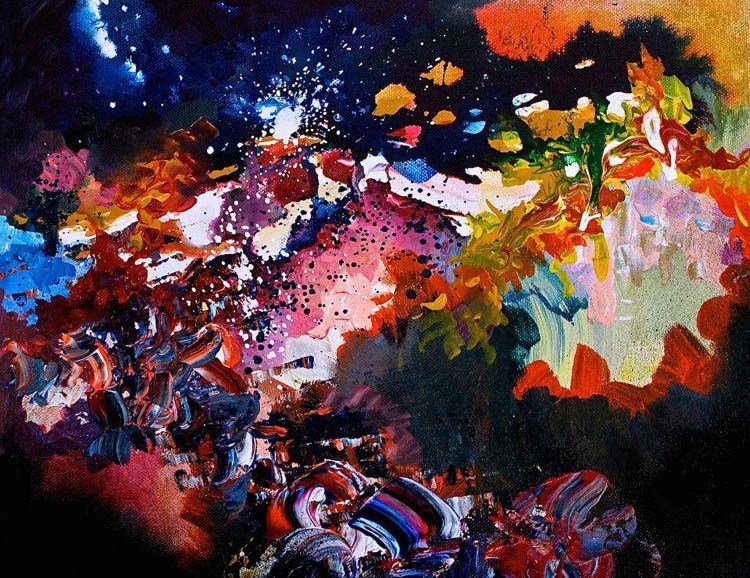
Yet, for all his prescience, Scriabin remains a figure of paradox. He was both a mystic and a modernist, a man who sought to unite the spiritual and the scientific in a single, shimmering whole. His life was a testament to the power of perception—and the dangers of obsession. By the end, he was reportedly so consumed by his vision of Mysterium that he neglected his health, his finances, and even his family. Was he a genius ahead of his time, or a man who mistook his own mind for the universe’s blueprint? The answer may lie somewhere in the liminal space between.
One thing is certain: Scriabin’s synesthesia wasn’t just a quirk of his brain. It was a rebellion. A refusal to accept that the senses must remain separate. In an age where we’re bombarded by stimuli—where screens demand our eyes, speakers demand our ears, and algorithms demand our attention—his work is a radical reminder that the most profound experiences are those that refuse to be boxed in. They are, like Scriabin’s music, a fusion of fire and gold, a symphony of the unseen.
So the next time you listen to a piece of music, ask yourself: What if it wasn’t just sound? What if it had a color, a scent, a texture? What if, just for a moment, you could step outside the confines of your senses and into a world where everything is connected? Scriabin dared to ask that question. And in doing so, he didn’t just compose music—he composed a new way of seeing.


Leave a Comment