

In the quiet hum of a craft room, where the scent of wool lingers like a whispered secret, the battle lines are drawn. On one side stands the hand needle, a slender wand of steel, its barbs glinting with the promise of transformation. On the other, the felting machine, a mechanical marvel with whirring gears and vibrating needles, a symphony of precision in motion. Both tools share the same noble purpose: to sculpt wool into three-dimensional forms that defy the flatness of fabric. Yet, when the goal is the tightest, most intricate 3D sculpture, which reigns supreme? The answer isn’t as simple as it seems—it’s a dance between patience and power, control and chaos, tradition and innovation.
The allure of creating lifelike sculptures from mere tufts of wool is nothing short of alchemy. There’s a primal fascination in watching chaos yield to form, in coaxing a shapeless mass into a creature with eyes that seem to follow you across the room. But the path to that magic diverges sharply depending on the tool you wield. The hand needle whispers of intimacy, a dialogue between artist and material, while the felting machine roars with industrial efficiency, promising uniformity and speed. Yet, beneath the surface of this rivalry lies a deeper question: what does “tightest” truly mean? Is it the density of the fibers, the crispness of the edges, or the ability to capture the most delicate nuances without unraveling?
The Hand Needle: A Dance of Precision and Patience
To wield a hand needle is to engage in a meditative duel with wool. Each stab is a deliberate act, a conversation between the artist’s hand and the material’s resistance. The needle’s barbs catch and tangle fibers, pulling them inward with each thrust, gradually building density and structure. The beauty of this method lies in its tactile feedback. You feel the resistance of the wool, the way it resists or yields under pressure, and this feedback guides your next move. It’s a process that rewards patience, where every layer is earned through repetition and care.
For 3D sculptures, the hand needle excels in nuanced control. The artist can adjust the angle of each stab, the depth of penetration, and the pressure applied, allowing for the creation of fine details like facial features, fur textures, or delicate appendages. The sculpture’s edges remain crisp because the artist can work incrementally, ensuring that the outer layers are as dense as the core. This method is particularly effective for organic forms—think of a fox’s muzzle or the delicate curve of a bird’s wing—where imperfections in density can add character rather than detract from it.
Yet, the hand needle is not without its challenges. The process is labor-intensive, and fatigue can set in, leading to uneven density or rushed work. There’s also the matter of time. A complex sculpture that might take hours with a hand needle could be completed in minutes with a machine. But for those who crave the process as much as the product, the hand needle offers something the machine cannot: a tangible connection to the craft. Every imperfection, every slight variation in density, tells a story of the artist’s journey.
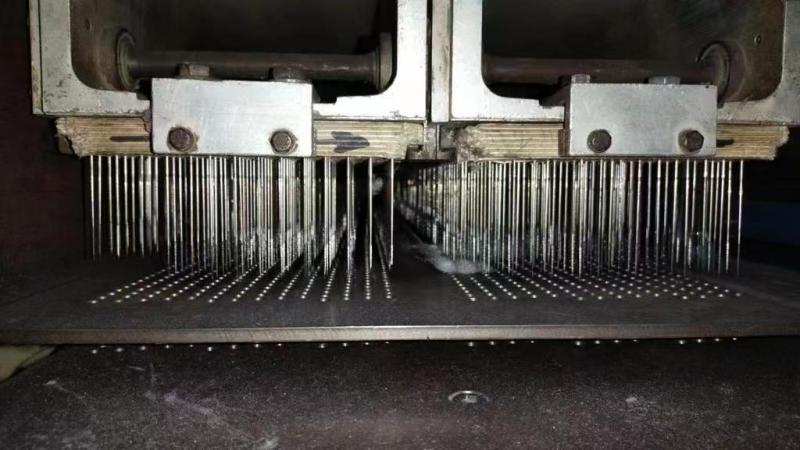
The Felting Machine: Speed and Uniformity in a Mechanical Embrace
Enter the felting machine—a marvel of modern crafting technology. With its rapid, synchronized needle array, it transforms wool into dense, structured forms at a pace that would leave a hand needle artist breathless. The machine’s power lies in its ability to compress fibers uniformly, creating a tight, even density that’s difficult to achieve by hand. This uniformity is particularly advantageous for larger sculptures or pieces where structural integrity is paramount, such as abstract forms or geometric designs.
The machine’s speed is its greatest asset. Where a hand needle might require hours to felt a small ball of wool into a dense core, a felting machine can achieve the same result in minutes. This efficiency is a game-changer for artists who need to produce multiple pieces or work on tight deadlines. Additionally, the machine’s consistent pressure reduces the risk of over-felting or uneven density, which can plague hand-felted work. For projects that demand precision—like architectural models or intricate jewelry components—the felting machine is an invaluable tool.
However, the machine’s strength is also its limitation. While it excels at creating tight, uniform structures, it struggles with the delicate intricacies that hand needles handle with ease. The machine’s needles work in unison, which means they can’t adapt to the subtle variations required for lifelike textures or fine details. For example, sculpting the delicate fur of a rabbit’s paw or the intricate patterns of a butterfly’s wings is nearly impossible with a machine. The artist is left with a choice: sacrifice detail for speed, or embrace the slower, more intimate process of hand felting.
There’s also the matter of creative control. With a felting machine, the artist’s role shifts from active sculptor to operator. The machine dictates the pace and the pressure, leaving little room for spontaneous adjustments. This can stifle the creative process for those who thrive on experimentation and improvisation. Yet, for artists who prioritize consistency and efficiency, the felting machine offers a level of reliability that’s hard to match.

The Verdict: Which Tool Crafts the Tightest Sculpture?
The answer to this question hinges on what “tightest” means to you. If your goal is maximum density and structural integrity, the felting machine is the clear winner. Its ability to compress fibers uniformly and rapidly ensures that even the largest sculptures maintain their shape without sagging or warping. The machine’s power is unmatched when it comes to creating tight, even cores that can support intricate outer layers. For artists working on large-scale projects or those who need to produce multiple pieces efficiently, the felting machine is an indispensable ally.
But if “tightest” refers to the precision of detail and organic texture, the hand needle takes the crown. The hand needle’s ability to adapt to the material’s nuances allows for the creation of sculptures that feel alive, with textures that mimic fur, feathers, or skin. The hand-felted sculpture’s edges are crisp not just because of density, but because the artist can control the felting process at every stage. There’s a liveliness to hand-felted work that machines struggle to replicate—a quality that elevates it from mere craft to art.
Ultimately, the choice between the two tools isn’t about which is superior, but which aligns with your creative vision. Do you crave the speed and uniformity of the machine, or the intimacy and control of the hand needle? Perhaps the answer lies in a hybrid approach: using the felting machine to build the core of a sculpture and the hand needle to refine the details. After all, the tightest sculpture isn’t just about density—it’s about the story it tells, the emotions it evokes, and the connection it forges between artist and material.
The Deeper Fascination: Why We’re Drawn to the Craft
Beneath the technical debate lies a more profound fascination with the act of felting itself. There’s something almost magical about transforming loose, fluffy wool into a solid, three-dimensional form. It’s a process that mirrors the way life itself takes shape—chaotic at first, then gradually organizing into something recognizable and beautiful. Whether you’re using a hand needle or a felting machine, the act of felting taps into a primal desire to create order from chaos, to breathe life into the inanimate.
This fascination is amplified by the tactile nature of the craft. Wool is a living material, responsive to touch, temperature, and pressure. It has a memory of its own, resisting or yielding in ways that feel almost sentient. The hand needle, with its direct contact, amplifies this connection, making the artist feel as though they’re in a silent conversation with the wool. The felting machine, while less intimate, offers a different kind of magic—the awe of watching raw wool yield to mechanical precision in a matter of minutes.
Perhaps the true allure of felting lies in its duality: the balance between control and surrender. Whether you’re guiding a hand needle with steady hands or letting a machine’s vibrations do the work, you’re participating in a timeless ritual of transformation. And in the end, the tightest sculpture isn’t just the one with the most density—it’s the one that feels most alive.
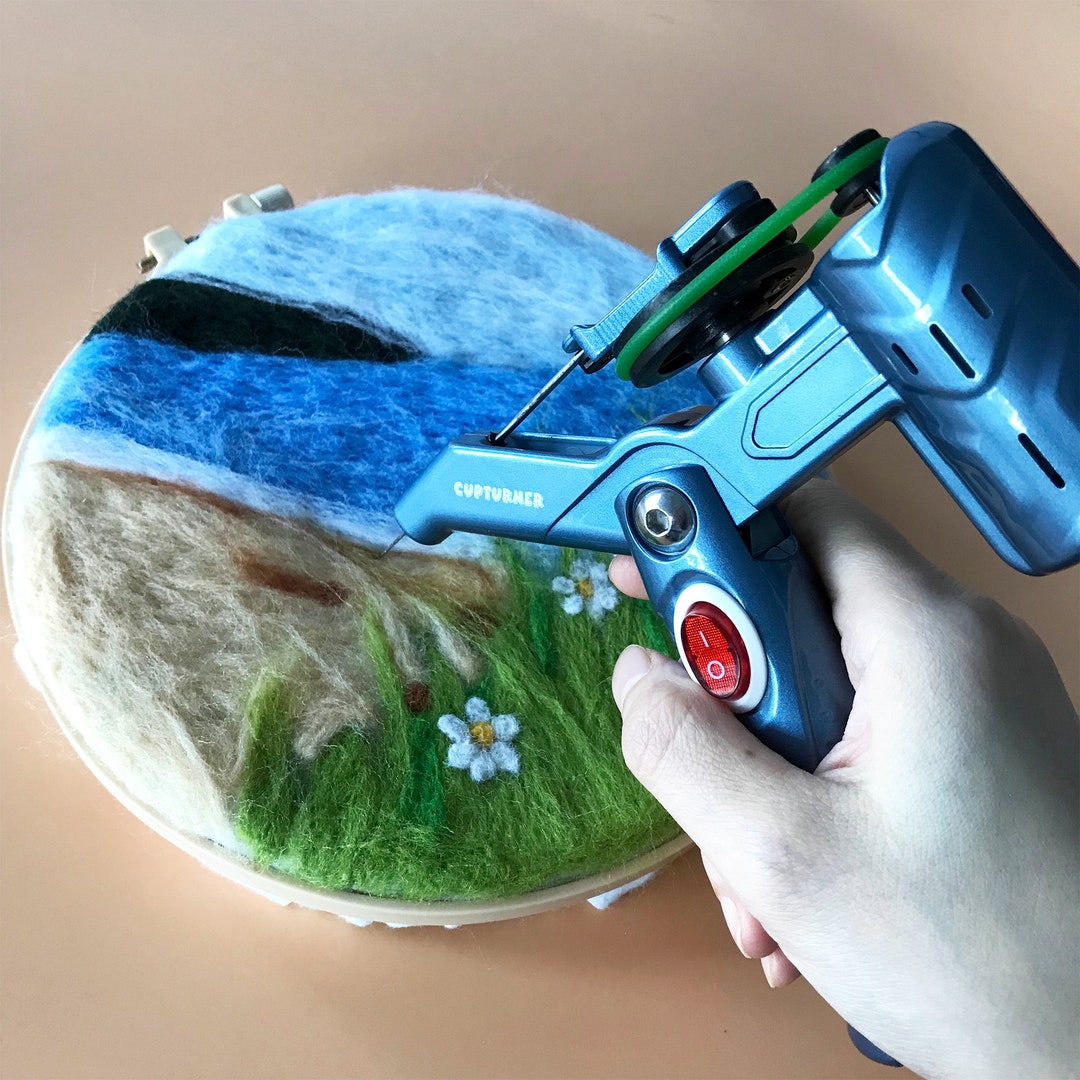
The next time you stand before a pile of wool, needle in hand or machine humming at your side, ask yourself: what story do you want to tell? The tightest sculpture isn’t just a testament to your skill—it’s a reflection of your connection to the craft, your patience, and your willingness to embrace the process, whatever tool you choose.


Leave a Comment