

In an era where digital interactions often eclipse tactile experiences, the resurgence of floral artistry feels less like nostalgia and more like a quiet rebellion. The bouquet, once a mere accessory in grand gestures or solemn occasions, has evolved into a canvas of emotion, a whisper of nature’s resilience in a world that increasingly favors the synthetic. Yet, what is it about these arrangements of petals and stems that continues to captivate us? Why do we still reach for flowers when algorithms dictate so much of our lives? The answer lies not just in their beauty, but in their ability to transcend the ephemeral, to carry stories that words alone cannot.
Consider the way a single bloom can halt a conversation, or how an entire garden of colors can transform a sterile room into a sanctuary. Flowers are silent storytellers, their language as old as time yet as fresh as the morning dew. They mark beginnings and endings, celebrations and farewells, and in doing so, they remind us of the cyclical nature of existence. But beyond their symbolic weight, there’s something deeper at play—a fascination with the fleeting, the delicate, the almost magical. In a world obsessed with permanence, flowers offer a paradox: they bloom brilliantly, then fade, and yet, their essence lingers in memory like a half-remembered dream.
The Language of Petals: More Than Meets the Eye
Flowers have long been the unsung poets of human emotion. A red rose speaks of passion, a white lily of purity, a sunflower of adoration. But these associations are merely the surface. Delve deeper, and you’ll find that every petal, every hue, carries a nuance that defies simple translation. The Victorian language of flowers, or floriography, was a coded dialogue where a single bloom could convey entire sentences. A sprig of rosemary whispered of remembrance; a yellow carnation, rejection. Today, while we may no longer rely on such intricate symbolism, the subconscious pull remains. We gift flowers not just for their beauty, but for the emotions they silently encapsulate.
Take the sunflower, for instance. Its bold, golden face follows the sun, a trait known as heliotropism. This relentless pursuit of light mirrors our own human desire to seek joy and warmth in the face of darkness. It’s no wonder sunflowers are often gifted to those embarking on new journeys or recovering from hardship. They are, in essence, a visual metaphor for resilience. Similarly, the delicate orchid, with its intricate structure, symbolizes luxury and strength. Its ability to thrive in the most inhospitable conditions—clinging to tree branches or cracking through concrete—echoes the human spirit’s capacity to flourish against odds. Flowers, it seems, are not just passive adornments; they are active participants in the narrative of our lives.

The Alchemy of Arrangement: Crafting Emotion in Three Dimensions
Selecting and arranging flowers is an art form that marries intuition with precision. The choice of blooms, their colors, and their placement within a bouquet are not arbitrary; they are deliberate decisions that evoke specific reactions. A tightly packed arrangement of small, delicate flowers might convey intimacy, while a sprawling, asymmetrical display could evoke wild, untamed beauty. The process is akin to composing a symphony, where each stem plays its part in harmony with the others.
Consider the Japanese art of ikebana, where every element—from the length of a stem to the angle of a leaf—holds significance. The empty space, or *ma*, is as crucial as the flowers themselves, allowing the arrangement to breathe and the viewer to reflect. This philosophy extends beyond aesthetics; it’s a meditation on balance and impermanence. In a world where we’re bombarded with noise, the deliberate stillness of a floral arrangement offers a rare moment of clarity. It’s no coincidence that ikebana is often practiced as a form of mindfulness, a way to reconnect with the present moment.
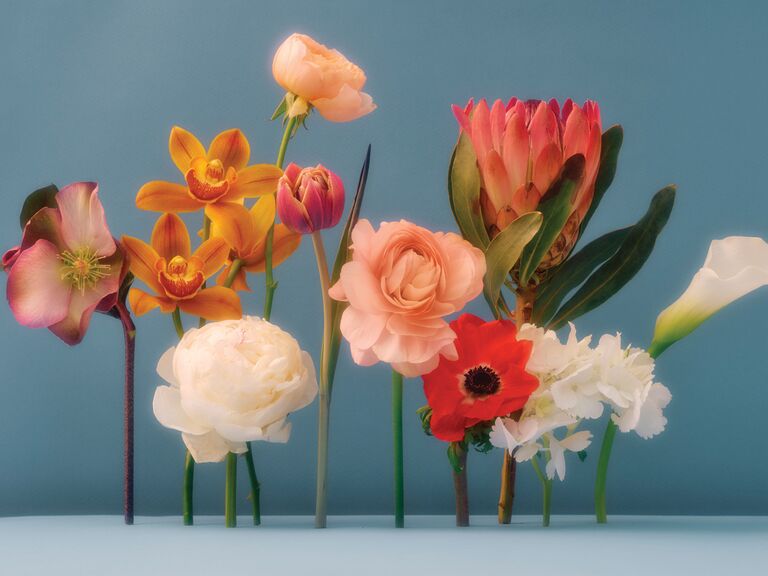
Even in Western floral design, the principles of contrast and rhythm play a pivotal role. A monochromatic bouquet of whites and creams can feel ethereal and serene, while a riot of contrasting colors—crimson, emerald, and gold—can feel celebratory and bold. The choice of foliage adds another layer of complexity. Eucalyptus, with its silvery-blue leaves, can soften the sharpness of a red rose, while monstera leaves bring a tropical, almost primordial energy to an arrangement. The result is a tactile experience that engages not just the eyes, but the senses of touch and even smell. A well-crafted bouquet is a multisensory masterpiece, a fleeting masterpiece that demands to be experienced in the moment.
Flowers in the Digital Age: A Counterbalance to the Virtual
In an age dominated by screens and pixels, the tactile allure of flowers feels almost revolutionary. They are a tangible reminder of the natural world, a world that exists beyond the confines of algorithms and data streams. Studies have shown that exposure to nature, even in small doses like a single flower, can reduce stress and enhance well-being. This is perhaps why floral subscriptions have surged in popularity, offering a weekly or monthly dose of organic beauty to urban dwellers starved for greenery.
Yet, the relationship between humans and flowers in the digital era is more complex than mere nostalgia. It’s a dialogue between the ephemeral and the eternal. Social media platforms are flooded with images of flowers—#flowerstagram, #bloomvibes, #petalporn—where their beauty is immortalized in pixels. But these digital representations often lack the depth of the real thing. A photograph of a rose cannot capture the dewy freshness of its petals or the subtle fragrance that lingers in the air. The digital world may amplify the allure of flowers, but it also highlights their irreplaceable magic. In a sense, flowers become a rebellion against the intangible, a defiant assertion of the real in a world that increasingly blurs the line between virtual and physical.
Moreover, the rise of sustainable and locally sourced floristry reflects a growing consciousness about the environmental impact of our choices. The global flower industry, with its reliance on air freight and chemical pesticides, has long been a contributor to ecological strain. Today, however, consumers are seeking out seasonal, locally grown blooms, supporting small-scale growers and reducing their carbon footprint. This shift is not just about aesthetics; it’s a statement of values. By choosing flowers that are in harmony with their environment, we’re making a quiet but powerful declaration about the kind of world we want to live in.
The Future of Floral Artistry: Innovation Meets Tradition
The world of floral design is not immune to innovation. Designers are experimenting with unconventional materials, from dried flowers that last indefinitely to biodegradable arrangements that return to the earth without a trace. There’s a growing movement toward “forever flowers”—preserved blooms that retain their color and form for years, offering a sustainable alternative to fresh-cut flowers. These creations challenge our perceptions of what a bouquet can be, blending artistry with environmental responsibility.
Technology, too, is playing a role in redefining floral experiences. Augmented reality (AR) apps now allow users to visualize how a bouquet will look in their space before purchasing, bridging the gap between online shopping and the tactile experience of selecting flowers in person. Meanwhile, vertical farming and lab-grown flowers are poised to revolutionize the industry, making it possible to grow blooms in urban environments with minimal resources. These advancements hint at a future where flowers are not just seasonal luxuries, but accessible, sustainable staples of daily life.
Yet, for all its innovation, the heart of floral artistry remains rooted in tradition. The act of gifting a bouquet, of arranging stems with care, of presenting a loved one with a symbol of affection—these are timeless rituals that transcend trends. They are acts of love, of memory, of hope. In a world that often feels fragmented, flowers offer a thread of continuity, a link to the past and a promise for the future.
The Unspoken Bond: Why We’ll Always Need Flowers
Perhaps the most profound reason for our enduring fascination with flowers is their ability to evoke the ineffable. They are, at once, both ordinary and extraordinary. A single daisy growing through a crack in the pavement is a testament to nature’s tenacity; a carefully curated wedding bouquet is a celebration of human creativity. In their duality, flowers mirror our own complexities—the way we balance fragility with strength, transience with permanence.
They also serve as a reminder of our interconnectedness. Flowers rely on pollinators, on sunlight, on soil, and in turn, they sustain ecosystems that support life. In this way, they are a microcosm of the world we inhabit—a delicate web of relationships that sustain us all. When we pause to admire a flower, we’re not just acknowledging its beauty; we’re acknowledging the intricate dance of life that makes it possible.
So the next time you receive a bouquet, or even just notice a single bloom on your windowsill, take a moment to really look. See beyond the petals to the stories they hold—the quiet resilience of a sunflower, the understated elegance of an orchid, the wild joy of a field of poppies. In their fleeting existence, they teach us to cherish the present, to find beauty in impermanence, and to remember that even the smallest things can carry the weight of the world.
In the grand tapestry of life, flowers are the threads that bind us to nature, to each other, and to ourselves. They are, quite literally, the bouquet for the future—a future where beauty, sustainability, and meaning intertwine. And as long as there are petals to unfurl and stems to reach for the sun, we will continue to find solace, inspiration, and wonder in their embrace.


Leave a Comment