

Have you ever stood before a canvas so vibrant it seemed to hum with life? Or perhaps you’ve lost yourself in a mural where petals of color bloom like whispers from another world? Art isn’t merely seen—it’s felt, inhaled, devoured by the soul. It nourishes the mind like sunlight feeds a flower, unfurling thoughts and emotions into something tangible, something *alive*. But what if the art you adore isn’t just a feast for the eyes—what if it’s a banquet for the spirit? What if every brushstroke, every hue, every carefully placed shadow is a silent sermon, a whispered prayer, a burst of joy that lingers long after the frame is hung? Welcome to the world of art that doesn’t just hang on walls—it *feeds* the soul.
In this realm, art transcends aesthetics. It becomes a living dialogue between the creator and the observer, a bridge between the mundane and the divine. It doesn’t just depict beauty—it *embodies* it. And nowhere is this more evident than in the blossoming genre of spirit-nourishing art: works that don’t just capture a moment, but *elevate* it into something sacred. From the golden hues of Renaissance masterpieces to the bold strokes of modern digital canvases, art has always been a vessel for the ineffable. But today, it’s evolving into something even more profound—a sanctuary for the weary, a mirror for the introspective, and a lantern for the lost.
The Canvas as Communion: When Art Becomes Prayer
Imagine walking into a gallery where every painting is a whispered hymn. Where the Virgin Mary’s gaze isn’t just painted but *prayed into existence*, where the crucifixion isn’t a historical event but a visceral cry of sacrifice. Religious art has long been the spiritual backbone of civilizations, but today’s artists are reimagining these ancient narratives with a fresh, almost rebellious tenderness. They’re not just depicting faith—they’re *feasting* on it, savoring its textures, its contradictions, its raw humanity.
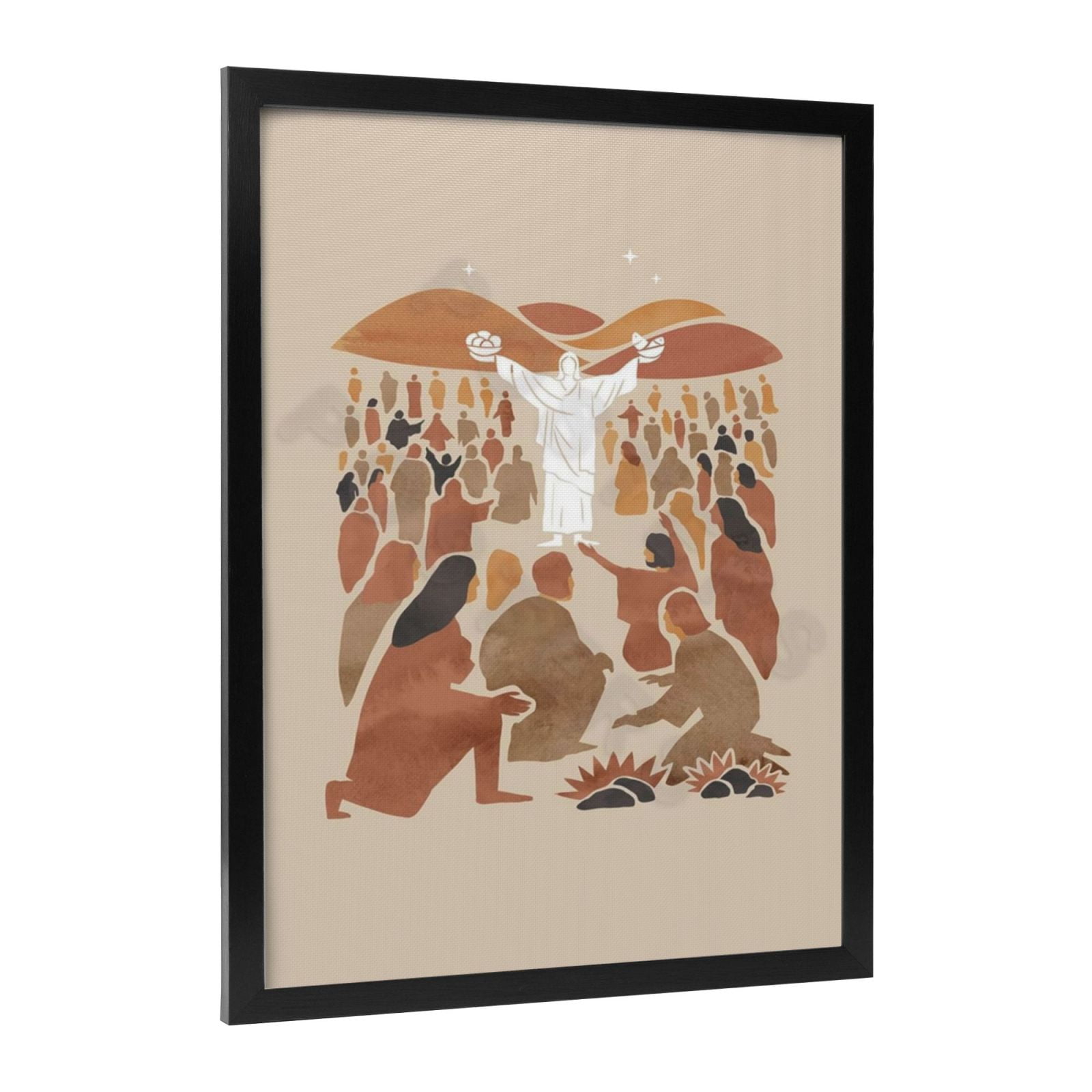
Take, for instance, the modern reinterpretation of the “Feeding of the 5,000.” No longer a distant biblical tableau, it’s a riot of color and emotion—a sea of upturned faces, hands reaching, bread breaking, light spilling like honey across the canvas. The artist doesn’t just tell the story; they *immerse* you in it. You don’t just see the miracle—you *taste* the loaves, you *feel* the hunger, you *hear* the murmurs of awe. This is art as sacrament: a visual communion where the observer doesn’t just witness but *participates*.
But here’s the playful challenge: Can art that feeds the soul ever be too much? In a world where we’re bombarded by noise, where our senses are constantly overloaded, could a surfeit of spirit-nourishing art actually become a burden? What happens when the sacred and the sensory collide in a way that overwhelms rather than uplifts? The line between reverence and saturation is thin—and crossing it might just turn a feast into a famine.
The Alchemy of Color: How Palettes Stir the Soul
Color isn’t just a visual tool—it’s an emotional catalyst. A single shade can ignite joy, soothe sorrow, or provoke rebellion. In spirit-nourishing art, color isn’t chosen at random; it’s *orchestrated* like a symphony, each hue a note in a grand, unspoken melody. Consider the use of ochre in Renaissance frescoes—warm, earthy, grounding—like sunlight on ancient stone. Or the electric blues of modern digital art, crackling with energy, as if the canvas itself is alive with static.
But color can also deceive. A palette that’s too sweet risks saccharine sentimentality. A scheme that’s too dark may plunge the viewer into a void. The true mastery lies in balance: a splash of crimson to awaken passion, a whisper of lavender to calm the mind, a dash of gold to remind us of the divine. Artists like Marc Chagall understood this intuitively, weaving color into dreamscapes where lovers float above villages and animals speak in tongues of light. His work doesn’t just hang on walls—it *floats* in the mind, a kaleidoscope of the subconscious.
Yet here’s the paradox: the most spiritually potent art often defies color theory entirely. Think of Caravaggio’s chiaroscuro—where darkness isn’t absence, but a presence, a void that cradles the sacred. Or the monochrome austerity of some contemporary spiritual art, where the absence of color becomes its own kind of prayer. Can a single shade of black hold more divinity than a rainbow? The challenge isn’t just in choosing colors—it’s in knowing when to let them vanish.

From Canvas to Couch: The Rise of Spirit-Feeding Decor
Art isn’t confined to galleries anymore. It’s crept into our homes, our offices, our digital feeds—transforming blank walls into altars, desktops into sanctuaries. The rise of spirit-feeding decor is a quiet revolution, one where a framed print of a laughing Buddha or a minimalist mandala isn’t just decoration—it’s a daily ritual. These aren’t mere images; they’re talismans, charged with intention and energy.
Consider the boho-chic trend of gallery walls adorned with mixed-media spiritual art: a vintage Jesus poster beside a neon mantra, a watercolor lotus next to a black-and-white photograph of a desert mystic. Each piece is a chapter in a personal gospel, a visual affirmation of what the soul believes. But with this freedom comes a new dilemma: how do we curate a collection that nourishes without overwhelming? Is it possible to have too many spirit-feeding pieces in one space? Could a room saturated with sacred imagery lose its power to uplift, becoming instead a cacophony of competing prayers?
Then there’s the digital dimension. Social media feeds are now galleries in their own right—Instagram accounts dedicated to spiritual art, Pinterest boards overflowing with sacred geometry, TikTok videos where artists paint mantras in real time. The challenge here? Authenticity. In a world where anyone can slap a quote over a sunset and call it art, how do we separate the wheat from the chaff? How do we find pieces that truly feed the soul, rather than just tickle the algorithm?
The Unseen Thread: Art That Feeds Across Cultures
Spirit-nourishing art isn’t bound by geography or creed. From the intricate mandalas of Tibetan monks to the bold geometric patterns of Islamic calligraphy, from the dreamlike landscapes of Australian Aboriginal dot paintings to the vibrant folk art of Mexican *retablos*, every culture has its own visual language of the divine. These aren’t just artworks—they’re maps of the sacred, guiding the viewer through realms of myth, memory, and meaning.
Take the Japanese concept of *wabi-sabi*—the beauty of imperfection, the acceptance of transience. In a world obsessed with perfection, a cracked tea bowl or a faded scroll becomes a meditation on the fleeting nature of life. Or consider the African concept of *ubuntu*—“I am because we are”—embodied in communal art forms like beadwork or communal murals, where the act of creation is as sacred as the finished piece. These traditions remind us that spirit-feeding art isn’t just about what we see—it’s about how we *participate*.
But here’s the challenge: cultural appropriation. As spiritual art goes mainstream, there’s a risk of stripping these traditions of their context, reducing sacred symbols to mere aesthetic choices. How do we honor the origins of these art forms while allowing them to evolve in new spaces? Can a non-Indigenous artist paint a dreamcatcher without erasing its cultural significance? The line between appreciation and exploitation is razor-thin—and crossing it could turn a feast into a violation.

The Future of Feasting: Where Art Meets AI and Augmented Reality
The next frontier of spirit-nourishing art isn’t just on canvas or screen—it’s in the air, in the walls, in the very fabric of our environments. Augmented reality (AR) is transforming how we experience art, turning static images into interactive journeys. Imagine walking through a park where every tree is adorned with digital frescoes that shift with the seasons, or a subway station where the walls tell the story of the city’s spiritual history as you pass by. Art isn’t just seen—it’s *experienced*, a living dialogue between the viewer and the unseen.
Then there’s artificial intelligence, the ultimate collaborator. AI-generated art is already pushing boundaries, creating pieces that respond to the viewer’s emotions, that evolve over time, that even generate personalized spiritual art based on one’s mood or life events. But here’s the challenge: if an algorithm can create a painting that *feels* divine, does it still carry the weight of human intention? Can a machine truly feed the soul, or is it just a mirror reflecting our own desires back at us?
Perhaps the future lies in the fusion of human and machine—where artists use AI as a tool to explore the ineffable, to push the boundaries of what’s possible. Where a digital brushstroke isn’t just pixels, but a prayer. Where a generative art piece isn’t just code, but a conversation with the divine.
The journey of art that feeds the soul is far from over. It’s a path paved with questions, with challenges, with the quiet hum of creation. It asks us to look deeper, to feel more keenly, to question not just what we see, but why it moves us. It invites us to feast—not just with our eyes, but with our entire being.
So the next time you stand before a piece of art that makes your heart swell, ask yourself: Is this merely beautiful—or is it sacred? And if it’s the latter, then let it feed you. Let it nourish you. Let it remind you that beauty isn’t just in the eye of the beholder—it’s in the soul of the artist, and in the hunger of the one who looks.


Leave a Comment