

The floral pop of the wedding industry isn’t just a fleeting trend—it’s a full-blown revolution, a chromatic explosion that transforms ceremonies into living canvases. Couples today aren’t merely arranging flowers; they’re curating experiences, weaving narratives through petals and stems, and turning their big day into a sensory masterpiece. This isn’t about tradition anymore. It’s about spectacle. It’s about defiance. It’s about love expressed in hues so bold they demand attention, in arrangements so unexpected they linger in memory like a perfume. The wedding industry has always been a mirror to cultural shifts, but nowhere is that reflection more vibrant than in the way flowers now dominate the aesthetic conversation. From lush, jungle-inspired arches to minimalist bursts of single-stem elegance, the floral pop is less a choice and more a declaration: we are here, we are bold, and we are unforgettable.
What fuels this obsession? Why have flowers, those ephemeral symbols of beauty and transience, become the cornerstone of modern matrimonial artistry? The answer lies not just in aesthetics, but in psychology, in the human need to anchor fleeting moments in something tangible, something that whispers permanence even as it wilts. Flowers, in their fleeting glory, become metaphors for love itself—radiant, delicate, and destined to fade. Yet in their arrangement, they are sculpted into permanence, frozen in time for a single, radiant day. This paradox—beauty bound to decay—is the very essence of the floral pop. It’s a celebration of life’s contradictions: joy and sorrow, permanence and impermanence, tradition and rebellion. And in that tension, couples find not just decoration, but meaning.
The Rise of the Floral Statement: When Less Becomes More (and More Becomes Everything)
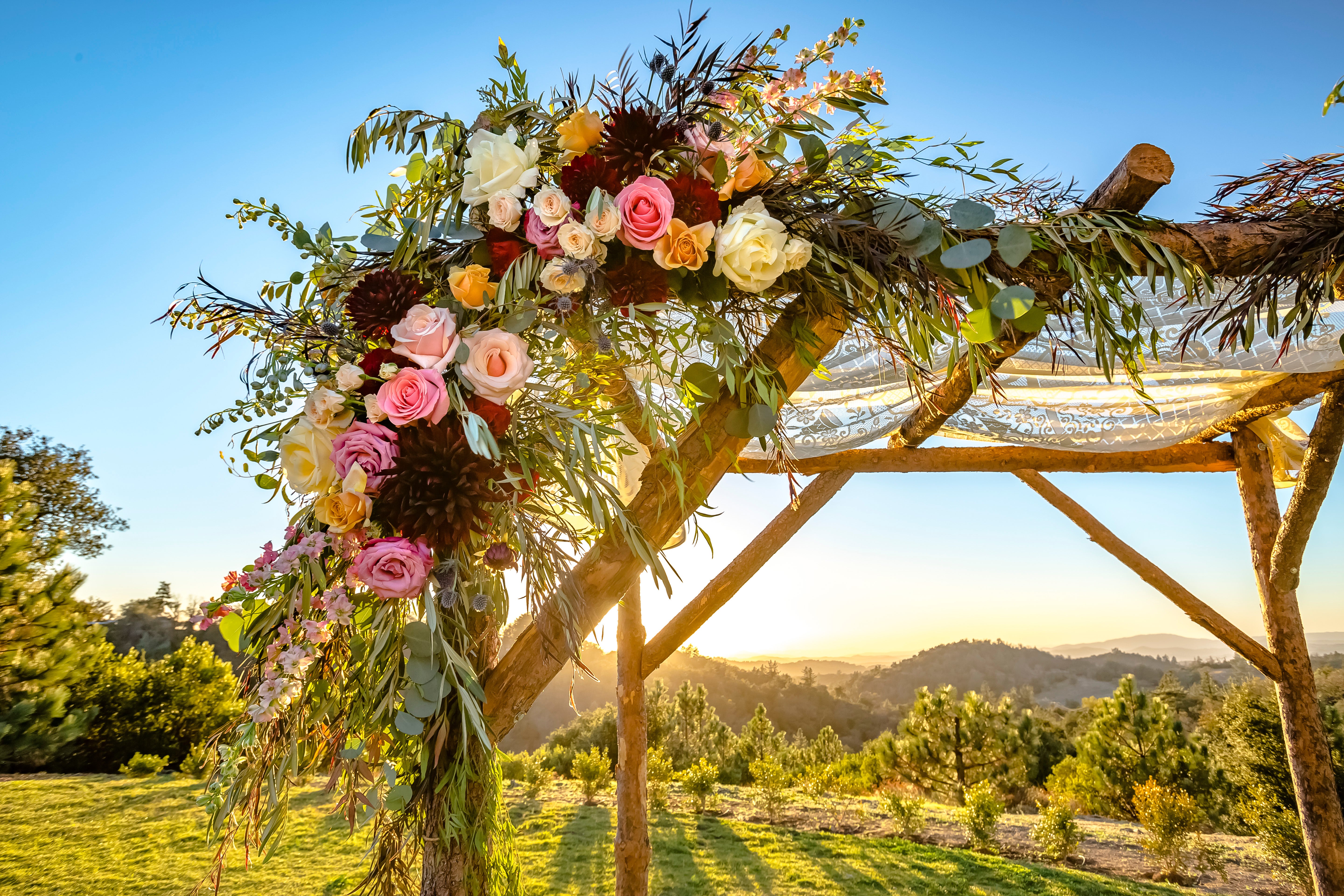
There was a time when wedding florals were demure, almost apologetic. Bouquets were small, arrangements symmetrical, colors muted. But somewhere between the rise of social media and the decline of rigid etiquette, flowers stopped whispering and started shouting. The modern wedding floral statement isn’t just large—it’s architectural. It’s sculptural. It’s a centerpiece that commands the room before the first guest even sits down. Think of the Instagram-famous “floral walls” that dwarf guests, or the suspended installations that make ceilings disappear into a sky of blossoms. These aren’t decorations. They are installations. They are art. They are the visual equivalent of a standing ovation.
This shift reflects a broader cultural movement toward self-expression. Couples today are rejecting the idea that weddings must conform to outdated norms. They’re embracing maximalism not out of excess, but out of authenticity. A floral statement isn’t just pretty—it’s personal. It tells a story. A couple who chooses a monochromatic palette of deep burgundies and plums might be nodding to their shared love of autumnal landscapes. Another who opts for neon-bright proteas and anthuriums? They’re channeling the raw energy of a tropical storm. The floral pop isn’t random. It’s intentional. It’s identity made visible.
And yet, within this explosion of color and scale, there’s a counter-movement: the rise of the “quiet luxury” floral. Single stems in slender vases. Delicate sprigs of baby’s breath scattered like confetti. These minimalist arrangements whisper rather than shout, but their impact is no less profound. They speak to a different kind of sophistication—one that values restraint, subtlety, and the power of suggestion. In a world drowning in noise, sometimes the most powerful statement is the one you barely hear. The floral pop, in all its forms, is a rebellion against invisibility. Whether through riotous color or whispered elegance, it ensures that love isn’t just felt—it’s seen.
The Psychology of Petals: Why Flowers Speak When Words Fail
Flowers are ancient communicators. Long before language evolved, humans used blossoms to convey emotions—love, grief, celebration, apology. The Victorian language of flowers, or floriography, turned petals into a secret code, where a single rose could mean devotion and a yellow carnation could signal rejection. Today, we may not assign such rigid meanings to every bloom, but the underlying psychology remains: flowers are emotional shorthand. They bypass logic. They touch something primal in us. That’s why a bride clutching a bouquet of white peonies doesn’t just hold flowers—she holds a lifetime of associations: purity, abundance, renewal. That’s why a groom’s boutonniere of thistle isn’t just a sprig—it’s a nod to resilience, to rugged beauty, to a love that thrives in harsh conditions.
In the context of weddings, flowers become emotional anchors. They ground the day in sensory memory. The scent of jasmine at dusk. The sight of hydrangeas trembling in the breeze. The feel of velvety petals against skin. These are not incidental details. They are the emotional DNA of the event. Studies in sensory psychology show that scent and memory are deeply intertwined—the aroma of a particular flower can trigger vivid recollections decades later. That’s why couples choose flowers not just for their looks, but for their emotional resonance. A couple who met in a lavender field might weave lavender into their bouquets. A couple who survived a difficult year might choose sunflowers, symbols of resilience and joy. The floral pop isn’t arbitrary. It’s a love letter written in petals.
There’s also something deeply human in the way we fetishize flowers at weddings. We photograph them obsessively. We frame them in albums. We press them into books. We preserve them like relics. Why? Because they are proof. Proof that this day happened. Proof that love was real, even if only for a moment. Flowers, in their ephemeral nature, become the ultimate memento mori—a reminder that beauty is fleeting, and therefore, all the more precious. The floral pop, then, is not just a trend. It’s a coping mechanism. A way to hold onto joy in a world that constantly reminds us of its fragility.
From Tradition to Transgression: How Flowers Became the Ultimate Rebel Accessory
For centuries, wedding florals were bound by convention. Roses for romance. Lilies for purity. Orchids for exoticism. But today, the rules have been rewritten—or rather, erased. Couples are turning to flowers that defy expectation: black calla lilies for drama, proteas for their alien-like strangeness, dried flowers for their haunting beauty. The floral pop isn’t just about color. It’s about subversion. It’s about taking something traditionally “soft” and infusing it with edge. A bouquet of thistles and black dahlias isn’t just a bouquet—it’s a manifesto. It says: we are not here to please. We are here to astonish.
This rebellion is especially evident in the rise of non-traditional wedding florals. Dried flowers, once relegated to funeral arrangements, now adorn bridal tables with a ghostly elegance. Succulents, those desert survivors, are woven into corsages as symbols of endurance. Even weeds—yes, weeds—are finding their way into bouquets, celebrated for their wild, untamed beauty. This isn’t just floral innovation. It’s cultural upheaval. It reflects a generation that values authenticity over tradition, that sees beauty in the overlooked, that refuses to be boxed in by outdated norms. The floral pop, in its most radical form, is a middle finger to the idea that weddings must be “proper.” It’s a celebration of the unconventional, the unexpected, the downright strange.
And yet, even in this rebellion, there’s a deep sense of reverence. Flowers, after all, are not just rebellious—they are sacred. Across cultures and centuries, they’ve been used in rituals of passage, in rites of love and loss. The floral pop, then, is a sacred rebellion. It’s a way to honor tradition while breaking free from it. It’s a way to say: we respect the past, but we are not bound by it. We will take the old symbols and make them new. We will take the expected and make it extraordinary. In doing so, couples aren’t just planning a wedding. They’re crafting a legacy.

The Business of Blossoms: When Flowers Become a Luxury Commodity
The floral pop isn’t just a cultural phenomenon—it’s a booming industry. Couples today are spending thousands on florals, not just as decorations, but as investments in experience. The rise of “floral designers” as celebrities—think of the florists who’ve become Instagram icons, with legions of followers hanging on their every stem placement—speaks to the commodification of beauty. Flowers are no longer just accessories. They are the main event. And with that elevation comes a new set of expectations: flowers must be rare, seasonal, impeccably sourced. A bride today might demand peonies in January, knowing full well they’ll cost a fortune. She might insist on locally grown blooms, not just for ethics, but for the story they tell. The floral pop, in its most luxurious form, is a status symbol. It’s a way to say: we spared no expense. We spared no effort. We spared no imagination.
But this luxury comes with a cost—both financial and environmental. The demand for out-of-season flowers has led to a global flower trade that’s often exploitative, with workers in developing countries facing poor conditions and low wages. The floral pop, then, is not without its shadows. It forces us to ask: at what point does beauty become complicity? How do we reconcile our love for flowers with the ethical dilemmas they present? Some couples are turning to local, seasonal florists, embracing the imperfections of what’s naturally available. Others are opting for dried or preserved flowers, which offer longevity without the carbon footprint. The floral pop, in its most thoughtful form, is not just about spectacle—it’s about stewardship. It’s about choosing beauty that doesn’t cost the earth.
And yet, even in this awareness, there’s a certain magic to the industry’s growth. The floral pop has created entire ecosystems: flower farms that double as tourist destinations, workshops that teach couples how to forage for their own bouquets, subscription services that deliver seasonal blooms to doorsteps. Flowers are no longer just something you buy. They’re something you experience. Something you live with. Something you fall in love with. The business of blossoms isn’t just about selling petals—it’s about selling joy, memory, and meaning. And in a world that often feels transactional, that’s a rare and beautiful thing.
The Future of Floral Fantasy: Where Do We Go From Here?
The floral pop isn’t a passing phase. It’s a cultural reset. A visual revolution. And like all revolutions, it’s only just beginning. What’s next for wedding florals? The possibilities are as endless as the petals themselves. Imagine floral installations that respond to touch, that change color with the light, that release scent on command. Imagine bouquets grown in labs, tailored to a couple’s DNA, blooming in hues no earthly garden could produce. Imagine weddings where the flowers aren’t just decorations, but interactive art—projections of blooms that dance across walls, or arrangements that grow over the course of the reception, their stems elongating in real time.
But perhaps the most exciting frontier isn’t technological—it’s ecological. The future of the floral pop may lie in sustainability, in a return to the earth, in a celebration of what grows naturally and locally. Imagine weddings where the floral theme is dictated by the season, where the bouquets are foraged from the couple’s own backyard, where the arrangements are composted after the event, returning to the soil they came from. This isn’t just eco-friendly. It’s poetic. It’s a full-circle moment, where love and nature intertwine in a dance as old as time.
Whatever the future holds, one thing is certain: the floral pop will continue to evolve. It will push boundaries. It will challenge conventions. It will demand attention. And in doing so, it will remind us of something fundamental: that beauty is not just something we observe. It’s something we create. Something we feel. Something we carry with us long after the petals have fallen.
The floral pop isn’t just a trend. It’s a testament to the human desire to make the fleeting eternal. To turn a moment into a memory. To take something as fragile as a flower and make it as enduring as love itself. And in that alchemy, we find not just decoration—but magic.


Leave a Comment