

In an age where artificial intelligence relentlessly imprints its signature across countless creative domains, a curious and vibrant phenomenon has emerged: the floral pop reaction to AI homogenization. This isn’t simply a passing trend or an aesthetic choice; it is a robust counterpoint that delves into the core of human craving for individuality and natural beauty amid the sterile echoes of mechanized repetition. As AI-generated images multiply, showcasing a spectrum of compositions that often blur into indistinguishable sameness, the blossoming and vivid floral motifs stand out—not just as visual elements but as emblematic expressions of resistance and fascination.
The Landscape of AI Homogenization
The proliferation of AI-generated art brings with it a paradoxical consequence: while AI’s capacity to produce abundant, intricate images is awe-inspiring, it also fosters an inadvertent uniformity. Inundated with algorithms that rely heavily on vast databases and pattern recognition, many AI creations end up echoing similar shapes, color palettes, and styles. This uniformity — a homogenized aesthetic — can feel both mesmerizing and disquieting. It offers a seductive surface-level appeal but struggles to evoke the subtle uniqueness or emotional resonance that authentic, human-led creativity naturally imparts.
This observation is not merely a surface critique but a profound reflection on the nature of creativity. The subtle imperfections, the unpredictable details, and the organic growth of ideas tend to be flattened when intelligence is simulated rather than intrinsically human. It is within this context that the floral pop reaction emerges as a fascinating counterbalance.
Floral Imagery: Nature’s Rebellion Against Digital Conformity
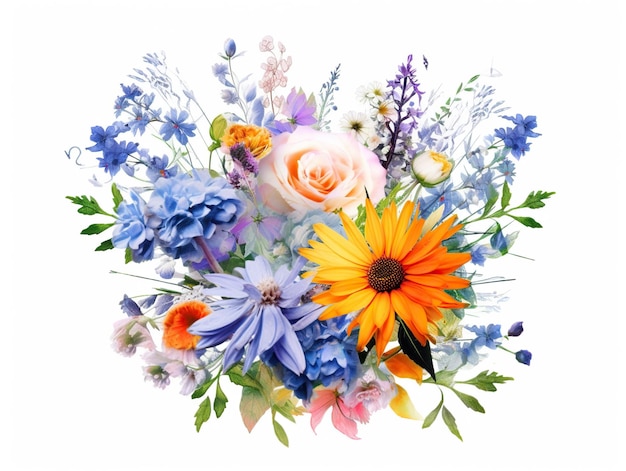
Floral imagery, especially when infused with a burst of colors and organic complexity, represents a symbolic and aesthetic rebellion against AI’s visual monotony. Flowers, by their very nature, are emblematic of diversity—their infinitely varied forms, subtle hues, and spontaneous asymmetries create a rich tapestry that defies replication by rigid algorithms.
AI’s interpretation of floral designs often reveals its inherent limitations in grasping the ephemeral beauty and chaotic order found in natural life forms. When artists, or even AI itself, push the boundaries to generate floral symphonies bursting with vibrancy and layered intricacy, a palpable energy fills the digital canvas. These creations aren’t just images; they are dynamic explorations of growth, transformation, and life cycles—concepts inherently resistant to homogenization.
Why Does the Floral Pop Evoke Such Fascination?
On a deeper psychological level, floral motifs resonate with primal human impulses. Flowers are universally symbolic of renewal, fragility, and the ephemeral passage of time. As a result, seeing these motifs rendered in AI-generated art sparks a complex interplay between recognition and novelty. The familiar patterns soothe a deep-seated aesthetic appetite, while the hyper-stylized and sometimes surreal interpretations captivate with their unexpected twists.
Moreover, flowers evoke multisensory memories and emotional nuances—delicate scents, textured petals, shifting shadows—that AI cannot yet authentically replicate. This gap between sensory fullness and digital mimicry heightens curiosity, drawing viewers into a reflective state on the nature of perception versus simulation. The floral pop thus becomes an entry point not just for visual enjoyment but for philosophical musings on authenticity and artifice.
The Role of Color and Composition in Breaking Monotony
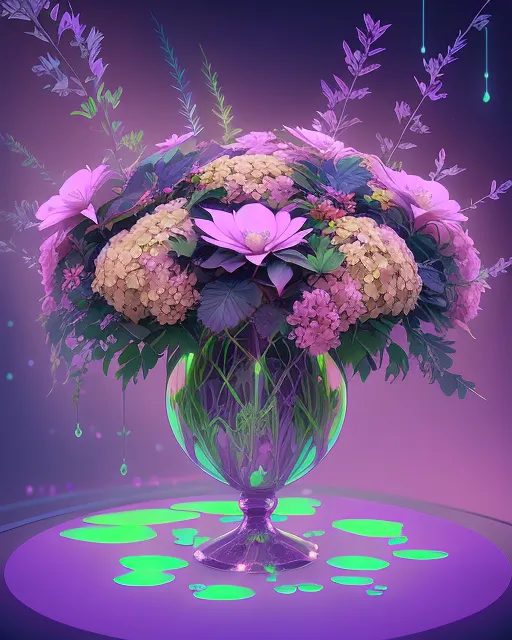
The explosion of floral patterns in AI art is deeply entwined with the deliberate use of vibrant, often exaggerated color palettes. Where homogenized AI visuals trend toward muted, algorithmically safe hues, the florals emerge with audacious chromatic declarations—rich purples, fiery reds, iridescent blues—that command attention and invigorate the viewer’s senses.
Compositionally, these floral images reject rigid frameworks. Petals overlap with chaotic elegance; leaves intertwine unpredictably; light plays unevenly across textures, introducing dynamic tension. This compositional spontaneity mimics nature’s impulsiveness and reinvigorates the visual narrative. As a result, these floral works act as a counterweight, disrupting the monotony propagated by algorithmic predictability.
Floral Pop as a Cultural Phenomenon
Beyond the technical and aesthetic domains, the floral pop reaction embodies a broader cultural rebuttal to the perceived coldness of AI creativity. In a hyper-digital era, human beings increasingly seek refuge in symbols of life, growth, and organic unpredictability as antidotes to the abstract and mechanical. Flowers represent connection—to environment, emotion, and identity.
This cultural yearning can also be viewed as an artistic dialogue—an ongoing push-and-pull between the synthetic and the natural. The floral pop occupies a liminal space where technology and biology intersect. It is a flourishing frontier where AI’s capabilities meet humanity’s yearning for meaning and diversity. Far from rejecting AI outright, the floral pop embraces it, using its tools to explore, highlight, and even exaggerate the beauty of nature’s irregularity within structured digital realms.
Implications for Future Creativity
The floral pop reaction signals an important trajectory for future creative exploration. It invites artists and technologists alike to reconsider how AI might be harnessed not just for replication but for amplification of naturalistic variety. By spotlighting the limitations of homogenization, it encourages more nuanced algorithm design that can incorporate irregularity, randomness, and organic growth models.
Furthermore, this reaction stimulates innovation in hybrid workflows—where human intuition guides machine precision, and where AI-generated floral elements become starting points for deeper human-led embellishment and reinterpretation. The floral pop is not resistance; it is evolution, a new chapter staking the claim that even in a digitized world, complexity and individuality must prevail.

Ultimately, the vibrant surge of floral motifs as a reaction to AI homogenization is a testament to the enduring human spirit that seeks uniqueness and depth in all its expressions. Amid an increasingly uniform digital landscape, these bursts of floral brilliance reawaken our senses and remind us that beauty thrives in diversity, irregularity, and the unexpected moments of spontaneous creation. In embracing the floral pop, we celebrate not only nature’s bounty but also the limitless potential of creative synergy between humans and machines.


Leave a Comment