

The Grand Budapest Hotel isn’t merely a film—it’s a Russian nesting doll of narratives, a cinematic labyrinth where stories unfold within stories, each layer revealing new dimensions of meaning. Wes Anderson’s 2014 masterpiece doesn’t just employ a frame story; it *is* a frame story, a meticulously crafted structure where every vignette, every character, and every visual flourish exists to amplify the central tale. This isn’t just storytelling—it’s narrative alchemy, transforming a simple plot into a rich tapestry of interconnected lives, histories, and emotions. For writers, filmmakers, and even readers who crave depth, the film serves as a masterclass in how to nest stories without losing coherence or emotional resonance. Let’s dissect the layers of this cinematic marvel and explore why its frame story works with such precision.
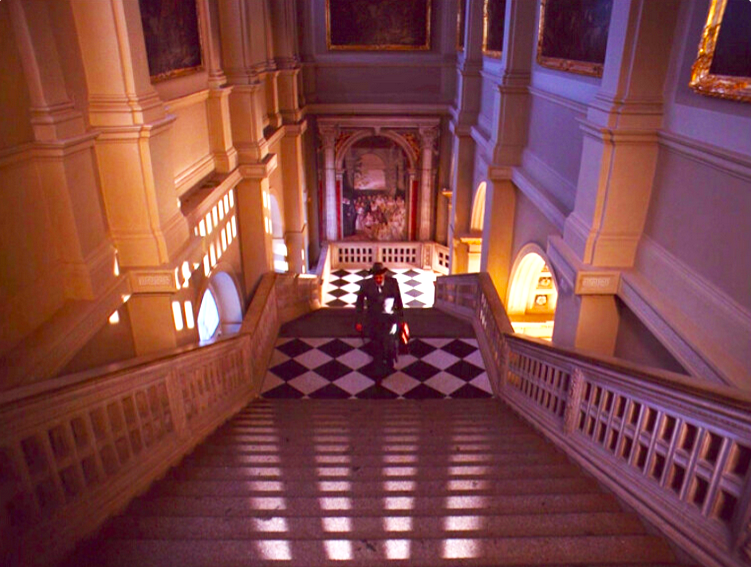
The Anatomy of a Frame Story: How Layers Create Depth
A frame story isn’t just a gimmick—it’s a narrative scaffold, a way to elevate a simple plot into something grander. In *The Grand Budapest Hotel*, the outermost layer is the story of the unnamed Author (Tom Wilkinson), who visits the ruins of the hotel and hears its history from the elderly Zero (F. Murray Abraham). This sets the stage for Zero’s own recollections, which then introduce us to his younger self (Tony Revolori) and his mentor, the legendary concierge M. Gustave (Ralph Fiennes). Each layer peels back a new chapter, but crucially, each one enriches the others. The Author’s curiosity mirrors our own as viewers, making us complicit in the unfolding drama. This isn’t just a story within a story—it’s a story that *needs* its layers to breathe.
The genius lies in how Anderson uses these layers to control pacing and tone. The Author’s segment is slow, almost melancholic, setting a reflective mood. Zero’s memories, meanwhile, are vibrant, chaotic, and brimming with life—until they’re not. The contrast between these layers creates a push-and-pull effect, making the film feel both expansive and intimate. It’s as if Anderson is whispering in our ear while simultaneously shouting from the rooftops. This duality is what makes the frame story so powerful: it allows for emotional range without losing focus.
Visual Storytelling: How Framing Enhances Narrative Layers
Anderson’s signature symmetrical compositions aren’t just stylistic choices—they’re narrative tools that reinforce the film’s layered structure. The Grand Budapest Hotel itself is a character, its pastel hues and exaggerated proportions reflecting the grandeur and decay of its stories. The film’s aspect ratio shifts between 1.85:1 and 4:3, subtly signaling transitions between layers. The wider ratio feels expansive, like the Author’s distant perspective, while the tighter ratio feels claustrophobic, like Zero’s trapped nostalgia.
Consider the film’s use of miniatures and models. The lobby, the train, the prison—each is rendered with meticulous detail, as if Anderson is inviting us to peer into a dollhouse where every tiny figure has a story. This visual nesting mirrors the narrative layers, reinforcing the idea that even the smallest details matter. The frame story isn’t just a structural device; it’s a visual metaphor for how history and memory are preserved, distorted, and passed down. When M. Gustave is chased across a snowy landscape, the miniature-like quality of the scene makes it feel like a fable, a story within a story that could exist independently but gains power from its context.
Character Arcs and the Ripple Effect of Shared Stories
In a traditional narrative, characters exist within a single timeline. But in *The Grand Budapest Hotel*, they’re part of a continuum. Zero’s journey from bellhop to heir isn’t just his own—it’s a continuation of the hotel’s legacy, which is itself a continuation of Gustave’s mentorship. The frame story allows Anderson to explore how one life’s choices reverberate through generations. Gustave’s loyalty to Zero isn’t just a plot point; it’s a testament to the enduring power of mentorship, a theme that resonates across the layers.
This interconnectedness extends to the film’s villains. Dmitri (Adrien Brody) and his henchmen aren’t just antagonists in Zero’s story—they’re the dark reflection of the hotel’s grandeur, a force that seeks to erase history for personal gain. Their actions ripple outward, affecting not just Zero and Gustave but the Author’s perception of the past. The frame story turns them into symbols of disruption, their greed contrasting with the cyclical nature of the hotel’s stories. It’s a brilliant way to explore themes of legacy, preservation, and the fragility of memory.
Pacing and Tone: The Delicate Balance of Layered Narratives
One of the biggest challenges of a frame story is maintaining momentum. Too many layers can feel like a hall of mirrors, disorienting rather than enriching. Anderson avoids this by using the frame story to control pacing. The Author’s segments bookend the film, providing moments of stillness that bookend the chaos of Zero’s memories. The transitions between layers are seamless, often marked by a character breaking the fourth wall—whether it’s Zero addressing the Author directly or Gustave’s exaggerated gestures that feel like a performance within a performance.
The tonal shifts are equally deliberate. The Author’s segments are melancholic, tinged with nostalgia for a past that’s slipping away. Zero’s memories, by contrast, are frenetic, filled with slapstick humor and sudden violence. Anderson uses these contrasts to keep the audience engaged, ensuring that the film never feels monotonous. The frame story becomes a rhythm section, guiding the viewer through emotional highs and lows with the precision of a metronome.
Why This Structure Resonates: The Psychology of Shared Stories
At its core, *The Grand Budapest Hotel* is about the human need to preserve and share stories. The frame story taps into something primal: the desire to pass down wisdom, to keep memories alive, even when the world around us changes. Gustave’s obsession with the hotel’s legacy mirrors our own cultural obsession with storytelling—whether it’s through films, books, or oral traditions. The film suggests that stories aren’t just entertainment; they’re the glue that holds societies together.
This psychological resonance is why the frame story works so well. It mirrors the way we experience life—not as a single, linear narrative, but as a series of interconnected vignettes, each one shaping the next. The Author’s curiosity, Zero’s nostalgia, Gustave’s flamboyance—all of these elements combine to create a story that feels both personal and universal. It’s a reminder that even the grandest tales are, at their heart, human ones.
Lessons for Writers and Filmmakers: How to Nest Your Own Stories
For those looking to emulate Anderson’s technique, the key is to ensure that each layer serves a purpose. The frame story shouldn’t just be a gimmick—it should deepen the central narrative, adding layers of meaning without overwhelming the audience. Start by asking: *What does each layer reveal that the others can’t?* In *The Grand Budapest Hotel*, the Author’s perspective adds a layer of melancholy, while Zero’s memories bring the past to life. The villain’s actions, meanwhile, highlight the stakes of preserving history.
Another crucial element is consistency. The tone, style, and pacing of each layer should feel distinct but harmonious. Anderson achieves this through visual cues—color palettes, aspect ratios, and even the actors’ performances. The transitions between layers should feel natural, almost imperceptible, so the audience is never jolted out of the story. Finally, remember that the frame story is a tool, not a crutch. If a layer doesn’t add value, cut it. The goal is to create a cohesive whole, not a tangled web of unrelated tales.
The Grand Budapest Hotel isn’t just a film about a hotel—it’s a film about the stories we tell and the stories that tell us. Its frame story is a masterclass in how to nest narratives, how to use structure to enhance meaning, and how to make even the smallest details feel monumental. For writers and filmmakers, it’s a blueprint for creating stories that resonate on multiple levels, stories that linger long after the final frame fades to black. So the next time you sit down to craft a tale, ask yourself: *How can I make my story nest perfectly?*


Leave a Comment