

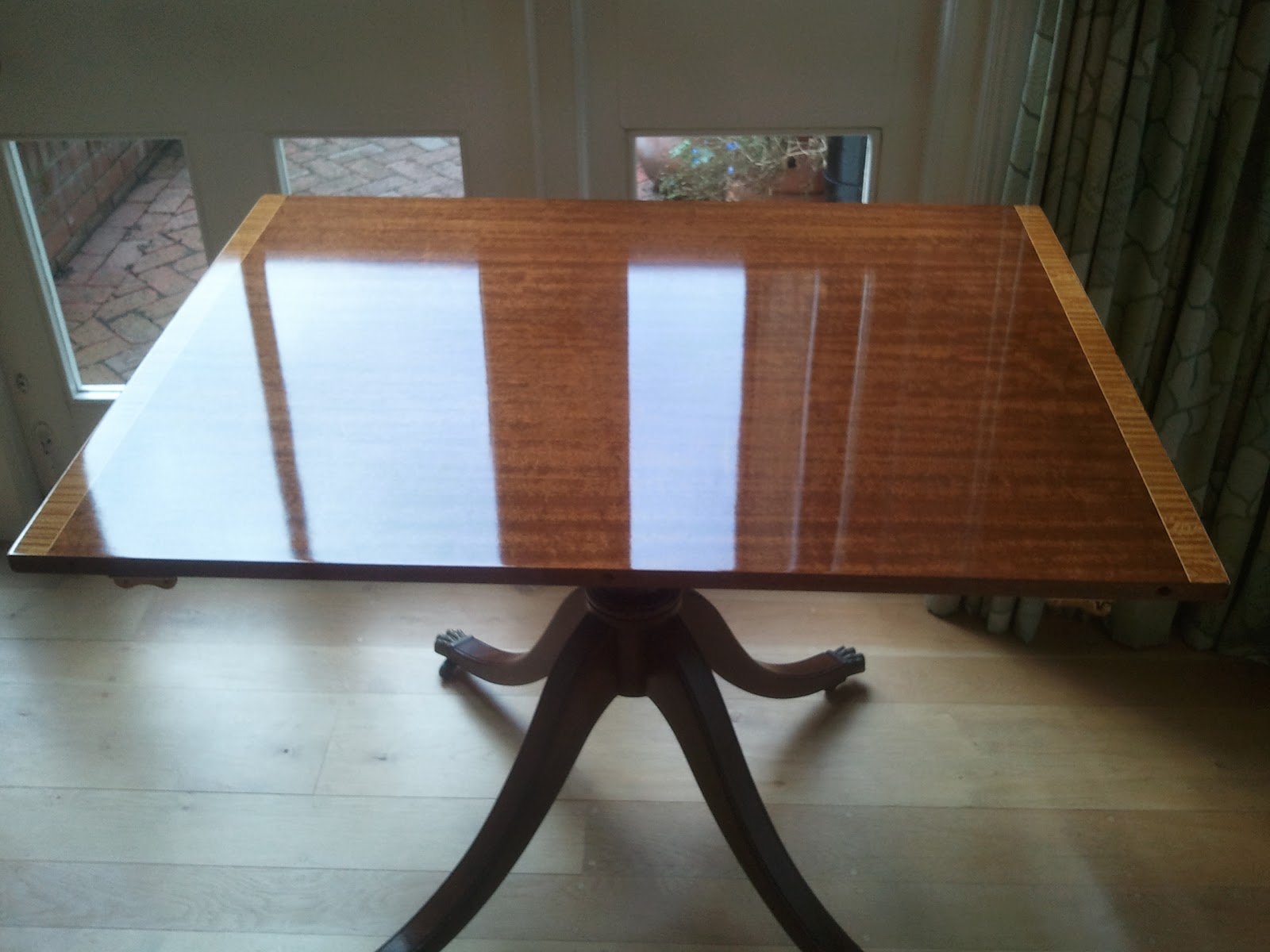
Have you ever run your fingers across a dining table and felt a surface so smooth it seems to defy the laws of wood? Not just smooth—*liquid*. Not just polished—*alive*. That’s the magic of French polishing, a technique so refined it transforms ordinary timber into something that gleams like a pane of glass, catching the light in ways that make you pause mid-conversation just to stare. It’s not just about shine; it’s about creating an optical illusion, a tactile deception that whispers of craftsmanship so meticulous it borders on the magical.
At first glance, French polishing appears deceptively simple: a cloth, a little shellac, and hours of rhythmic motion. But beneath that simplicity lies a world of precision, patience, and an almost alchemical understanding of how light dances on organic surfaces. It’s the kind of finish that doesn’t just reflect your face—it *distorts* it, bending reality just enough to make you question whether you’re looking at wood or a mirror. And that, perhaps, is why we’re so captivated by it. There’s something deeply human about wanting to turn the mundane into the extraordinary, to take something as earthy as wood and coax it into something so luminous it feels untouchable.
The Alchemy of Shellac: Why This Resin Holds the Secret to Unmatched Luster
At the heart of French polishing lies shellac, a natural resin secreted by the lac insect—a tiny creature whose labor yields one of the most versatile finishes in woodworking. But shellac isn’t just a coating; it’s a living, breathing medium that evolves with time and touch. When applied in the traditional French polishing method, shellac isn’t merely spread—it’s *built* layer by layer, each application fusing with the last in a molecular dance that fills microscopic imperfections in the wood. The result? A surface so dense with cured resin that it becomes virtually impervious to moisture, scratches, and the dulling effects of age.
What makes shellac particularly mesmerizing is its ability to create what’s known as a “wet look”—a finish so glossy it appears to be wet, even when bone dry. This optical phenomenon occurs because shellac’s refractive index closely matches that of wood fibers, allowing light to pass through the finish without scattering. The deeper the polish, the more pronounced this effect becomes, until the table no longer looks like wood at all but like a portal into another dimension where light bends at will. It’s a trick of physics disguised as artistry, and it’s why French-polished surfaces have a way of hypnotizing anyone who dares to touch them.
Yet shellac’s allure extends beyond its visual magic. Unlike synthetic varnishes, which can yellow or crack over time, shellac ages with a grace that enhances its depth. A well-maintained French-polished table doesn’t just retain its luster—it develops a patina, a subtle ambering that tells the story of decades of care. This longevity is why antique dealers prize French-polished furniture; it’s not just a finish, but a testament to the enduring relationship between human hands and natural materials.
The Ritual of the Rub: How the Right Motion Transforms Wood into Liquid
French polishing isn’t a task—it’s a performance. The technique requires a specific tool, known as a French polish rubber, which is essentially a wad of cloth (traditionally cotton or wool) wrapped around a core of cotton or felt. The polisher dips this rubber into a solution of shellac dissolved in alcohol, then applies it to the wood in a figure-eight motion, building layers with each pass. The key isn’t force but rhythm; too fast, and the shellac won’t adhere properly; too slow, and it’ll dry before it can fuse. It’s a dance of patience, where the polisher must listen as much as they watch, attuning themselves to the subtle changes in the wood’s surface.
This ritualistic process is where the true transformation occurs. As the shellac is applied, it begins to fill the wood’s grain, creating a mirror-like plane that reflects light in a way no other finish can replicate. The first few coats are rough, uneven—more like a sketch than a masterpiece. But with each subsequent layer, the surface smooths, the reflections sharpen, and the wood’s natural figure emerges in high relief. It’s a process of revelation, where the polisher isn’t just adding a finish but coaxing the wood’s true character to the surface.
What’s fascinating is how the act of polishing itself becomes a meditative practice. The repetitive motion, the scent of shellac, the way the light shifts with each pass—it’s easy to see why French polishing has been called “the slowest art form in woodworking.” There’s no shortcut, no spray gun, no mass production. Just a single person, a cloth, and a piece of wood, engaged in a dialogue that spans hours, days, or even weeks for a single table. And when it’s done? The result is nothing short of alchemy: wood that behaves like glass, yet retains the warmth of organic matter.
The Psychology of Reflection: Why We’re Drawn to Surfaces That Defy Reality
There’s a primal fascination with surfaces that mimic other materials. We’re instinctively drawn to reflections, to things that blur the line between one state and another. A French-polished table does exactly that—it makes wood *look* like glass, and in doing so, it taps into a deep-seated human desire to conquer nature, to bend it to our will without losing its essence. It’s the same pull that makes us stare at still water, mistaking it for solid ground, or reach out to touch a mirage. French polishing is, in many ways, the ultimate illusion: wood that behaves like glass, yet remains undeniably wood.
This psychological draw is amplified by the tactile experience. When you run your fingers over a French-polished surface, you’re met with a resistance so slight it’s almost imperceptible—like gliding over ice that never melts. The lack of friction is disorienting, almost unnatural. Our brains expect wood to have texture, to resist the touch. But here, the wood *gives way* to the hand, as if it’s not solid at all but a membrane stretched over something far more fluid. It’s a sensory paradox that challenges our understanding of materials, and that’s why it lingers in the mind long after the initial glance.
There’s also the element of exclusivity. French polishing is a dying art, replaced in most workshops by faster, more industrial methods. To own a French-polished piece is to own something rare, something that required not just skill but devotion. In a world where everything is mass-produced and disposable, a French-polished table is a rebellion—a declaration that some things are worth the time, worth the imperfection, worth the slow, deliberate craftsmanship that can’t be rushed or replicated by machines. It’s a statement of value, not just in monetary terms, but in the value of patience, of presence, of the unhurried pursuit of perfection.
Beyond the Table: The Enduring Legacy of French Polishing in Design
While French polishing is most commonly associated with furniture, its influence extends far beyond dining tables and sideboards. The technique has been used to finish everything from musical instruments—where the resonance of a violin’s back can be subtly enhanced by a well-applied shellac—to architectural elements like paneling and doors, where the depth of the polish adds a sense of grandeur to a space. Even in modern design, where minimalism and raw materials dominate, there’s a quiet resurgence of interest in French polishing as a way to reintroduce warmth and tactility into sleek, contemporary interiors.
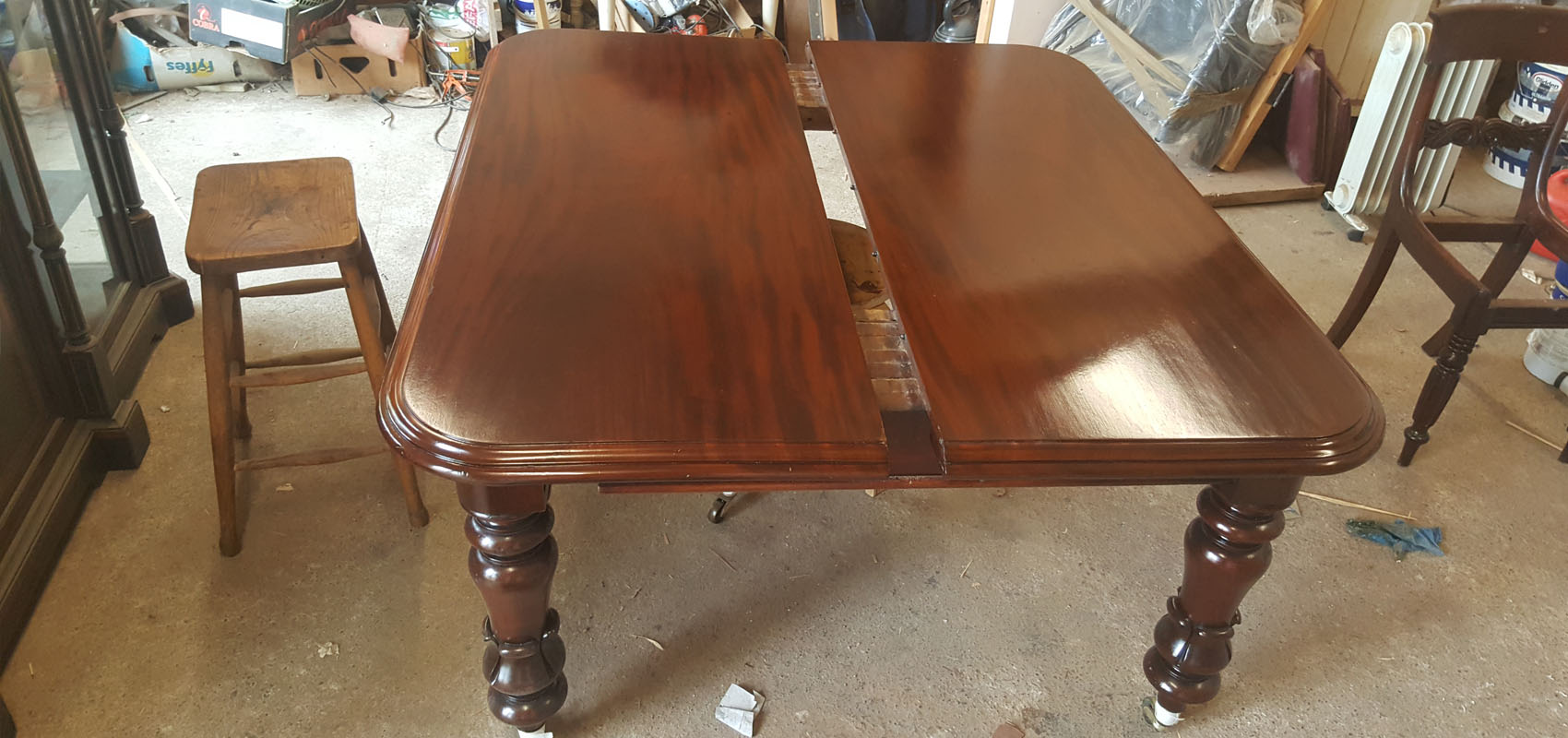
What’s particularly striking is how French polishing adapts to different woods. Oak, with its open grain, takes on a honeyed glow that seems to emanate from within. Mahogany, with its tighter grain, develops a deep, wine-like richness that deepens with age. And exotic woods like rosewood or ebony? They become almost translucent, their natural colors amplified by the shellac’s ability to enhance contrast without obscuring the wood’s inherent beauty. It’s a finish that doesn’t just sit on top of the wood but *becomes* part of it, a marriage of material and method that results in something greater than the sum of its parts.
In an era where sustainability is increasingly important, French polishing also offers an eco-friendly alternative to synthetic finishes. Shellac is a renewable resource, harvested without harming the lac insects, and its application requires minimal waste. Unlike polyurethane or lacquer, which often contain volatile organic compounds (VOCs), shellac is non-toxic and safe to use in well-ventilated spaces. For those who care about the environmental impact of their choices, a French-polished piece is not just beautiful—it’s a responsible one.
Yet perhaps the most compelling reason to embrace French polishing is the way it transforms our relationship with everyday objects. A French-polished table isn’t just a place to set your dinnerware; it’s a conversation starter, a focal point, a piece of art that invites interaction. It turns the mundane into the extraordinary, proving that with the right technique and a little patience, even the most ordinary materials can be elevated into something extraordinary. And in a world that often feels rushed and disposable, that’s a rare and precious thing.
So the next time you see a table that seems to glow from within, don’t just admire it—take a moment to appreciate the craftsmanship behind it. Run your fingers across its surface and feel the illusion of liquidity. Look closely and see the way the light dances, as if the wood itself is alive. And remember: what you’re witnessing isn’t just a finish. It’s a testament to the power of human hands, the magic of natural materials, and the timeless allure of turning the ordinary into the extraordinary.


Leave a Comment