

The Gulf’s sculptors are rewriting the rules of artistry, not with chisels and pristine marble, but with the discarded, the overlooked, the forgotten. In a region where tradition often dictates the path of creation, a radical movement is emerging—one that finds beauty in the broken, meaning in the mundane, and poetry in the overlooked. These artists, whom we might call the Gulf’s Chaoticists, are not merely repurposing objects; they are orchestrating a rebellion against the idea that art must be born from purity. Instead, they embrace the raw, the fragmented, and the serendipitous, transforming what society discards into statements that resonate with urgency and relevance.
Imagine walking through a gallery where a rusted oil drum becomes a towering monument, where shattered glass morphs into a shimmering constellation, or where the detritus of daily life—plastic bottles, old tools, discarded electronics—assembles into a narrative that feels both deeply personal and universally human. This is not art for the faint of heart. It is art that demands attention, that refuses to be ignored. It is art that whispers, “Look closer. See what you’ve missed.” And in doing so, it promises to shift how we perceive not just art, but the world around us.
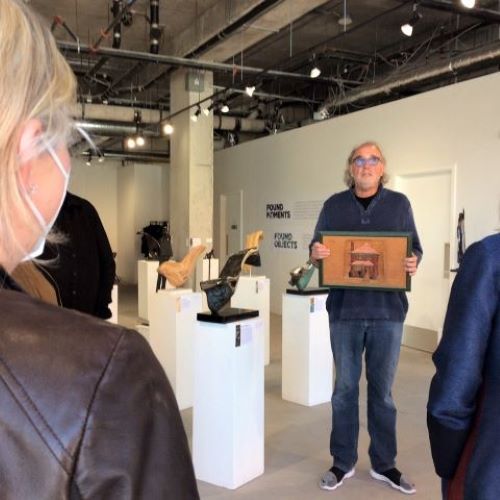
The Philosophy of the Found: Why Waste is the New Gold
At the heart of the Chaoticist movement lies a radical redefinition of value. In a world drowning in consumption, where landfills burgeon and oceans choke on plastic, these artists see not waste, but possibility. They operate on the principle that nothing is truly disposable—only waiting for the right hands to reimagine its purpose. This philosophy is not born from naivety, but from a profound understanding of entropy: the universe tends toward disorder, and so, too, does human creation. Yet from that disorder, beauty can emerge.
Consider the work of a sculptor who collects the remnants of a shipyard—rusted anchors, twisted metal beams, frayed ropes—and fashions them into a kinetic installation that sways with the wind, its components singing a mournful, industrial hymn. Each piece carries the weight of its past: the labor, the wear, the abandonment. Yet in the artist’s hands, it becomes something transcendent. The Chaoticist does not erase history; they amplify it. They do not cleanse the object of its scars; they let those scars become the very texture of the art.
This approach challenges the viewer to confront their own relationship with consumption. When an artist turns a discarded tire into a sprawling, textured wall, or a broken mirror into a fractured reflection of society, they force us to ask: What have we deemed unworthy? What stories have we silenced by labeling things as “trash”? The answer, often unsettling, reveals how much we’ve outsourced our perception to convenience and speed.
The Alchemy of Assembly: How Chaos Becomes Creation
Creating with found objects is not a passive act—it is an excavation. The artist must sift through the detritus of human activity, discerning not just what is usable, but what is evocative. This process is less about control and more about collaboration. The materials speak. They resist. They surprise. A sculptor might intend to create a geometric form, only to find that the wood they’ve chosen splinters in a way that suggests an entirely different shape. The result? A piece that feels alive, unpredictable, almost sentient.
This alchemy requires a mindset that embraces serendipity. The Chaoticist does not fear the unexpected; they court it. They understand that the most powerful art often arises from accidents—a misplaced weld, a splinter of glass that catches the light just so, a hinge that refuses to close. These are not flaws; they are the fingerprints of the creative process. In a world that values precision and predictability, such unpredictability is radical. It is a declaration that art need not be perfect to be profound.
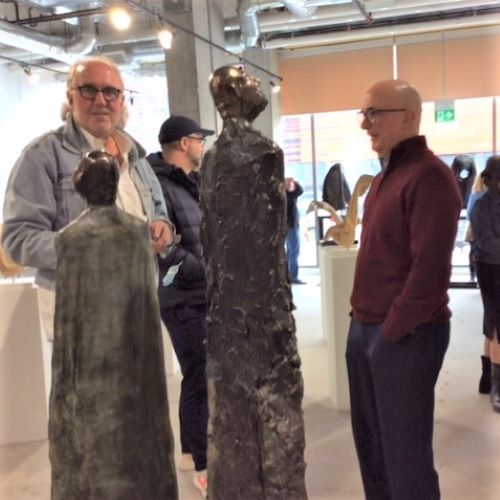
Moreover, working with found objects democratizes the act of creation. Unlike traditional sculpture, which often requires expensive materials and specialized tools, found object art can be made with little more than curiosity and a willingness to see potential in the overlooked. This accessibility is not just practical—it is political. It allows voices from all walks of life to enter the conversation, to challenge the exclusivity of the art world, and to redefine what it means to be an artist.
The Gulf as a Canvas: A Region in Flux
The Gulf, with its rapid urbanization, its juxtaposition of ancient traditions and futuristic skylines, and its complex relationship with natural resources, is the perfect breeding ground for the Chaoticist movement. Here, the remnants of progress—construction debris, obsolete technology, the detritus of a booming economy—are as abundant as the sand dunes. Artists in the region are not just repurposing materials; they are repurposing narratives. They are taking the discarded legacies of industry and turning them into commentaries on sustainability, identity, and the cost of development.
In one striking installation, a sculptor might arrange hundreds of discarded water bottles into a shimmering, translucent reef, a stark reminder of the region’s dependence on plastic and the fragility of its marine ecosystems. In another, the skeletal remains of old vehicles might be welded into a towering figure, a silent sentinel watching over the landscape it once traversed. These works do more than decorate space—they interrogate it. They ask the viewer to consider the unseen costs of progress, the hidden lives of objects, and the stories buried beneath the surface of the familiar.
The Gulf’s Chaoticists are also engaging with the region’s cultural heritage, not by replicating it, but by recontextualizing it. They might incorporate traditional weaving techniques into a sculpture made from discarded fishing nets, or use calligraphy to inscribe found metal with poetry that speaks to both the past and the future. This fusion of old and new, of local and global, creates art that feels both timeless and urgently contemporary.
The Emotional Resonance: Art That Speaks to the Soul
Found object sculpture is not merely visual—it is visceral. It engages the senses in ways that traditional art often does not. The clink of metal, the rough texture of wood, the scent of rust and old paper—these elements draw the viewer into the piece, making them not just observers, but participants. When a sculpture is composed of objects that once belonged to someone—a chipped teacup, a faded photograph, a rusted key—the art becomes a vessel for memory. It carries the weight of human experience, of love and loss, of journeys and endings.
This emotional resonance is perhaps the most compelling aspect of the Chaoticist movement. In a world that often feels disconnected, where digital interactions replace tactile ones, these artists are reminding us of the power of the physical. They are asking us to touch, to feel, to remember that our hands, too, are part of the creative process. When we engage with a sculpture made from found objects, we are not just looking at art—we are touching a piece of the world’s collective history.
The Future of the Movement: Beyond the Gallery Walls
The influence of the Chaoticist movement extends far beyond the confines of galleries and museums. Increasingly, these artists are taking their work into public spaces, transforming urban landscapes into open-air galleries where art is not a luxury, but a necessity. Pop-up installations in abandoned lots, community workshops where locals learn to repurpose waste, and large-scale public sculptures made from recycled materials are becoming more common. This shift is not just about making art more accessible—it is about reclaiming public spaces as sites of dialogue and reflection.
Moreover, the movement is inspiring a new generation of artists who see value in what others discard. Schools and community centers are incorporating found object art into their curricula, teaching students not just how to create, but how to see. Workshops on upcycling and sustainable art practices are popping up across the region, fostering a culture of creativity that is as much about environmental stewardship as it is about artistic expression.
The Gulf’s Chaoticists are not just artists—they are visionaries. They are challenging us to look at the world with fresh eyes, to see beauty in the broken, and to recognize that creation is not the exclusive domain of the pristine or the new. In doing so, they are not only redefining art; they are redefining our relationship with the world itself. And perhaps, in a time of environmental crisis and cultural upheaval, that is the most radical act of all.
So the next time you pass by something discarded, pause. Look closer. Ask yourself: What could this become? The answer might just change everything.


Leave a Comment