

The Gulf’s skyline, once a testament to fossil-fueled ambition, is now being redrawn by a new wave of eco-conscious mega-projects. These aren’t mere architectural marvels; they are audacious declarations that the region is pivoting toward a sustainable future. From solar-powered cities that float on innovation to hydrogen hubs that could redefine global energy, the Gulf is scripting a story of transformation. The question isn’t whether these projects will succeed—it’s how swiftly they’ll reshape our understanding of what’s possible in the fight against climate change.
The shift is seismic. For decades, the Gulf’s wealth was synonymous with oil, its identity forged in the fires of extraction. Yet today, nations like the UAE and Saudi Arabia are pouring billions into renewable energy, green hydrogen, and circular economies. The result? A paradox that’s as thrilling as it is unexpected: the same landscapes that once fed the world’s addiction to fossil fuels are now incubating the technologies that could break it. This isn’t just progress—it’s a revolution in slow motion, one that demands we pay attention.
The Dawn of the Solar Oasis: Cities That Breathe Light
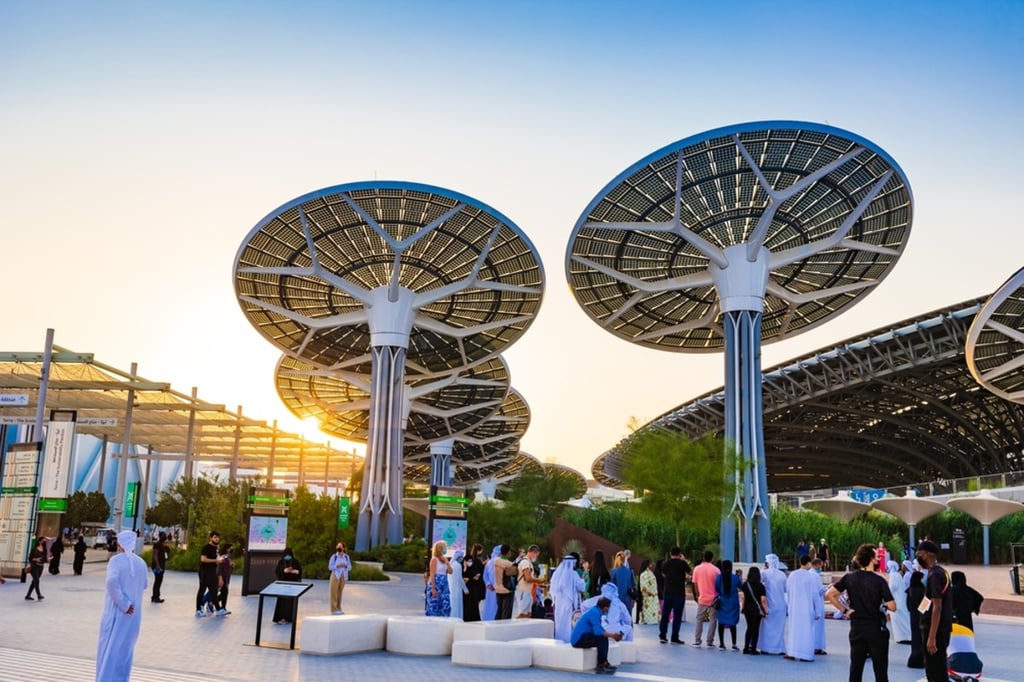
Imagine a city where the air hums with the quiet efficiency of solar panels, where every structure is a living, breathing entity powered by the sun. This isn’t a distant utopia—it’s the reality of projects like NEOM’s Oxagon, a floating industrial city in Saudi Arabia designed to run entirely on renewable energy. With a footprint that mimics the hexagonal cells of a beehive, Oxagon is a marvel of biophilic design, integrating solar canopies, wind turbines, and even tidal energy to create a closed-loop ecosystem.
The numbers are staggering. Oxagon aims to generate 100% of its electricity from renewables, slashing carbon emissions by 50% compared to conventional industrial zones. But its ambitions don’t stop there. The city is also a testing ground for green hydrogen, a fuel that could replace fossil fuels in heavy industry. By harnessing the power of the sun to split water molecules, Oxagon isn’t just reducing emissions—it’s redefining the very concept of industrial sustainability.
Yet Oxagon is just one piece of a larger puzzle. Across the Gulf, solar farms are sprouting like metallic forests, each panel a silent soldier in the war against climate change. The Al Dhafra Solar Farm in Abu Dhabi, for instance, is one of the largest single-site solar projects in the world, capable of powering 160,000 homes while offsetting 2.4 million metric tons of carbon annually. These aren’t just energy farms; they’re monuments to a new era, where the sun’s generosity is harnessed with surgical precision.
But the Gulf’s solar revolution isn’t confined to land. Offshore solar farms, like those proposed in the UAE’s Sir Bani Yas Island, are pushing the boundaries of what’s possible. By floating solar arrays on the calm waters of the Arabian Gulf, engineers are overcoming the limitations of land scarcity while tapping into a resource that’s both abundant and untapped. These projects are a reminder that sustainability isn’t just about what we build—it’s about how we build it.
Hydrogen Horizons: The Gulf’s Silent Fuel Revolution
If solar energy is the Gulf’s first act in the sustainability saga, then green hydrogen is its grand finale. This isn’t just another energy source—it’s a game-changer, a fuel so versatile it could decarbonize industries from steel to shipping. And the Gulf, with its vast deserts and relentless sun, is positioning itself as the Saudi Arabia of hydrogen.
Consider the NEOM Green Hydrogen Project, a joint venture between NEOM, ACWA Power, and Air Products. Set to become the world’s largest green hydrogen plant, it will produce 650 tons of hydrogen daily, all powered by renewable energy. The hydrogen will be exported globally, offering a lifeline to industries struggling to wean themselves off coal and gas. But the project’s real genius lies in its ripple effect. By demonstrating that green hydrogen can be produced at scale, NEOM is proving that the Gulf isn’t just a spectator in the energy transition—it’s a leader.
Yet hydrogen’s potential extends far beyond exports. The Gulf is also exploring its use in domestic applications, from powering buses to fueling desalination plants. In Dubai, the Mohammed bin Rashid Al Maktoum Solar Park is piloting hydrogen-powered buses, a move that could slash emissions in a city known for its love of the automobile. Meanwhile, in Qatar, researchers are investigating how hydrogen can be integrated into the country’s vast desalination infrastructure, turning a water-scarce nation into a model of circular resource management.
The irony isn’t lost on anyone: the same region that built its wealth on hydrocarbons is now betting its future on a fuel that could render them obsolete. But this isn’t just a pivot—it’s a power play. By mastering green hydrogen, the Gulf could dictate the terms of the global energy market for decades to come, ensuring its influence extends far beyond the oil era.

Circular Economies: Waste Not, Want Not
The Gulf’s eco-conscious mega-projects aren’t just about energy—they’re about reimagining the very concept of waste. In a region where landfills overflow and water is a precious commodity, circular economies are emerging as a lifeline. These aren’t just systems; they’re ecosystems, where every byproduct is a resource, and every process is designed to eliminate waste entirely.
Take the Masdar City in Abu Dhabi, a living laboratory for sustainable urbanism. Here, waste isn’t discarded—it’s repurposed. Organic waste is composted, plastics are recycled into construction materials, and even sewage is treated and reused for irrigation. The city’s zero-waste goal isn’t just aspirational; it’s a blueprint for how urban centers can operate without leaving a trace. But Masdar City’s real innovation lies in its closed-loop systems. By mimicking natural processes, it’s proving that cities can thrive without depleting the planet’s resources.
Yet the Gulf’s circular economy ambitions extend beyond cities. In Saudi Arabia, the Red Sea Project is redefining luxury tourism by integrating sustainability into its core. The project’s waste management system is designed to achieve a 90% diversion rate from landfills, with all organic waste converted into biogas and non-organic waste recycled or repurposed. Even the project’s construction materials are sourced from recycled or locally produced sources, ensuring that every element of the development aligns with its eco-conscious ethos.
The implications are profound. By embedding circularity into their DNA, these projects are challenging the linear model of “take, make, waste” that has defined modern economies. Instead, they’re fostering a new paradigm—one where waste is an outdated concept, and every resource is valued as a precious commodity.
The Human Element: Empowering Communities Through Sustainability
No sustainability story is complete without acknowledging the people at its heart. The Gulf’s eco-conscious mega-projects aren’t just engineering feats—they’re social catalysts, creating jobs, fostering innovation, and empowering communities to take ownership of their future.
In the UAE, the Emirates Green Building Council is working to transform the construction industry by training a new generation of green builders. Through certification programs and educational initiatives, the council is ensuring that sustainability isn’t just a buzzword—it’s a skill set. Meanwhile, in Oman, the Duqm Special Economic Zone is attracting green tech startups, offering them a platform to develop and scale solutions tailored to the region’s unique challenges. From solar-powered desalination to waste-to-energy systems, these innovations are born from the needs of the communities they serve.
But the human impact goes deeper. The Gulf’s sustainability push is creating jobs in sectors that didn’t exist a decade ago. In Saudi Arabia, the NEOM Green Hydrogen Project alone is expected to generate 3,500 jobs, from engineers to technicians. These aren’t just employment opportunities—they’re pathways to economic diversification, reducing the region’s reliance on oil and gas while building a workforce equipped for the future.
Perhaps most importantly, these projects are fostering a cultural shift. By integrating sustainability into education, entertainment, and everyday life, the Gulf is nurturing a generation that sees environmental stewardship as a core value. From school programs that teach renewable energy principles to eco-tourism initiatives that highlight the region’s natural beauty, sustainability is becoming a way of life.
The message is clear: the Gulf’s eco-conscious mega-projects aren’t just about technology—they’re about people. They’re about creating a future where progress and preservation go hand in hand, where every individual has a stake in the fight against climate change.
The Gulf’s transformation is more than a trend—it’s a tectonic shift in the global sustainability landscape. What began as a bold experiment is now a movement, one that’s redefining the region’s identity and its role in the world. From solar-powered cities to hydrogen hubs and circular economies, the Gulf is proving that even the most entrenched systems can be reimagined.
Yet the journey is far from over. The challenges ahead—scaling technologies, ensuring equitable access, and maintaining momentum—are formidable. But if the Gulf’s track record is any indication, the region won’t shy away from the fight. Instead, it will lead the charge, offering the world a blueprint for a sustainable future.
So, as the sun sets over the Arabian desert, casting long shadows over fields of solar panels and hydrogen tanks, one thing is certain: the Gulf’s eco-conscious revolution has only just begun. And the world is watching.


Leave a Comment