

The Harlem Renaissance was a cultural explosion that reshaped American art, music, and literature in the 1920s and 1930s. Yet, while names like Langston Hughes and Duke Ellington echo through history, many of its most visionary artists remain overlooked—despite their stories being ripe for cinematic reinvention. Imagine a film franchise that doesn’t just recount the past but reimagines it, where the bold strokes of Aaron Douglas’ murals pulse with the rhythm of the era, and the defiant elegance of Augusta Savage’s sculptures becomes a visual manifesto. These artists weren’t just creators; they were revolutionaries who wielded their craft like a weapon against ignorance, their work a bridge between the Jim Crow South and the promise of a new world. What if their lives were told not as dry biographies but as high-stakes dramas, where every brushstroke and note carried the weight of a movement? The Harlem Renaissance deserves more than footnotes—it demands a saga that captures its fire, its fury, and its fearless creativity.
The Painter Who Painted the Soul of a Movement: Aaron Douglas
If the Harlem Renaissance had a visual architect, it was Aaron Douglas, the man whose geometric silhouettes and radiant halos became the defining aesthetic of the era. His murals didn’t just adorn walls—they became sacred texts, translating the struggles and triumphs of Black America into a language of light and shadow. Picture Douglas in his studio, a cigarette dangling from his lips as he sketches the contours of a dancer’s body, the curves mirroring the undulating rhythms of jazz. His most famous work, *Aspects of Negro Life*, isn’t just a painting; it’s a manifesto in oil, a four-panel epic that traces the Black experience from slavery to freedom, each stroke a defiant act of reclaiming identity.
What if Douglas’ life were a film? The opening scene could be a close-up of his hands, calloused from years of labor, gripping a paintbrush in a dimly lit Greenwich Village apartment. The camera pulls back to reveal the walls covered in half-finished sketches—each one a fragment of a larger story. The tension isn’t just in the art; it’s in the man. Douglas wasn’t just an artist; he was a soldier in a cultural war, his work a shield against the erasure of Black history. His collaborations with W.E.B. Du Bois and Alain Locke weren’t just professional alliances; they were alliances of purpose, a collective dream of a renaissance that would echo through generations. A movie about Douglas wouldn’t just show his art—it would make you *feel* the weight of every line, the urgency of every composition.
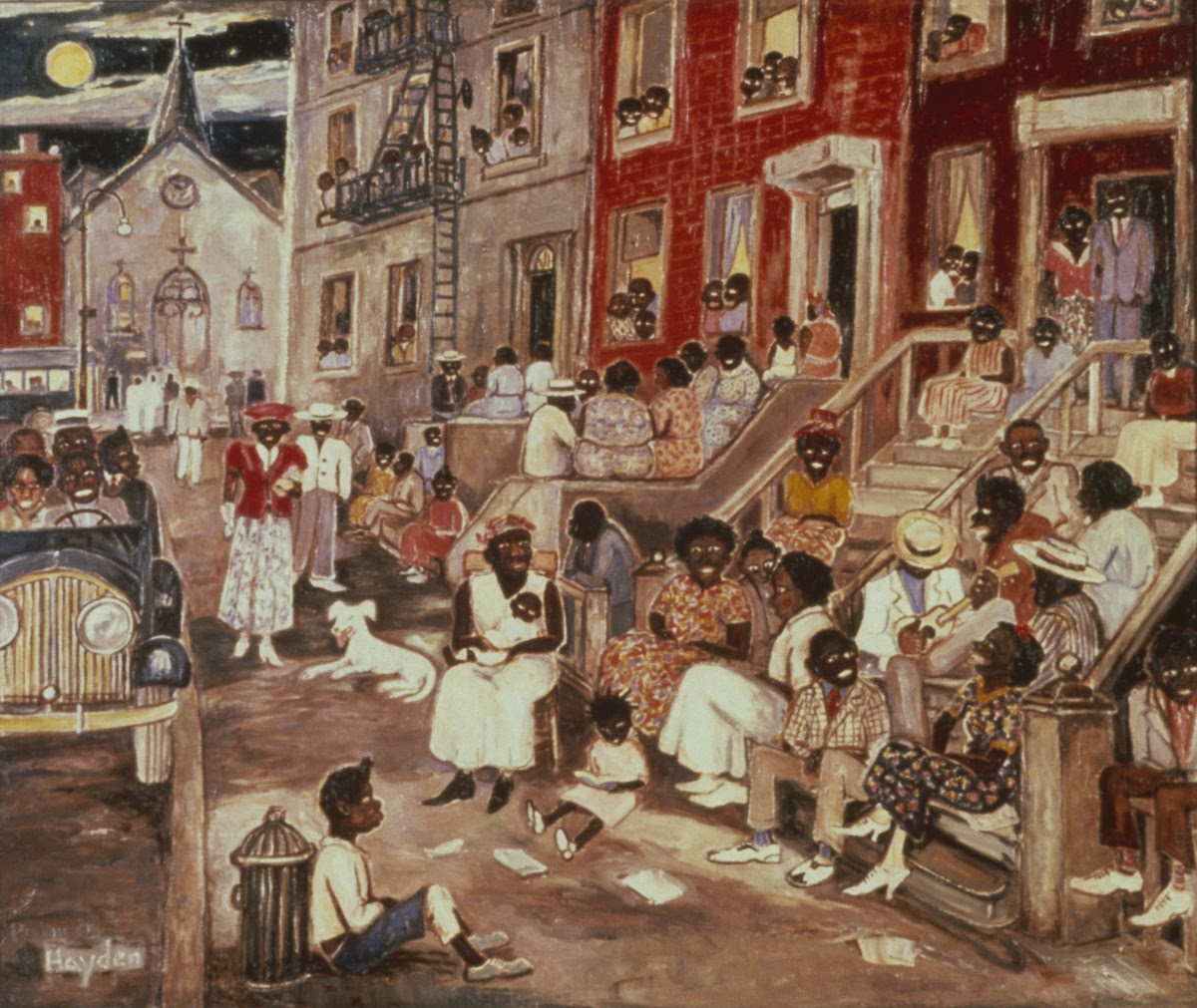
The Sculptor Who Defied the Gaze: Augusta Savage
Augusta Savage didn’t just carve stone—she carved a path. In an era when Black women were expected to be seen, not heard, Savage’s sculptures were thunderclaps of defiance. Her most famous work, *Gamin*, a bust of a young Black boy with tousled hair and a knowing smirk, wasn’t just a portrait; it was a challenge to the art world’s narrow definitions of beauty. Savage’s life reads like a tragic opera: a childhood spent in poverty, a career stifled by racism, and a final act where her own work was destroyed by neglect. Yet, her legacy endures—not just in the pieces that survive, but in the artists she mentored, like Jacob Lawrence and Norman Lewis, who carried her torch forward.
Imagine a film about Savage that begins in the sweltering heat of Florida, where a young Augusta molds clay from the earth, her fingers instinctively shaping the contours of a face no one else dared to see. The film would pivot on a single, pivotal moment: Savage’s rejection from the National Association of Women Painters and Sculptors, a snub that could have crushed her spirit. Instead, it fueled her fire. The climax? A scene where Savage, now in her 50s, stands before the ruins of her own studio, the remnants of her life’s work scattered like fallen soldiers. The camera lingers on her face—not with despair, but with a quiet triumph. She didn’t just create art; she redefined what it meant to be an artist.
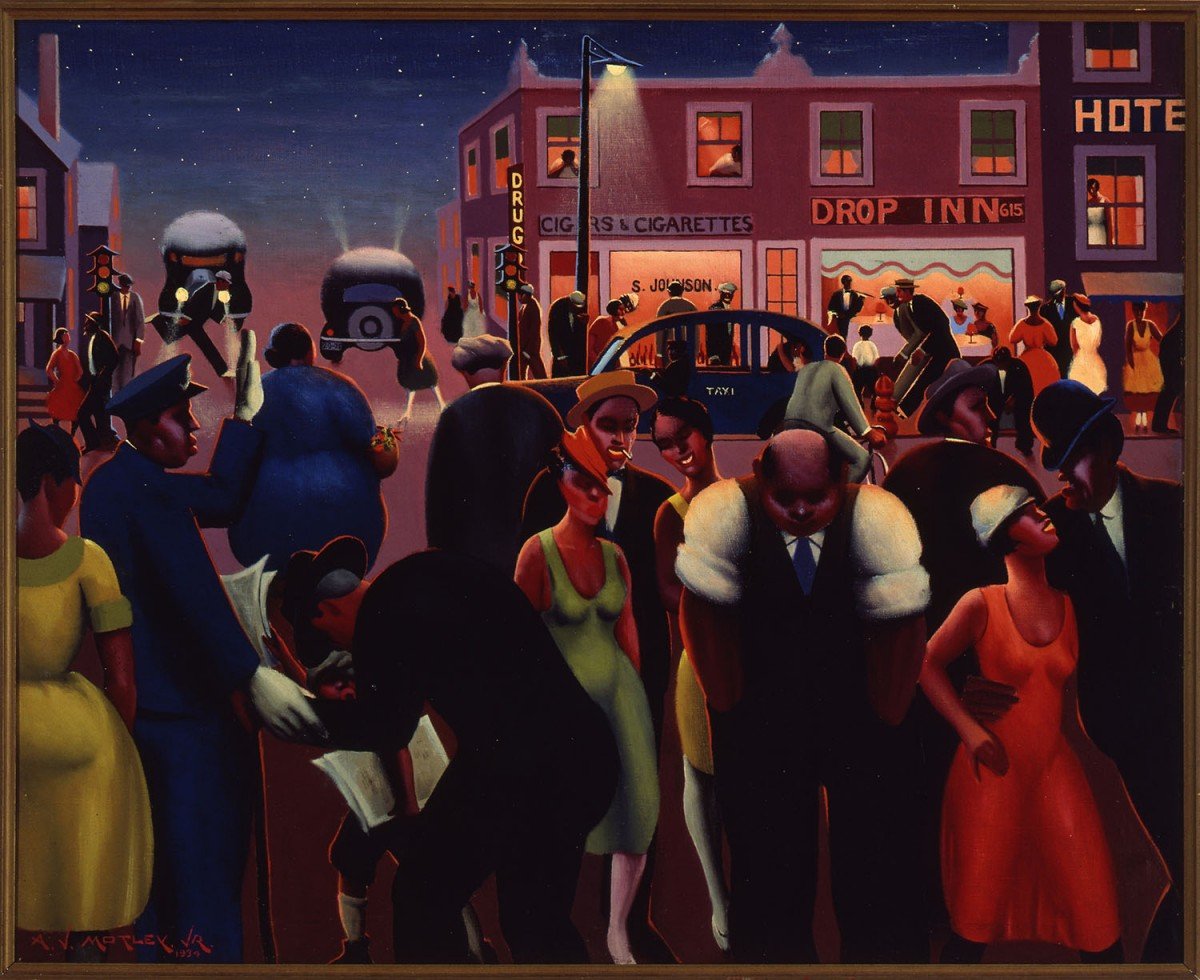
The Jazz Painter Who Captured the Pulse of the Era: Archibald Motley
If Aaron Douglas painted the soul of the Harlem Renaissance, Archibald Motley painted its heartbeat. His canvases weren’t just paintings; they were symphonies of color and sound, where the neon glow of a jazz club spilled onto the streets, and the faces of revelers became a chorus of joy and struggle. Motley’s work was a rebellion against the sanitized depictions of Black life that dominated the era. His *Blues* series, with its lurid greens and electric blues, didn’t just capture the music—it *was* the music, a visual equivalent of a trumpet’s wail or a saxophone’s moan. Motley understood something profound: art wasn’t just about what you saw; it was about what you *felt*.
A film about Motley could open with a scene that’s pure cinematic poetry: a slow pan across a crowded Chicago jazz club in the 1920s, the air thick with smoke and the scent of whiskey. In the center of the frame, Motley sits at a table, sketching furiously, his eyes alight with the chaos around him. The camera zooms in on his canvas, where the figures begin to take shape—not as static portraits, but as living, breathing entities, their limbs swaying to a rhythm only they can hear. The film would explore Motley’s duality: a man who loved the vibrancy of Black culture but was also haunted by its shadows. His self-portraits, where he often depicted himself as a dandy in a sharp suit, weren’t just vanity; they were armor. Motley knew the world saw him as an exotic curiosity. His art was his way of saying, *No, I am the one who defines you.*
The Poet Who Spoke in Fire: Countee Cullen
Countee Cullen wasn’t just a poet; he was a storm. His words crackled with the intensity of a preacher’s sermon and the precision of a surgeon’s scalpel. In an era when Black artists were expected to write about suffering or joy—never both—Cullen wrote about *everything*. His poem *Heritage* isn’t just a meditation on Africa; it’s a confrontation with the weight of history, a question posed to the reader: *What is Africa to me?* Cullen’s life was a paradox: a man who won accolades for his craft but was dismissed as “too white” by some and “too Black” by others. His marriage to Nina Yolande Du Bois, daughter of W.E.B. Du Bois, was a union of two titans, but it was also a collision of egos and expectations. Cullen’s story is one of quiet rebellion, where every poem was a grenade tossed into the complacency of the status quo.
A film about Cullen could begin with a scene that’s deceptively simple: a young boy in a Harlem tenement, scribbling verses in the margins of a Bible. The camera lingers on his hands, ink-stained and trembling, as he reads his words aloud in a voice that’s both hesitant and fierce. The film would weave between Cullen’s public triumphs—like his historic win of the *Opportunity* magazine poetry contest—and his private struggles, including his complicated relationship with his wife and his grappling with his sexuality. The climax? A moment where Cullen, now a celebrated poet, stands before a room of white critics who praise his work but refuse to see him as anything more than a “Black poet.” He doesn’t argue. Instead, he reads a new poem, one that leaves the room in stunned silence. The final shot? Cullen walking away, his coat flaring behind him like the cape of a superhero who knows the fight is far from over.
The Unsung Heroine: Lois Mailou Jones
Lois Mailou Jones was a force of nature, a woman who painted her way across continents and decades, leaving a trail of vibrant canvases in her wake. Her work spanned impressionism, abstraction, and African-inspired motifs, but her true genius lay in her ability to transcend categories. Jones wasn’t just an artist; she was a cultural diplomat, her paintings a bridge between the Harlem Renaissance and the global art world. Her *Les Fétiches* series, with its bold, mask-like figures, wasn’t just a homage to African art—it was a rebuke to the primitivism that had long defined Western depictions of Black culture. Jones’ life reads like a globe-trotting adventure: from her childhood in Boston to her studies in Paris, where she rubbed shoulders with Picasso and Matisse, to her decades-long tenure at Howard University, where she mentored generations of artists.
A film about Jones could open with a scene that’s pure visual poetry: a young Lois, barely out of her teens, boarding a ship to France with a suitcase full of paintings and a heart full of dreams. The film would follow her as she navigates the Parisian art scene, where she’s both celebrated and sidelined, her work admired but her presence as a Black woman often ignored. The turning point? A moment where Jones, frustrated by the lack of opportunities in America, decides to submit her work to European galleries under a pseudonym. The film would juxtapose her quiet triumphs abroad with the overt racism she faced back home, creating a narrative that’s as much about resilience as it is about art. The climax? A scene where Jones, now in her 80s, stands before her own retrospective at the National Museum of Women in the Arts, her hands trembling as she surveys the walls covered in her life’s work. The final shot? Her walking out of the museum, the sunlight catching the silver in her hair, a smile playing on her lips. She didn’t just paint her way into history—she *paved* it.
The Harlem Renaissance wasn’t just a moment in time; it was a revolution in color, sound, and spirit. These artists—Douglas, Savage, Motley, Cullen, Jones—weren’t just creators; they were architects of a new world, their work a testament to the power of defiance and the beauty of self-reclamation. Their stories deserve more than a footnote in a history book. They deserve the silver screen, where every brushstroke, every note, every word can leap off the canvas and into the hearts of a new generation. Imagine a franchise that doesn’t just tell their stories but *immerses* you in them, where you don’t just watch the Harlem Renaissance—you *live* it. The cameras are ready. The stage is set. The revolution is waiting to be filmed.


Leave a Comment