

Can the ancient sands of the Gulf truly embrace the digital pulse of tomorrow without losing their intrinsic identity? As 2026 unfolds, the Gulf art scene stands at an exhilarating crossroads, where the timeless cadence of tradition converses with the boundless possibilities of technology. This vibrant intersection reveals both a kaleidoscope of opportunity and a labyrinth of challenges waiting to be navigated.
Tradition as the Soul of Gulf Art
Gulf art is a rich tapestry woven from centuries of cultural heritage, tribal narratives, and religious symbolism. It is a visual echo of desert landscapes, pearl diving sagas, and the intricate patterns of Islamic calligraphy and geometry. These elements are not mere aesthetics; they serve as vessels of identity and memory deeply embedded within the societies of the Gulf. Every brushstroke and sculpture carries with it an ancestral whisper, inviting viewers to engage with the past.
Yet, tradition is not static. It adapts, morphs, and evolves. Artists in the Gulf have historically drawn inspiration from their environment, responding to social and political changes. The question now morphs: how can this soulfulness persist when married to the cold precision of digital tools? Will technology enhance authenticity, or could it inadvertently erode the very essence of what makes Gulf art unique?

The Technological Renaissance: AI, VR, and Beyond
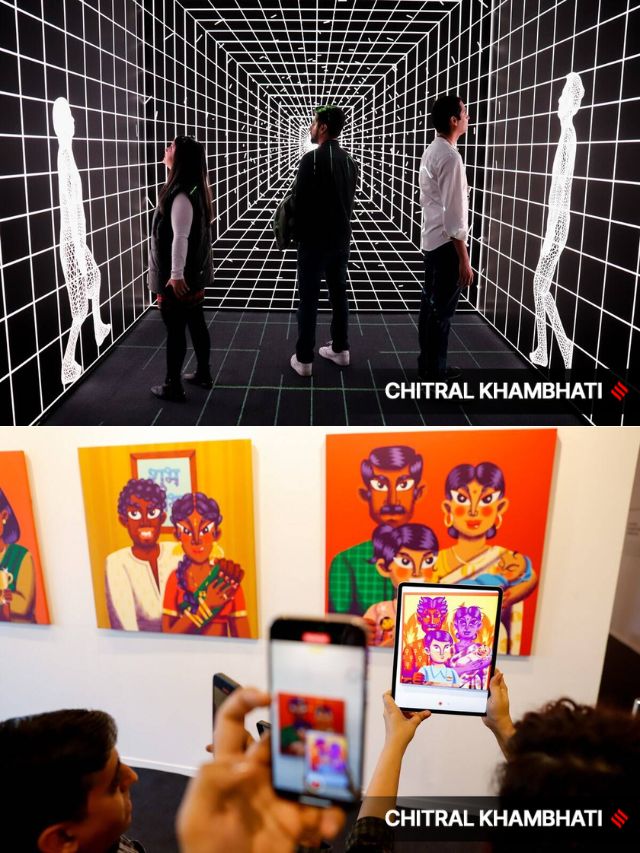
In 2026, the Gulf art community is witnessing a technological renaissance. Artificial Intelligence (AI) algorithms now assist artists in generating novel patterns, while Virtual Reality (VR) transports audiences into immersive cultural narratives. These advancements herald a new era wherein art transcends the physical frame and becomes a dynamic experience. Imagine wandering through a VR-rendered souk where ancient textiles animate around you, or AI-driven installations that reinterpret calligraphy in response to viewers’ emotions.
However, this technological infusion is not merely about novelty. It empowers artists to explore themes previously constrained by physical media limitations. Algorithms can analyze historical art databases to help revive forgotten techniques or merge disparate cultural motifs into harmonious syntheses. The Gulf, with its rapid modernization and affinity for innovation, becomes fertile ground for such avant-garde experimentation.
The Cultural Conundrum: Authenticity vs. Innovation
Yet, the integration of technology with tradition poses an intricate conundrum. How does one define authenticity in a medium where human hand and machine intellect coalesce? Purists argue that mechanized creation risks commodifying culture, diluting its spiritual incandescence into mass-produced simulations. Conversely, proponents insist that innovation breathes fresh life into heritage, preventing stagnation and irrelevance.
This tension is palpable within Gulf artistic circles. Some artists cautiously blend hand-crafted elements with digital enhancements, striving to maintain a tactile intimacy. Others fully embrace the digital paradigm, questioning whether the notion of ‘tradition’ needs reevaluation under postmodern scrutiny. This dialectic invites broader reflections on cultural preservation: Should the past be strictly conserved, or allowed to evolve with contemporary resonances?
Digital Platforms and Democratization of Gulf Art
Technology’s influence extends beyond creation to distribution and accessibility. Digital platforms have democratized Gulf art like never before, dismantling geographical and socio-political barriers. Artists from smaller emirates or marginalized communities can showcase their work on global stages via online galleries, social media, and virtual exhibitions. The Gulf’s art ecosystem, once limited by physical galleries and patron networks, is now a cosmopolitan agora pulsating with diversity.
This newfound visibility, however, requires careful navigation. The ephemeral nature of online attention cycles challenges artists to sustain engagement without sacrificing depth. Additionally, questions about intellectual property and cultural appropriation arise. How can Gulf artists protect their heritage in a digital realm prone to replication and unauthorized usage? These concerns underscore a potential challenge: wielding technology as a double-edged sword.
The Role of Institutions and Collaborative Ecosystems
Museums, galleries, and cultural institutions in the Gulf are pivotal in steering the integration of tech and tradition. By fostering collaborative ecosystems that unite technologists, artists, historians, and curators, these establishments mediate the dynamic dialogue between epochs. Digital residencies, AI-driven curation, and educational workshops serve as incubators for interdisciplinary innovation.
Moreover, state initiatives and private foundations are investing heavily in digital art infrastructure. These efforts not only elevate Gulf artists but also contribute to building a sustainable creative economy that balances heritage preservation with futuristic outlooks. Yet, with this power comes responsibility: institutions must ensure that the drive towards modernization does not marginalize indigenous narratives or commodify culture inappropriately.
Conclusion: Embracing a Hybrid Future
The confluence of tradition and technology in 2026 Gulf art is a vibrant dance—sometimes harmonious, sometimes discordant, but always compelling. It beckons a future where artists become alchemists, transforming ancient wisdom through the prism of innovation. The playful challenge remains: Can the Gulf’s artistic soul adapt to digital metamorphosis without losing its luminous core?
As this journey unfolds, audiences and creators alike are invited to engage with art that is both a relic and a revolution: deeply rooted yet skyward-reaching. Ultimately, the intersection of tech and tradition offers a chance for Gulf art to transcend boundaries, crafting a legacy that is as timeless as the desert sun and as limitless as the digital horizon.


Leave a Comment