

The art of crafting sprawling sci-fi metropolises has long been a labor of love—one that demands hours of meticulous modeling, texturing, and rendering. Yet, in an era where time is currency and originality is currency, a technique has emerged that flips the script: kitbashing. This alchemical process of repurposing, recombining, and reimagining pre-existing 3D assets isn’t just a shortcut; it’s a creative revolution. It transforms the daunting task of world-building into an exhilarating puzzle, where every piece tells a story and every arrangement births a new universe. But why does this method resonate so deeply with artists and audiences alike? The answer lies not just in efficiency, but in the very nature of human fascination with the infinite.
The Alchemy of Repurposing: How Kitbashing Defies Convention
Traditional 3D modeling is often a solitary endeavor, a meticulous dance between imagination and execution. Artists sculpt every brick, every neon sign, every towering spire from scratch, pouring their soul into each polygon. Kitbashing, however, is a collaborative rebellion—a way to hijack the collective creativity of others and remix it into something entirely new. The technique traces its roots to the golden age of miniature filmmaking, where model-makers like Greg Jein famously cannibalized plastic kits to create the iconic ships of Star Trek and Close Encounters of the Third Kind
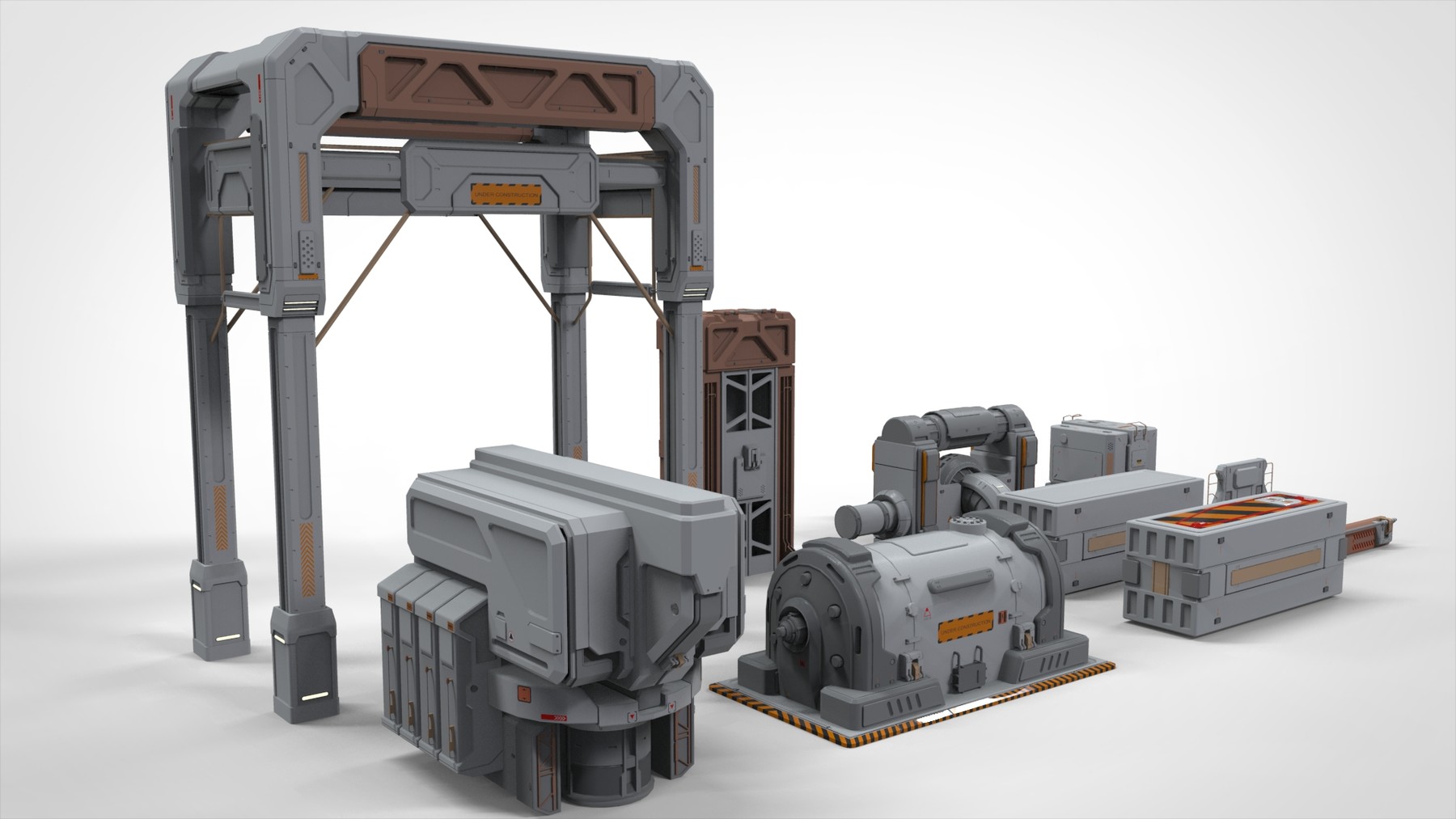
Today, the digital realm has democratized this practice. Artists scour online marketplaces, extracting modular buildings, futuristic vehicles, and alien flora from pre-made asset packs. These components—often designed for reuse—become the raw material for something greater. The magic lies in the juxtaposition: a cyberpunk skyscraper might find itself dwarfed by a colossal, organic megastructure, while a rusted industrial complex is reborn as a gleaming utopian plaza. The result? A city that feels both familiar and alien, a testament to the power of creative recombination.
But kitbashing isn’t just about slapping pieces together. It’s about narrative collision. Each asset carries its own history—a crumbling tenement might whisper of a forgotten dystopia, while a sleek monorail suggests a society obsessed with progress. By colliding these elements, artists create tension, depth, and a sense of lived-in authenticity. The technique forces a confrontation between the old and the new, the mundane and the extraordinary, revealing the hidden poetry in the mundane.
From Asset Packs to Architectural Poetry: The Art of Composition
Kitbashing is less about building and more about orchestrating. The true skill lies in composition—the art of arranging disparate elements into a cohesive whole. A well-executed kitbash isn’t a haphazard collage; it’s a symphony of scale, texture, and light. The first step is selective curation: choosing assets that share a visual language or thematic thread. A sci-fi cityscape might demand a palette of neon blues, metallic silvers, and rusted oranges, so the artist filters through asset packs with an eye for color harmony.
Next comes the spatial dialogue. Tall, angular structures should converse with squat, organic forms, creating a rhythm that guides the viewer’s eye. Negative space becomes as important as the assets themselves—gaps between buildings invite mystery, while crowded districts suggest bustling life. Lighting is the final brushstroke. A single neon sign can transform a mundane alley into a noir thriller, while harsh sunlight can turn a utopian plaza into a sterile wasteland. The best kitbashers understand that composition isn’t just about placement; it’s about emotional resonance.
Consider the layering of a kitbashed city. Background elements—distant towers, smog-choked skylines—set the stage, while midground assets like transit hubs and markets add depth. Foreground details—street vendors, graffiti, flickering holograms—ground the scene in reality. This hierarchy ensures that the city feels vast yet intimate, a place where every corner has a story to tell. The technique thrives on controlled chaos, where order and anarchy coexist in perfect tension.
The Psychology of the Infinite: Why Kitbashing Captivates the Imagination
There’s a primal allure to kitbashing that transcends its practical benefits. It taps into a fundamental human desire: the thrill of discovery. When an artist stumbles upon an unexpected combination—a gothic cathedral repurposed as a spaceship hangar, a subway tunnel transformed into a bioluminescent cavern—they’re not just creating art; they’re uncovering hidden worlds. This process mirrors the way children build castles from blankets or invent galaxies from cardboard boxes. It’s play elevated to an art form.
Moreover, kitbashing satisfies a deeper craving for belonging. Sci-fi cities are often reflections of our own societal anxieties and aspirations—dystopian sprawls mirroring urban decay, gleaming utopias embodying technological utopia. By remixing existing assets, artists engage in a form of cultural bricolage, stitching together fragments of the familiar to confront the unknown. The result is a city that feels both alien and eerily recognizable, a place where the future is both exhilarating and unsettling.
There’s also the collaborative thrill of kitbashing. In an era of solo creators and isolated workflows, the technique fosters a sense of community. Artists share tips, swap assets, and remix each other’s work, creating a feedback loop of innovation. Platforms like ArtStation and CGTrader have turned kitbashing into a social experiment, where the line between creator and consumer blurs. This democratization of world-building isn’t just practical; it’s revolutionary. It suggests that the future of art isn’t in isolation, but in the alchemy of shared imagination.
Mastering the Craft: Tips and Pitfalls for Aspiring Kitbashers
Kitbashing may seem like a free-for-all, but the best practitioners treat it with the discipline of a traditional artist. The first rule? Start with a vision. Before downloading a single asset, define the mood, scale, and narrative of your city. Is it a cyberpunk noir, a gleaming utopia, or a post-apocalyptic wasteland? This clarity will guide every subsequent choice, from asset selection to lighting.
Next, embrace modular thinking
Assets should be interchangeable, scalable, and adaptable. A single building might serve as a skyscraper in one shot and a shack in another. Look for assets with clean topology—avoid overly complex models that resist manipulation. Tools like Blender’s Boolean operations or Unreal Engine’s foliage tools can help merge and reshape components seamlessly.
But kitbashing isn’t without its pitfalls. The most common mistake? Overcrowding. A city that’s a jumbled mess of assets will feel chaotic rather than immersive. Use depth of field in your renders to draw focus to key areas, and employ atmospheric effects like fog or smog to obscure less important details. Another challenge is scale inconsistency. Ensure that assets share a common unit system—nothing breaks immersion faster than a tiny car dwarfed by a colossal building.
Finally, don’t be afraid to break the rules. Kitbashing thrives on experimentation. Mismatched textures? Try a cel-shaded approach to unify the scene. Clashing architectural styles? Lean into the surrealism. The goal isn’t perfection; it’s evocative imperfection. After all, the most memorable sci-fi cities aren’t the ones that look real—they’re the ones that feel alive.

The Future of World-Building: Where Kitbashing Meets AI and VR
The evolution of kitbashing is inextricably linked to the rise of artificial intelligence and virtual reality. Imagine an AI that not only generates assets but also suggests narrative-driven combinations—a tool that understands the emotional weight of a crumbling temple next to a neon-lit plaza. Platforms like MidJourney and Stable Diffusion are already blurring the line between human and machine creativity, offering artists a starting point for their kitbashing experiments.
Virtual reality takes this a step further. In a VR environment, artists can walk through their kitbashed cities, rearranging assets in real-time and experiencing scale and perspective firsthand. This immersive approach could revolutionize the way we design worlds, turning the solitary act of creation into a dynamic, collaborative process. Imagine a team of artists in a shared VR workspace, each contributing to a living, breathing metropolis—where every tweak sparks new ideas.
Yet, for all its technological promise, the heart of kitbashing remains human. It’s a celebration of imperfection, of play, and of the infinite possibilities that emerge when we dare to remix the familiar. In a world that often feels fragmented, kitbashing offers a way to stitch together the pieces of our collective imagination—one asset at a time.
The next time you gaze upon a sci-fi city in a film, a game, or a digital artwork, ask yourself: Is this a place that was built from scratch, or one that was discovered through the alchemy of kitbashing? The answer might just change the way you see the future—because the most extraordinary worlds are often the ones we assemble from the fragments of the past.


Leave a Comment